Irving Hit-and-Run Case: The Two-Impact Sequence That Redefined Nighttime Road Accountability
A Night That Split Into Two Collisions and One Unanswered Question

The Irving hit-and-run case has drawn attention across North Texas because it does not follow the familiar rhythm of a single collision and its aftermath. Instead, investigators describe a sequence that unfolded in phases, beginning with an initial impact, followed by a second strike, and ending with a departure from the scene. That structure has reshaped how authorities interpret responsibility, timing, and awareness in a fatal roadway incident.
The crash occurred in the early morning hours of June 19, 2026, on Cantrell Street in Irving, Texas. A motorized scooter rider, later identified as 31-year-old Tony Vasquez, was traveling in the roadway when the first collision occurred at approximately 2:53 a.m. At that hour, visibility drops sharply, traffic thins, and driver reaction time becomes the primary defense against unexpected movement on the road.
What makes the Irving hit-and-run case distinctive is not only the fatal outcome but the alleged continuation of movement after the first impact. According to investigators, the driver did not stop. Instead, police say the vehicle turned back toward the victim, struck him a second time, and then left the scene entirely. That sequence has become the central framework through which the entire case is now being analyzed.
The victim was transported to Parkland Memorial Hospital in Dallas, where he later died from his injuries. Parkland Memorial Hospital. His death transformed what could have been a single-incident crash investigation into a multi-layered felony case involving questions of impairment, responsibility, and post-impact behavior.
The Critical Second Impact That Changed the Legal Direction
In most fatal traffic cases, investigators focus on a single point of impact. They reconstruct speed, direction, braking, visibility, and reaction time. In the Irving hit-and-run case, however, that reconstruction begins with a complication: a second alleged collision.
Police say the initial strike was followed by a U-turn and another impact on the scooter rider. That detail has shifted the investigation from a standard crash analysis into a sequence-based inquiry. Instead of asking only how the collision occurred, investigators must also determine why the vehicle allegedly returned to the scene.
This second impact is not a minor detail. It alters how intent and awareness are evaluated. In legal and forensic reconstruction, repeated contact often introduces questions about driver perception and decision-making after the first collision. Did the driver recognize what happened? Did the driver understand the severity? Or did impairment interfere with the ability to process the situation?
The Irving hit-and-run case forces these questions into the center of the investigation. It also creates an unusually sequential narrative structure: impact, reversal, second impact, departure. That structure now defines how the case is discussed in both legal and public contexts.
Irving’s Early Morning Roads and the Conditions of Invisible Risk

The location of the crash adds an additional layer of complexity. Irving is a major suburban city within the Dallas–Fort Worth metropolitan area, where wide arterial roads often prioritize vehicle flow over pedestrian or micro-mobility safety. Cantrell Street in Irving, like many similar corridors, is designed for cars traveling at moderate to high speeds, particularly during off-peak hours.
At 2:53 a.m., roadway conditions change dramatically. Lighting becomes inconsistent, driver alertness often decreases, and unexpected objects in the roadway can be missed entirely. These conditions are widely recognized in transportation safety research as high-risk environments for vulnerable road users.
Scooter riders, in particular, face heightened exposure in these environments. They operate with limited physical protection and depend heavily on visibility for safety. When mixed with high-speed vehicle traffic, especially at night, the margin for error becomes extremely small.
The Irving hit-and-run case reflects this structural imbalance. It is not only about individual behavior but also about how infrastructure interacts with new forms of mobility. As scooters become more common in urban travel, roadway design has not always kept pace, creating zones of uncertainty where visibility and expectations do not align.
When a Crash Becomes a Sequence of Legal Events

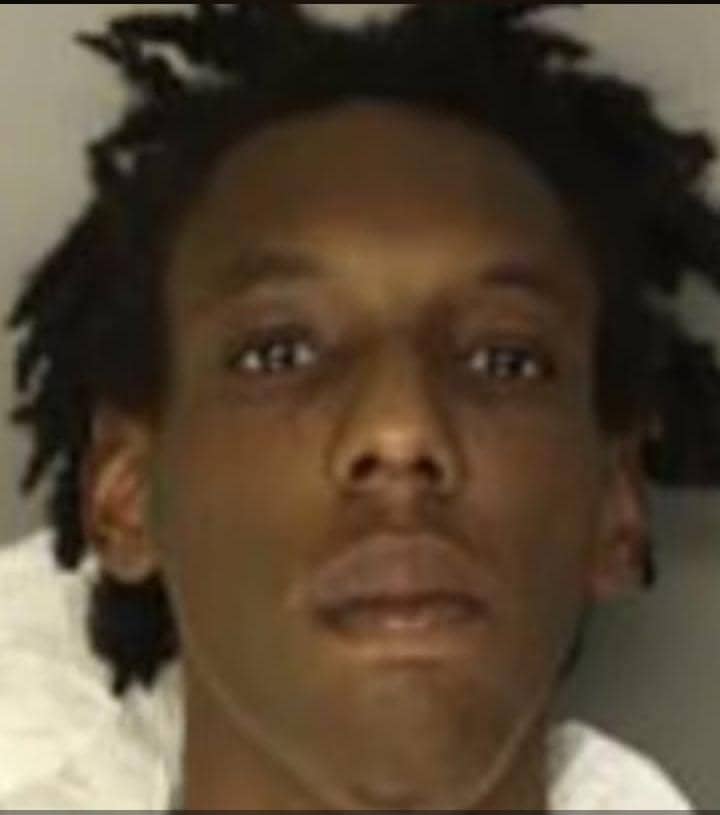
The suspect in the Irving hit-and-run case, identified as Noe Ibarra Cedeno, faces multiple felony charges that reflect different aspects of the same incident. These include intoxication manslaughter, collision involving death, intoxication assault, and collision involving serious bodily injury.
This layered charging structure is significant because it suggests that prosecutors are not viewing the incident as a single legal violation. Instead, they are treating it as a sequence of harms, each carrying its own legal threshold and evidentiary requirements.
Intoxication manslaughter, under Texas law, applies when a person operates a vehicle while impaired and causes a death. Collision-related charges, on the other hand, focus on the duty to stop, remain at the scene, and provide assistance. When combined, these charges form a legal framework that captures both the cause of the crash and the response afterward.
Bond in the case has been set at a combined total of $350,000, reflecting the seriousness of the allegations and the multiple felony counts involved. While a bond does not determine guilt, it provides a procedural signal of how the court is managing the case at this stage.
The Missing Interruption Point in a High-Speed Chain of Events
One of the most important analytical elements in the Irving hit-and-run case is what did not happen between the first and second impacts. In traffic safety research, the moments immediately following a collision are often the most critical for survival and legal outcome.
A typical sequence after a crash involves an interruption in motion. Drivers are expected to stop, assess the situation, and call for emergency assistance. That interruption often determines whether injuries become fatal or survivable.
In this case, investigators allege that the interruption never occurred. Instead, the sequence continued uninterrupted, moving from the first collision into a second impact and then into departure from the scene. That continuity has become central to how the case is interpreted.
This absence of interruption introduces a broader question about decision-making under stress or impairment. Even in chaotic situations, most traffic safety models assume a pause in action. When that pause does not happen, investigators must examine whether external factors, including intoxication, influenced perception and response.
Scooter Riders in Modern Traffic Systems and the Visibility Gap
The Irving hit-and-run case also highlights a broader issue in urban transportation: the visibility gap faced by scooter riders. Unlike pedestrians, scooter users move faster and often travel in the roadway. Unlike cars, they lack structural protection and lighting advantages.
This creates a category of road user that exists between established legal and design expectations. Drivers may not anticipate scooters in the same way they anticipate cars or pedestrians. That mismatch increases risk, particularly at night.
National safety data has increasingly reflected this trend. Micro-mobility devices, including scooters and e-bikes, have seen rising usage across U.S. cities, accompanied by a corresponding increase in injury incidents. These patterns do not suggest scooters are inherently unsafe. Instead, they reflect a transitional phase in transportation systems that were not originally designed for them.
The Irving hit-and-run case becomes part of this larger shift. It illustrates how modern mobility introduces new interactions that older infrastructure was never fully designed to manage.
Impairment Allegations and the Question of Cognitive Continuity
The charges in the Irving hit-and-run case include intoxication-related offenses, which introduce another dimension to the analysis. Impairment does not simply affect driving ability in isolation. It can influence how a driver processes unfolding events in real time.
Traffic safety studies frequently identify impaired driving as a factor that reduces reaction accuracy, delays recognition of hazards, and affects post-impact behavior. In severe cases, it can also contribute to continued movement after an initial collision.
In this case, those considerations are part of the legal framework being examined. However, the court process will ultimately determine how evidence supports or challenges those allegations. At this stage, the focus remains on reconstruction rather than conclusion.
The Irving hit-and-run case, therefore, becomes not only a question of physical impact but also of cognitive sequence. What did the driver perceive, and when did that perception occur? Those questions often define the boundary between accident and criminal liability.
A Systemic Pattern Reflected in a Single Roadway Incident
While the Irving hit-and-run case is specific to one night and one location, it reflects broader patterns seen across urban traffic systems. Fatal crashes involving vulnerable road users often share common elements: nighttime conditions, vehicle speed, limited visibility, and delayed emergency response.
Historical traffic safety data shows that many severe incidents occur outside peak commuting hours, when enforcement and witness presence are lower. Combined with impaired driving risk factors, these conditions create environments where small errors can escalate rapidly.
The Irving hit-and-run case fits within this pattern, but its distinguishing feature remains the alleged second impact. That detail transforms the narrative from a single event into a sequence of actions that must be interpreted together rather than in isolation.
What the Irving Hit-and-Run Case Ultimately Forces Us to Examine
At its core, the Irving hit-and-run case is not only about a collision. It is about the structure of decisions that follow a collision and how those decisions reshape legal and moral responsibility. The sequence described by investigators creates a timeline that moves from impact to reversal to impact again, and finally to departure.
That structure forces a difficult reflection on roadway behavior in moments of crisis. How quickly does a situation become recognized as life-threatening? When does a driver’s responsibility shift from reaction to obligation? And what happens when that shift never occurs?
Tony Vasquez’s death marks the end of one life and the beginning of a legal process that will attempt to reconstruct those answers through evidence, testimony, and forensic analysis. But beyond the courtroom, the Irving hit-and-run case leaves a broader question hanging over every similar roadway in every similar city.
How many seconds define responsibility, and how many actions define accountability, when a moving vehicle becomes the center of irreversible harm?
The answers to those questions remain unresolved, but the sequence that raised them is now fully set in the record.