Ukraine hits Russia’s Ufa oil refinery for second time in a week, Zelenskyy says
Ukrainian President Volodymyr Zelenskyy says Ukraine has struck Russia’s Ufa oil refinery for the second time in a week, turning another distant Russian energy facility into a symbol of Kyiv’s expanding long-range campaign. The reported strike, aimed at one of Russia’s major lubricant producers, landed more than 1,000 kilometers from Ukraine, underscoring how far the war has moved beyond the front line and into the infrastructure that keeps Moscow’s military machine supplied.
A Second Strike on Ufa Sends a Clear Message
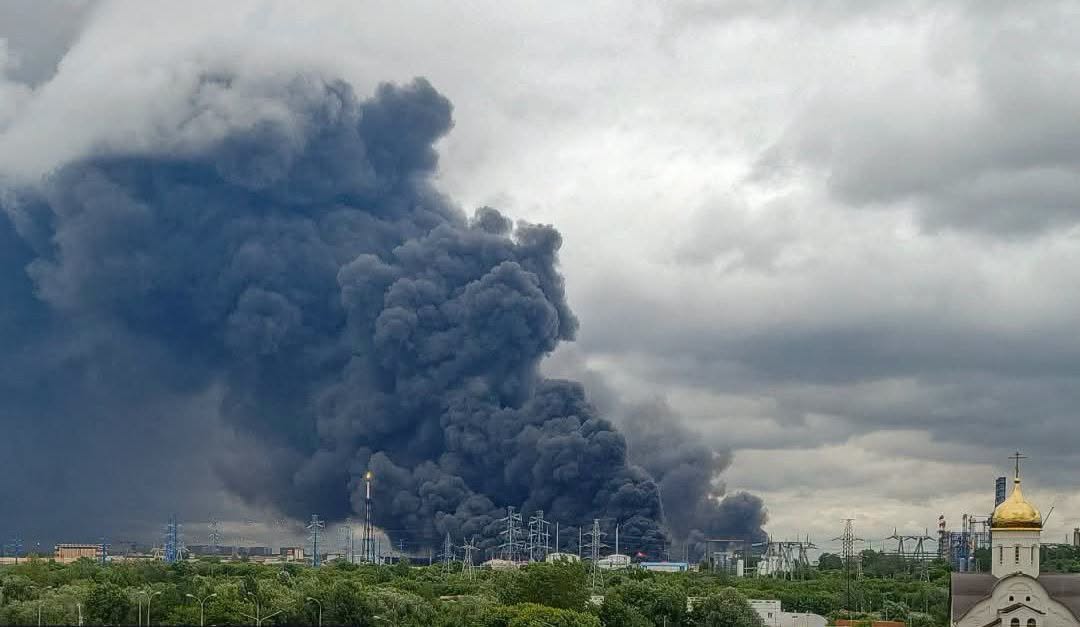
The Ufa refinery sits deep inside Russia’s Republic of Bashkortostan, far from the daily artillery battles in eastern and southern Ukraine. That distance is exactly why the reported attack matters. Kyiv is showing that Russian industrial sites once considered safely beyond reach are now inside Ukraine’s expanding strike radius.
Zelenskyy described the attack as part of a broader effort to weaken Russia’s ability to continue the war. Ukrainian officials also said a facility in Russia’s Penza region, linked to the production of missile components, was struck overnight. Ukraine’s General Staff identified the Penza target as an aerospace-related facility used to produce sensors for cruise missiles, ballistic missiles and satellite components.
Russia did not confirm that the Ufa refinery or the Penza facility had been successfully hit. The Russian Defense Ministry said its air defenses intercepted 179 Ukrainian drones over Russian regions, occupied Crimea and nearby sea areas. That gap between Ukrainian claims and Russian statements has become familiar in this war: Kyiv highlights strategic strikes, Moscow emphasizes interceptions, and the full extent of the damage often becomes clear only later.
Why Oil Refineries Have Become Prime Targets
Ukraine’s latest strike fits into a months-long pattern. Kyiv has increasingly aimed at Russian refineries, fuel depots, pumping stations, ports and storage terminals, arguing that these facilities support Russia’s invasion by supplying fuel, generating export revenue and feeding logistics networks. Reuters has tracked repeated Ukrainian strikes on major Russian energy sites, including facilities in Moscow, Nizhny Novgorod, Yaroslavl, Syzran, Tuapse and other regions.
This is not random destruction. Refineries are complex industrial systems, and even limited damage can have wider effects if key processing units are disabled. When a refinery stops or slows operations, the impact can ripple through fuel supply, transport, agriculture, military logistics, and consumer markets. That is why energy infrastructure has become one of the most important battlefields away from the trenches.
The Ufa strike also follows recent attacks on other Russian oil facilities. On June 28, Zelenskyy said Ukrainian forces hit the Sloviansk oil refinery in Krasnodar Krai and another refinery in Yaroslavl Oblast. The Sloviansk site is about 300 kilometers from the front line, while the Yaroslavl facility is roughly 700 kilometers from Ukraine’s border, showing the growing reach of Ukraine’s long-range drones and missiles.
Russia’s Fuel Pressure Is Becoming Harder to Hide
The broader impact is already visible. Ukrainian attacks on Russian energy infrastructure have contributed to fuel shortages, restrictions and long lines in several regions. Reuters reported that fuel restrictions have spread across much of Russia, including severe curbs in southern Russia, Siberia and Russian-occupied parts of Ukraine.
The political sensitivity is obvious. Russia is one of the world’s largest energy producers, yet many drivers and businesses are now feeling supply stress inside the country. Public reports have described fuel queues, rationing, and regional limits on purchases. Even Russian President Vladimir Putin acknowledged that fuel shortages and queues at petrol stations had become a problem, a rare admission that Ukraine’s strikes are affecting not only military logistics but also ordinary Russian life.
For Kyiv, that is the point. Ukraine is not trying to match Russia shell for shell across every kilometer of the front line. Instead, it is using long-range weapons to hit the systems that help Russia move troops, produce fuel, manufacture weapons, and sustain a long war.
The Drone War Is Changing the Battlefield
Ukraine’s campaign also highlights one of the biggest changes in modern warfare: the rise of relatively low-cost, long-range strike systems capable of threatening expensive, distant infrastructure. Kyiv has invested heavily in domestically developed drones and missiles, allowing it to reach targets far behind Russian lines without relying only on Western-supplied weapons.
That shift matters because it gives Ukraine a way to apply pressure even when the front line moves slowly. Russian forces are still pushing in parts of eastern Ukraine, especially in Donetsk, but Ukrainian officials say Moscow’s momentum has slowed as strikes disrupt logistics and supply routes. Ukrainian Defense Minister Mykhailo Fedorov said Russia is facing serious problems moving infantry and delivering supplies to the front.
We are watching a war where distance no longer provides the same protection it once did. A refinery hundreds of miles from Ukraine can become a target. A missile-parts plant deep inside Russia can be placed on Kyiv’s strike list. A logistics hub, fuel depot, or rail connection can suddenly become part of the front, even if it is nowhere near a trench.
Moscow’s Response Targets Ukrainian Fuel Stations
The pressure campaign is not one-sided. Russia continues to strike Ukrainian cities, transport routes and civilian infrastructure. On July 1, Russian attacks hit fuel stations in Ukraine’s Dnipropetrovsk region, killing one woman and injuring three other women, including a pregnant woman. Officials said fires and equipment damage were reported at all five targeted sites.
In the same 24-hour period, Ukrainian officials reported additional Russian strikes on fuel stations in Chernihiv. A separate drone attack on a passenger bus in Kherson killed two people and wounded nine others. Ukrainian officials argued that retail filling stations do not play a meaningful role in military fuel supply and accused Russia of targeting civilians to spread fear.
That contrast is now central to the narrative of the war. Ukraine says it is striking facilities tied to Russia’s war economy and military production. Russia frames Ukrainian drone attacks as terrorism while continuing to hit Ukrainian civilian infrastructure. The result is a widening cycle of infrastructure warfare, with fuel, transport and industry becoming daily targets.
Why the Ufa Strike Carries Strategic Weight
The Ufa refinery matters because of what it represents: depth, precision, and pressure. A strike that reaches Bashkortostan signals to Russian officials, refinery operators, military planners, and the public that the war is no longer geographically contained.
It also forces Russia to stretch air defenses across an enormous country. Protecting Moscow is one challenge. Defending refineries, ports, pipelines, military plants, and storage sites across multiple time zones is another. Analysts have noted that Ukraine’s campaign has exposed the vulnerability of Russia’s vast energy system, especially when critical facilities are spread across such a large territory.
The more facilities Russia must protect, the harder it becomes to defend them all well. That creates a strategic dilemma: concentrate air defenses near cities and military sites, or spread them thinly across industrial infrastructure. Ukraine appears to be exploiting that dilemma with repeated, long-range attacks.
A War of Attrition Moves Into Russia’s Industrial Core
The reported Ufa attack also shows how Ukraine is trying to turn Russia’s scale into a weakness. Russia’s size gives it depth, resources and redundancy. But it also means long supply chains, distant facilities, and countless vulnerable points. When Ukraine hits refineries, it is not only seeking immediate damage. It is forcing repairs, rerouting supplies, raising costs, and creating uncertainty.
Reuters reported that several Russian refineries have halted operations after drone attacks, including the Moscow refinery, NORSI, TANECO, Kuibyshev, and Syzran. Some facilities are major producers of gasoline, diesel, or other refined products. When several are pressured at once, the effect becomes cumulative.
That cumulative pressure may not end the war by itself. But it can make the war more expensive, more visible, and more politically uncomfortable for Moscow. It also gives Ukraine a way to indirectly influence the battlefield by attacking the systems that underpin Russian combat power.
Western Support and Ukraine’s Growing Defense Industry
Ukraine’s strike campaign is unfolding alongside renewed attention to Kyiv’s defense technology. European officials have increasingly described Ukraine not only as a country receiving aid, but as a country developing battlefield-tested military systems that others want to study and support.
Swedish Defense Minister Paul Jonsson visited Kyiv as Ukraine signed an agreement for Sweden to provide Gripen fighter jets. Ukrainian officials said the aircraft would help counter Russian planes carrying glide bombs, one of Moscow’s most destructive battlefield weapons.
That matters because Ukraine’s long-range campaign is not separate from its push for stronger air power and deeper integration with the West. Kyiv is trying to build a layered defense and strike capability: drones to hit logistics and energy sites, air defenses to protect cities, and fighter jets to challenge Russian aircraft before they release heavy bombs over Ukrainian positions.
The Bigger Meaning of the Second Ufa Strike
Zelenskyy’s announcement is more than another battlefield update. It marks another step in Ukraine’s effort to make the cost of invasion felt inside Russia’s own industrial system. By striking the Ufa refinery for the second time in a week, Kyiv is signaling that one hit is no longer enough. Repeated attacks are now part of the strategy.
For Russia, the challenge is no longer just holding territory in Ukraine. It must also protect refineries, ports, missile plants, fuel networks, and civilian supply systems across a vast homeland. For Ukraine, the challenge is to keep that pressure going without losing sight of the human cost at home, where Russian attacks continue to kill civilians far from military targets.
The war is entering a sharper industrial phase. Oil, drones, missiles, and logistics are becoming as decisive as tanks and trenches. The reported strike on Ufa shows that Ukraine wants Moscow to understand one message clearly: as long as Russia keeps the war going, the machinery behind that war will remain within reach.