James Carville’s AOC Warning Reveals the Bigger Democratic Battle Ahead
James Carville’s prediction that Alexandria Ocasio-Cortez is unlikely to become the Democratic presidential nominee in 2028 is about more than one politician’s future. It has reopened one of the biggest questions facing the Democratic Party: Should Democrats continue moving toward a more progressive identity, or should they return to a broader coalition strategy focused on winning over the political middle?
The veteran Democratic strategist, known for helping Bill Clinton win the White House in 1992, believes Ocasio-Cortez’s progressive brand places a ceiling on her national appeal. He praised her political skills and acknowledged the strength of her operation, but argued that Democratic primary voters would ultimately choose a different direction.
Carville’s message was direct: being a powerful voice inside the party does not automatically translate into becoming the person trusted to lead the entire party.
That distinction could define the 2028 Democratic primary.
Carville vs. AOC: A Clash Between Two Generations of Democratic Politics
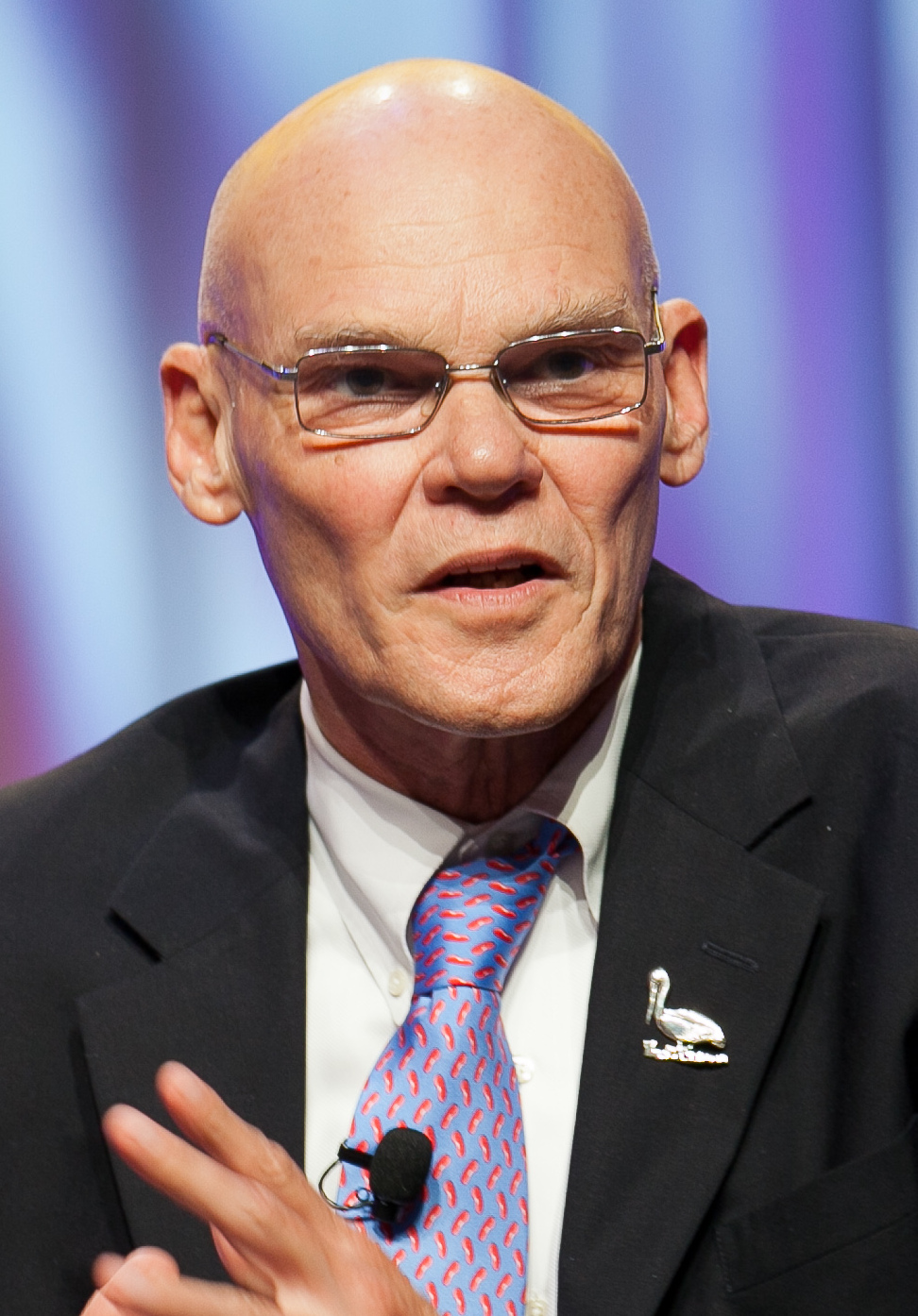
The disagreement between Carville and Ocasio-Cortez represents a deeper generational divide inside the Democratic Party.
Carville helped shape the Democratic strategy of the 1990s, when candidates such as Bill Clinton focused on appealing to working-class voters, suburban families, and independents who felt disconnected from both political extremes. That approach emphasized economic issues, cultural moderation, and the idea that Democrats needed to win voters beyond their traditional base.
Ocasio-Cortez represents a different political moment.
Her rise began during a period when many younger voters became increasingly frustrated with issues such as housing affordability, climate change, healthcare costs, income inequality, and corporate influence in government. Her political identity was built around challenging established systems rather than adapting to them.
The contrast creates a fundamental question:
Can a candidate who represents the energy of the progressive movement also become the leader of a national coalition?
That question will likely define not just AOC’s future but the future direction of the Democratic Party.
Why Carville Believes Democratic Primaries Tell a Different Story
Carville’s argument centers on the idea that Democratic presidential nominees are not chosen by the loudest voices online or the most passionate activists. They are chosen by millions of voters with different priorities across dozens of states.
He specifically pointed to Black Democratic voters in the South, a group that has historically played a major role in shaping Democratic presidential contests.
The 2020 Democratic primary provided one of the clearest examples. Joe Biden struggled in the early contests before winning decisively in South Carolina, where strong support from Black voters helped revive his campaign. That victory changed the momentum of the race and positioned him as the candidate capable of building a broad coalition.
Carville believes that the same coalition-building challenge would confront Ocasio-Cortez.
A candidate can have strong support among younger voters, progressive activists and online communities, but winning a presidential nomination requires convincing voters with different experiences, concerns and political priorities.
The challenge for AOC would not simply be defending her progressive record. It would prove that her message can connect with voters who may not share the same ideological background.
AOC’s Biggest Advantage: A National Profile Few Candidates Can Match
Despite Carville’s criticism, Ocasio-Cortez would enter any potential 2028 race with advantages that many presidential candidates spend years trying to build.
She already has:
- A national following.
- Strong name recognition among Democratic voters.
- A proven ability to generate media attention.
- A powerful grassroots fundraising network.
- A reputation as one of the party’s strongest communicators.
Unlike many possible candidates who would need to introduce themselves to voters, Ocasio-Cortez would begin with an established political identity.
Her supporters argue that this is precisely why traditional political predictions may underestimate her.
They point to previous presidential races in which candidates initially dismissed gained momentum by connecting with voters seeking something different.
Barack Obama, for example, faced skepticism before his 2008 campaign about whether he could overcome questions about experience and national appeal. His success came from expanding his coalition beyond his original supporters.
The comparison does not mean Ocasio-Cortez would follow the same path. However, it highlights a larger reality in presidential politics: candidates who reshape political conversations are often underestimated before voters have their final say.
Prediction Markets Challenge Carville’s View
Another interesting part of the 2028 conversation is the disagreement between traditional political experts and prediction markets.
While Carville believes Ocasio-Cortez would struggle to win the nomination, betting markets have treated her as a serious contender rather than a long-shot candidate.
That difference highlights two competing ways of analyzing politics.
Political strategists often focus on:
- Past voting patterns.
- Regional coalitions.
- Candidate ideology.
- Election history.
Prediction markets often focus on:
- Momentum.
- Public attention.
- Candidate visibility.
- Expectations about future events.
Neither approach guarantees accuracy.
Political history is filled with candidates who looked unstoppable early but faded quickly, as well as candidates who appeared unlikely to win before building unexpected movements.
The question surrounding AOC is whether her national recognition represents a temporary political moment or the beginning of a larger movement capable of winning a presidential nomination.
The Real Challenge: Turning Enthusiasm Into a Majority Coalition
The biggest obstacle for Ocasio-Cortez would not be attracting attention. She has already demonstrated that ability.
The harder challenge would be converting enthusiasm into a winning electoral coalition.
Presidential campaigns require balancing competing groups:
- Younger progressive voters who want major policy changes.
- Older Democratic voters who prioritize stability.
- Working-class voters are concerned about economic pressure.
- Minority voters who often focus on practical results.
- Suburban voters who may determine close elections.
A successful candidate must craft a message that is specific enough to inspire supporters yet broad enough to attract millions of voters who are not already committed.
That balancing act has defeated many politicians with strong national profiles.
The 2028 Democratic Primary Could Become a Battle Over the Party’s Future

The debate surrounding Ocasio-Cortez reflects a much larger struggle over what Democrats want their party to represent.
One side argues that Democrats need a stronger economic message and a more ambitious vision to energize voters who feel ignored by traditional politics.
The other side argues that Democrats must focus on electability, avoid ideological labels, and build a coalition capable of winning competitive states.
Both arguments come from real concerns.
Progressives worry that cautious politics fails to inspire voters. Moderates worry that ambitious proposals can create vulnerabilities in general elections.
The 2028 primary could become the moment when Democrats decide which argument has more influence.
A Possible Roadmap for AOC’s 2028 Challenge
The path to the nomination would require more than enthusiasm. It would require proving that a movement built around progressive change can also become a majority coalition.
Carville’s Prediction May Be a Warning, Not a Final Verdict
James Carville has spent decades studying elections, and his warning about Alexandria Ocasio-Cortez reflects a serious argument about how Democratic nominations are won.
However, presidential politics rarely follows a predictable script.
Voters change. Issues change. Political coalitions change.
A candidate who appears too ideological at one moment can become a defining figure of another political era. At the same time, popularity and influence do not guarantee victory.
For Ocasio-Cortez, the central challenge is clear: Can she transform her role as the voice of progressive America into a coalition that represents the entire Democratic Party?
The answer will determine whether Carville’s prediction becomes a political forecast or a reminder that even experienced strategists can underestimate the next generation of leaders.