Joy Reid declares she won’t support any Democrat unwilling to pledge ending America’s relationship with Israel.
Joy Reid has turned a foreign-policy argument into a direct warning to the Democratic Party. The former MSNBC host and political commentator said she will no longer vote for Democratic candidates who refuse to pledge an end to the United States’ relationship with Israel, a statement that lands at the center of one of the party’s most difficult internal fights.
Her comments are bigger than one media personality’s frustration. They capture a growing rupture inside the Democratic coalition over Gaza, U.S. military aid, Israel’s conduct, and the widening distance between party leaders and progressive voters. For years, Democratic candidates could rely on broad support from liberals, Black voters, young voters, Arab Americans, Muslim Americans, Jewish progressives, and anti-war activists, even when those groups disagreed on foreign policy. That arrangement is now under pressure.
Reid’s statement does not sound like routine criticism. It sounds like a voting condition. In a party already battling over age, leadership, economic frustration, immigration, civil liberties, and the fallout from the 2024 election, her Israel red line adds another pressure point. We are watching a familiar Democratic problem sharpen: the base is moving faster than many elected officials are willing to.
Joy Reid Says Democrats Can No Longer Count on Her Vote Over Israel
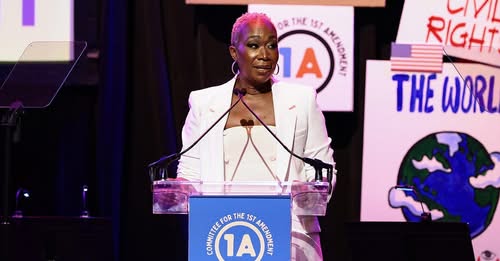
Reid made her position clear during a podcast conversation with author Ta-Nehisi Coates. The discussion focused on the Democratic Party, Israel, Gaza, and voter anger after the Biden-Harris administration. Reid argued that both major parties remain too committed to Israel and that Democratic candidates should no longer receive automatic support from voters who oppose that relationship.
Her message was blunt: a Democrat who will not pledge to end the U.S.-Israel relationship will not get her vote. That is a striking shift because Reid has long been associated with liberal media, anti-Trump commentary, and Democratic-aligned politics. Her criticism, therefore, carries a different political charge than criticism from the right or from long-standing third-party activists.
The key point is not simply that Reid criticized Israel. Many progressive commentators, activists, and voters have done that since the Gaza war intensified. The key point is that Reid connected that criticism directly to voting behavior. She framed Israel policy as a dealbreaker rather than one issue among many.
That matters because Democratic candidates often campaign on a broad platform focused on harm reduction. They tell voters that even if they disagree with the party on certain issues, the alternative is worse. Reid’s statement pushes back against that logic. It suggests that for some voters, U.S. support for Israel has become too morally and politically central to overlook.
Why Reid’s Israel Comments Hit a Nerve Inside the Democratic Party
The Democratic Party has spent years trying to hold together voters with very different views on Israel. Older Democrats, many establishment figures, and major pro-Israel donors often support strong U.S.-Israel ties. Younger Democrats, progressive activists, and many voters of color have become far more critical of Israel’s government, especially after the war in Gaza.
That tension has become harder to manage because the public language around Israel has changed. Younger voters are less likely to discuss the issue solely in traditional security terms. They often frame it through human rights, occupation, civilian deaths, displacement, military aid, and American responsibility. This creates a different moral vocabulary from the one used by many elected Democrats.
Reid’s comments speak directly to that shift. She did not call for small adjustments, softer rhetoric, or private pressure on Israel. She called for the end of the relationship. That is a far more aggressive position than conditioning aid, delaying weapons transfers, demanding a ceasefire, or criticizing Prime Minister Benjamin Netanyahu.
For Democratic leaders, that presents a serious strategic problem. If they reject voters like Reid as too extreme, they risk deepening distrust among progressive and anti-war voters. If they move toward Reid’s position, they risk backlash from pro-Israel Democrats, major donors, Republicans, and voters who still see Israel as a key U.S. ally.
The Gaza War Has Changed the Political Cost of Supporting Israel
For decades, support for Israel was one of the safest bipartisan positions in Washington. Republicans and Democrats disagreed on many foreign-policy issues, but support for Israel remained unusually durable. That consensus has weakened, especially among Democrats.
The war in Gaza accelerated the change. Images of destruction, reports of civilian casualties, hunger, displacement, and repeated U.S. weapons transfers have made Israel’s policy feel immediate to many voters. For them, the issue is no longer abstract diplomacy. It is about what American money, arms, and political protection are helping sustain.
That is why Reid’s comments are politically potent. They are not happening in a vacuum. They come after months of protests, campus clashes, primary pressure, donor fights, ceasefire demands, and anger among voters who believe Democratic leaders ignored their concerns.
The Democratic Party cannot easily dismiss this as online noise. Progressive anger over Gaza showed up in protest votes, third-party interest, Muslim and Arab American frustration, youth activism, and growing skepticism toward candidates who use careful language but avoid policy commitments. Reid’s statement gives that frustration a sharp media-friendly form.
U.S. Aid to Israel Is Now a Domestic Political Fight
The United States has provided Israel with substantial military assistance for decades, and the current security assistance framework has helped make that support predictable. That long-running aid relationship is now facing a level of public scrutiny far less common in Democratic politics than a generation ago.
Reid’s argument focuses on a simple claim: Israel does not need U.S. money. Supporters of the U.S.-Israel relationship reject that framing and argue that American assistance protects a key ally, supports regional deterrence, strengthens missile defense, and advances U.S. interests. Critics counter that unconditional aid reduces American leverage, shields Israeli leaders from consequences, and ties U.S. taxpayers to policies many voters oppose.
This is where the issue becomes more than symbolic. Voters are no longer only asking candidates how they “feel” about Israel or Palestine. They are asking whether candidates will support weapons transfers, military grants, diplomatic protection, sanctions, recognition of Palestinian statehood, or restrictions on aid.
That shift changes the campaign conversation. A candidate can say they support peace, humanitarian aid, and a two-state solution. But voters like Reid are asking for something firmer: a pledge that changes the structure of the U.S.-Israel relationship itself.
Ta-Nehisi Coates Adds Intellectual Weight to the Debate
Reid’s conversation with Ta-Nehisi Coates also matters because Coates has become one of the most prominent American writers linking race, state power, occupation, and moral responsibility. His recent work on Israel and Palestine has been fiercely debated, praised by supporters as morally clear and criticized by opponents as one-sided.
By making these comments in conversation with Coates, Reid placed her argument in a broader intellectual and moral frame. This was not a cable-news shouting match. It was part of a larger critique of U.S. power, media framing, and the language used to justify alliances.
That helps explain why the clip traveled quickly. Reid’s critics saw it as evidence that parts of the left have moved into anti-Israel absolutism. Her supporters saw it as an overdue refusal to reward politicians who speak about human rights at home but defend military support abroad.
Either way, the discussion reveals how Israel has become a test of credibility for many progressive voters. They are asking whether Democratic politicians apply their stated values consistently. If a candidate speaks about democracy, equality, racial justice, and civilian protection, critics want to know why those principles appear weaker when Israel is involved.
The 2024 Election Made This Warning Harder to Ignore
The political background to Reid’s statement is the 2024 election. Many Arab American and Muslim voters expressed deep anger over the Biden-Harris administration’s Israel policy, especially in key states such as Michigan. Some voters backed third-party candidates, some stayed home, and some shifted toward Donald Trump despite sharp concerns about his own record and rhetoric.
That voter movement became one of the clearest warnings to Democrats: foreign policy can affect domestic turnout. Party strategists often treat foreign affairs as less important than jobs, inflation, abortion, immigration, or health care. Gaza challenged that assumption in several communities.
Reid’s statement turns that lesson into a broader demand. She is not speaking only about Arab or Muslim voters. She is speaking as a Black progressive media figure who says Israel policy now affects her own willingness to vote Democratic. That broadens the pressure beyond one constituency.
For Democrats, the danger is not just losing voters to Republicans. The danger is losing enthusiasm, volunteers, small-dollar donors, campus energy, online advocacy, and moral trust. A voter who refuses to campaign, donate, persuade friends, or show up in a close race can matter almost as much as a voter who switches sides.
Democrats Face a Growing Base-versus-Leadership Divide
Polling has shown that Democratic voters have become more critical of Israel and more sympathetic to Palestinians than in previous eras. That does not mean every Democrat agrees with Reid. Many do not. Some support a ceasefire but still support U.S.-Israel ties. Some oppose Netanyahu but support Israel’s security. Some want aid conditioned but not ended.
Still, the direction of travel is clear. The Democratic base is less aligned with the old bipartisan consensus than party leaders are. That creates a leadership gap. Elected officials often speak in cautious terms, while activists and media figures speak in moral absolutes.
This gap is especially visible among younger Democrats. Many younger voters did not grow up with the same historical memory of Israel as a vulnerable state surrounded by hostile powers. They are more likely to associate Israel with occupation, settlements, blockade, military dominance, and U.S. protection. That generational difference shapes how they hear every statement from Democratic leaders.
Reid’s comments reflect that new pressure environment. She is saying that vague concern is no longer enough. She wants a pledge, and pledges are politically dangerous because they force candidates to choose sides publicly.
Republicans Will Use Reid’s Comments Against Democrats
Republicans are almost certain to use Reid’s comments as evidence that Democrats are divided, anti-Israel, or captured by the far left. That attack is predictable, especially because support for Israel remains much stronger among Republican voters and conservative media audiences.
The political risk for Democrats is clear. A statement like Reid’s can become campaign material in swing districts where Democratic candidates are trying to appeal to moderates, Jewish voters, national-security voters, and suburban independents. Republicans can argue that the Democratic Party is being pulled toward abandoning a long-standing U.S. ally.
But the Democratic risk cuts both ways. If candidates respond only by distancing themselves from Reid, they may anger the very voters already questioning whether the party listens to them. This is the trap. Democrats are trying to avoid Republican attacks without further alienating their own base.
That is why the issue is so difficult. Silence looks evasive. Strong support for Israel looks unacceptable to many progressives. Strong criticism of Israel invites donor pressure and Republican attacks. Middle-ground language satisfies fewer people than it once did.
Joy Reid’s Statement Shows How Media Figures Can Shape Party Pressure
Reid no longer needs a nightly cable-news platform to influence the conversation. In the current media environment, a podcast clip can move through social platforms, partisan sites, independent media, and political newsletters within hours. That gives commentators outside official party structures real agenda-setting power.
Her comments also show how media figures can say what politicians avoid. Elected Democrats have to count votes, donors, districts, interest groups, and party leadership. Commentators can define moral boundaries more freely. That makes them powerful pressure actors even when they do not hold office.
In this case, Reid has given progressive voters a simple test: Does the candidate pledge to end the relationship with Israel or not? That test may not become mainstream Democratic policy, but it can still influence primaries, activist endorsements, campus organizing, and online debate.
Political parties often change when outside pressure becomes too loud to manage. Reid’s comments are part of that pressure.
The Bigger Question Is Whether Democrats Can Still Hold Their Coalition Together
The Democratic Party’s Israel problem is not really only about Israel. It is about trust. Voters who agree with Reid believe Democratic leaders ask for moral urgency on some issues and patience on others. They see that as hypocrisy. Party leaders see it as coalition management in a dangerous world.
That tension will not disappear before the next election cycle. The war in Gaza, U.S. weapons policy, Israeli politics, Palestinian statehood, regional conflict, and campus activism will continue to test Democratic candidates. Every statement will be parsed. Every vote will be remembered. Every donor connection will be scrutinized.
Reid’s vow is therefore a warning shot. It tells Democrats that some voters are done treating Israel policy as a secondary concern. They want a break from the old consensus, and they are willing to withhold support to get it.
Whether that position grows or remains a loud minority will depend on events, candidates, organizing, and the next phase of U.S. policy. But the message is already clear: Democrats can no longer assume that anti-Trump voters will accept any foreign policy the party offers.
Joy Reid’s statement may anger party loyalists while energizing progressive critics. That is exactly why it matters. It exposes a Democratic coalition that is still powerful, still competitive, and still deeply divided over what American power should protect, what it should fund, and what voters should refuse to excuse.