Lammes Candies Closure After 141 Years Signals a Deeper Shift in America’s Local Retail Economy
The Lammes Candies closure after 141 years marks more than the end of a Texas candy shop. It signals the quiet unraveling of a retail world built on memory, craftsmanship, and generational loyalty. In Austin, a brand that once anchored celebrations, holidays, and family traditions now winds down operations under the weight of rising costs and shifting consumer behavior.
Lammes Candies did not collapse in a dramatic moment. It slowly reached a point where continuation no longer made financial sense. That distinction matters. It reflects a broader reality in American retail where heritage businesses survive long enough to become cultural symbols, then struggle to survive the modern economy that surrounds them.
This closure forces a difficult question. What happens when a business built on emotional value enters a market that increasingly rewards efficiency over tradition?
A Texas Institution Built in a Different Economic World
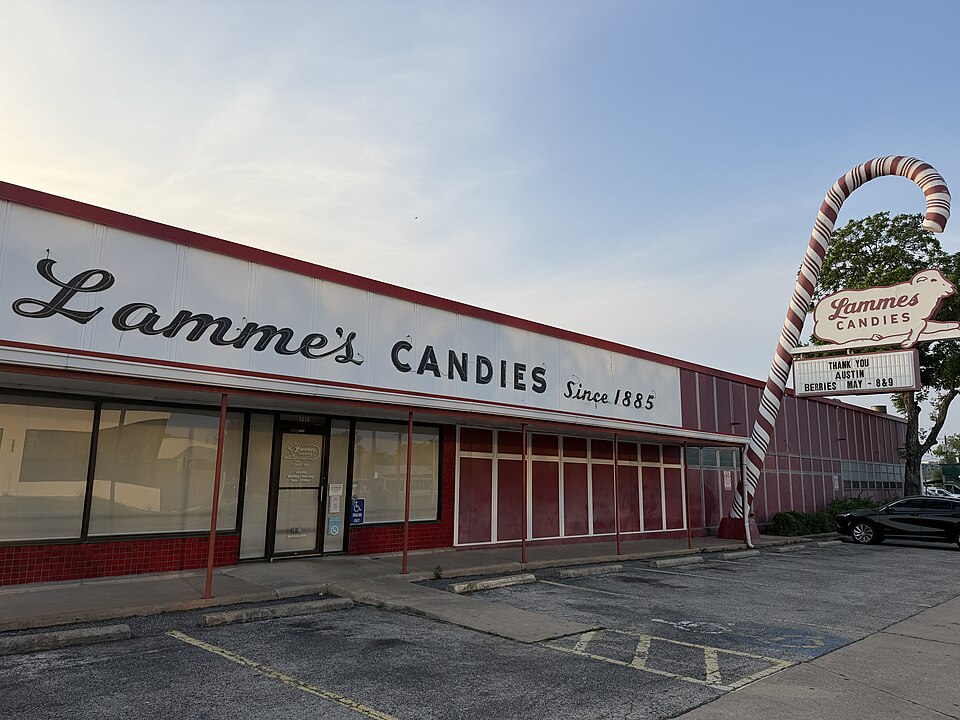
Lammes Candies began in 1885, a period when American retail depended heavily on local production and face-to-face customer relationships. The company grew in Austin, long before national chains, e-commerce, or global supply chains defined consumer habits.
At its core, the business operated in a simpler economic structure. Ingredients were local or regionally sourced, labor costs were stable, and customer loyalty formed through repetition rather than marketing algorithms. Candy shops like Lammes thrived because they filled a cultural role, not just a commercial one.
Over time, Lammes adapted to survival pressures. World War II sugar rationing forced product changes, reshaping early offerings. Later, the company shifted away from frozen desserts and committed fully to confectionery. That pivot anchored its identity for decades, but it also locked it into a category increasingly sensitive to global price fluctuations.
The closure of Lammes Candies after 141 years now reflects how businesses rooted in older economic systems struggle when those systems no longer exist.
The Texas Chewie and the Cost of Emotional Products
The Texas Chewie Pecan Praline became Lammes’ defining product and its strongest cultural anchor. Introduced in the late 19th century, it turned a simple combination of sugar, cream, and pecans into a recognizable regional signature.
This kind of product carries hidden economic tension. Emotional goods rely on consistency. Customers expect the same taste, texture, and experience across generations. That expectation limits flexibility in pricing, sourcing, and formulation.
As global cocoa markets tightened and ingredient costs rose, maintaining that consistency became more expensive. Cocoa prices surged in recent years due to supply disruptions, climate pressures, and global demand imbalances reported across commodity markets. Even when prices stabilize, production contracts and inventory cycles delay relief for manufacturers.
For Lammes, the Texas Chewie represented both identity and constraint. It anchored customer loyalty while restricting the company’s ability to adapt quickly. In a volatile market, that duality becomes difficult to sustain.
When Tradition Meets Modern Cost Pressure
The closure of Lammes Candies after 141 years illustrates a broader structural reality in retail economics. Many heritage businesses do not fail because demand disappears. They fail because cost structures shift faster than pricing tolerance.
Three major pressures converged:
First, ingredient inflation increased production costs across the chocolate and candy manufacturing industries. Cocoa, dairy, nuts, and sugar all experienced volatility, driven by global supply constraints and energy costs.
Second, consumer spending patterns changed. Inflation and higher interest rates pushed households to prioritize essentials. Discretionary categories like premium candy became less frequent purchases, even among loyal customers.
Third, operational costs rose simultaneously. Rent, insurance, logistics, and labor expenses increased across U.S. cities, particularly in growing markets like Austin. These combined pressures compressed margins from both ends.
The result is not a collapse in the traditional sense. It is compression until continuity no longer works.
The Disappearing Middle of American Retail
Lammes Candies belongs to a category of businesses increasingly under strain: mid-sized, emotionally driven, locally rooted retailers. These companies are too large to operate as artisan boutiques but too small to compete with national manufacturers.
This middle tier once defined American consumer culture. Regional candy makers, bakeries, and family-run specialty shops created local identity and seasonal tradition. Today, that space is shrinking.
Large corporations benefit from scale, automation, and distribution networks. Small artisan brands benefit from exclusivity and premium pricing. The middle segment carries the highest operational risk with the least structural protection.
The closure of Lammes Candies after 141 years reflects this imbalance. It highlights how modern markets reward either extreme efficiency or extreme niche identity, leaving limited room for long-standing hybrid models.
Austin’s Growth and the Pressure on Legacy Businesses
Austin’s rapid transformation adds another layer to Lammes’ story. Over recent decades, the city shifted from a regional capital to a national technology hub. That growth brought investment, population increases, and rising commercial rents.
However, growth also reshapes retail ecosystems. Long-standing businesses often face increased property costs and changing neighborhood demographics. New consumer bases may not share the same emotional attachment to legacy brands.
In many cases, older businesses either relocate, scale down, or exit entirely. Lammes remained longer than most, partly due to brand loyalty and historical significance. Yet even a strong local identity cannot fully offset structural economic pressure.
The closure reflects a broader urban pattern where cultural memory and economic modernization increasingly diverge.
Inflation, Psychology, and the Repricing of Small Joys
Economic change not only affects costs. It also changes how people value experiences. Inflation has altered how households categorize discretionary spending, especially for non-essential goods.
Candy once sat in the category of small indulgence. It was a low-cost emotional purchase tied to celebration, gifting, or nostalgia. That classification has shifted.
As prices rise across essential categories, consumers become more selective. Small luxuries are no longer automatic. They require justification. This subtle change reshapes demand in ways that do not always appear in headline statistics.
In this environment, even beloved brands face reduced purchase frequency. The closure of Lammes Candies after 141 years reflects how emotional spending contracts during prolonged inflation cycles, even when brand loyalty remains intact.
The Heritage Paradox in Modern Business
Heritage is often viewed as an advantage in branding. It signals trust, quality, and continuity. Yet in operational terms, it can create rigidity.
Legacy businesses carry expectations that limit change. Customers expect consistency, not experimentation. Recipes must remain stable. Packaging must preserve identity. Pricing adjustments must avoid breaking emotional trust.
This creates what can be described as a heritage paradox. The more successful a brand becomes over time, the more constrained its future options become.
Lammes embodied this tension. Its history strengthened its identity, but also limited its flexibility in responding to cost escalation and market shifts. That tension is central to understanding its closure.
A Controlled Exit Rather Than a Collapse
The winding down of Lammes Candies does not resemble a sudden failure. It resembles a managed withdrawal from an environment that no longer supports its structure.
Stores close gradually. Inventory sells through existing channels. Online operations continue temporarily. Production scales down in alignment with remaining demand. Employees transition out over time rather than through an abrupt shutdown.
This controlled process reflects a growing trend in legacy retail. Businesses increasingly exit through staged reductions instead of abrupt closures. The goal is not survival at all costs, but orderly conclusion.
In many ways, this form of closure is quieter but more telling. It shows how deeply economic pressures now shape even long-established institutions.
The Emotional Economy of Final Purchases
As physical locations close, customer behavior shifts into a final phase. Purchases become symbolic rather than routine. People buy not because they need products, but because they want to preserve a connection.
This creates a temporary emotional economy. Scarcity increases perceived value. Familiar products gain nostalgic weight. The final boxes of pralines become markers of memory rather than mere confectionery.
Such behavior is common in the closing stages of heritage retailers. It reflects a human response to disappearance. People attempt to preserve continuity through consumption.
The closure of Lammes Candies after 141 years is now operating within this final emotional cycle.
What Remains After the Last Praline
When a business like Lammes disappears from physical retail, what remains is not just a brand history. It is a cultural imprint. The company shaped holiday traditions, family rituals, and regional identity across generations.
Its closure also leaves behind a broader lesson about economic transition. Markets evolve faster than memory. Costs move faster than tradition. Even deeply rooted institutions eventually face systems that no longer accommodate their structure.
The question is not whether Lammes mattered. It clearly did. The question is how many other similar institutions are quietly approaching the same threshold.
As cities grow, commodities fluctuate, and consumer behavior shifts, the gap between emotional value and economic viability continues to widen. Lammes simply reached that gap after 141 years of holding it together.
The final image is not of collapse, but of completion. A long-running story reaching its final page in a market that no longer reads at the same pace.
When a business built on memory becomes financially unsustainable, the loss is not only what closes, but what society no longer finds room to keep open.