Mississippi’s Assma Ali Makes History as Yemeni-American Muslim Judge, Then Faces a Political Firestorm
A small Mississippi Delta town has suddenly found itself at the center of a national argument over immigration, religion and who belongs on the judicial bench.
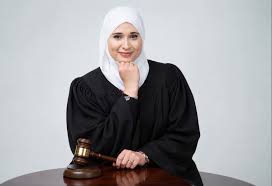
Assma Ali, a Muslim immigration attorney and daughter of Yemeni immigrants, was sworn in on August 5, 2026, as municipal judge for the town of Benoit, Mississippi. The appointment is historic, but some of the claims racing across social media have stretched far beyond the verified facts.
Some reports describe Ali as the first Yemeni-American woman to become a judge in the United States. Mississippi Free Press described her appointment as a first for Mississippi, while Sky News Arabia reported that she became the first American judge of Yemeni origin. She is not, however, America’s first Muslim woman judge. Nusrat Choudhury became the first Muslim woman to serve as a federal judge in 2023, and Muslim Americans had served on other courts before Ali’s appointment.
The appointment happened in Benoit, not Ridgeland
One of the biggest sources of confusion was geography.
Ali’s immigration law office is located in Ridgeland, Mississippi, but she was not appointed to the Ridgeland Municipal Court. She was appointed in Benoit, a Mississippi Delta town in Bolivar County with fewer than 400 residents. Ridgeland officials publicly rejected claims that their city had appointed her, noting that its municipal judges had been serving since 2001 and that there were no vacant judicial positions.
Ali said the confusion apparently came from the location of her law office. She told the Mississippi Free Press that she had never claimed to be Ridgeland’s judge.
Her new job is also far different from the sweeping judicial power some social-media posts suggested. Mississippi municipal judges handle matters such as violations of city ordinances, misdemeanor offenses and other cases that fall under municipal jurisdiction. They can also conduct initial appearances, issue warrants, set bonds and handle traffic-related cases.
Ali graduated from the law school now associated with Mississippi Christian University in 2017 and has practiced law in Mississippi for nearly a decade. She is a member of the Mississippi Bar and has practiced extensively in immigration law.
Her immigration career quickly became political ammunition
Ali’s professional background became one of the biggest targets after news of her appointment spread.
Her firm, Ali & Associates, lists practice areas including deportation defense, asylum, citizenship and naturalization, immigration bonds, family immigration, adjustment of status, Temporary Protected Status, immigrant visas and other immigration proceedings. Her professional biography says she has represented clients before immigration courts, U.S. Citizenship and Immigration Services and Immigration and Customs Enforcement.
That makes descriptions claiming that she simply specializes in “legalizing illegals” misleading. Immigration attorneys represent people with a wide range of legal circumstances, including lawful immigrants seeking citizenship, asylum applicants, people facing removal and families using congressionally established immigration procedures.
Ali’s biography says her parents immigrated to the United States from Yemen during the 1970s. Ali herself was born in the United States. Her career has included recognition from several professional organizations, and the Mississippi Bar’s records show her as the recipient of its Outstanding Young Lawyer award for 2022-2023.
But as Ali’s appointment spread online, criticism moved beyond her immigration work and focused heavily on her Muslim faith and hijab.
Mississippi Republican state Sen. Michael McLendon called for Benoit officials to take lawful steps to remove her from the bench. He criticized her immigration advocacy and wrote, “I believe in God we trust not Mohamed.”
Ali responds to fears about Sharia law
Some critics argued that a Muslim judge could attempt to apply Islamic religious law from the bench, an allegation Ali directly rejected.
“I only represent… one law, and that’s the U.S. Constitution,” Ali told the Mississippi Free Press. She questioned why being Muslim should disqualify an American-born lawyer from serving as a judge.
In another public statement, Ali said she was committed to the Constitution and Mississippi law and promised to carry out her duties with “fairness, integrity, impartiality, and respect for the law.”
The controversy also reached Mississippi’s developing political landscape. Agriculture Commissioner Andy Gipson, a Republican candidate for governor, separately pledged to prevent Sharia law from being used in Mississippi, although his statement did not name Ali.
Ali, meanwhile, says her office has received threats since the appointment became national news.
What began as a municipal judicial appointment in one of Mississippi’s smallest communities has therefore become something much larger. It is now a debate about immigration attorneys, religious identity, misinformation and the line between legitimate scrutiny of a judge’s record and opposition based on faith.
The verified story is striking enough without the viral embellishments: an American-born daughter of Yemeni immigrants built an immigration-law career in Mississippi, was appointed municipal judge in Benoit, and almost immediately found her qualifications, religion and allegiance to American law under national scrutiny.
And that leaves Mississippi with a question likely to outlast the social-media storm: When evaluating who belongs on the bench, how much should a judge’s religion and previous legal practice matter compared with qualifications, conduct and adherence to the Constitution?