Newsom’s 25th Amendment Call Against Trump Triggers Fierce Conservative Pushback
California Gov. Gavin Newsom’s call for the 25th Amendment to be considered against President Donald Trump has triggered a heated political clash, with conservatives accusing Democrats of applying a double standard after years of debate over former President Joe Biden’s cognitive health.
The controversy erupted after Trump delivered a speech focused on election integrity, where he discussed alleged weaknesses in the nation’s voting systems and highlighted documents his administration said revealed concerns about foreign interference and election security. Newsom quickly criticized the speech, calling it evidence that Trump was unfit to remain in office.
“The only thing missing in Donald Trump’s speech was tin foil,” Newsom said. “This was a legitimate 25th Amendment moment.”
The California governor’s comments immediately intensified an already bitter debate over presidential fitness, mental ability and the use of constitutional powers to remove a sitting president.
Newsom’s Comments Ignite Political Firestorm
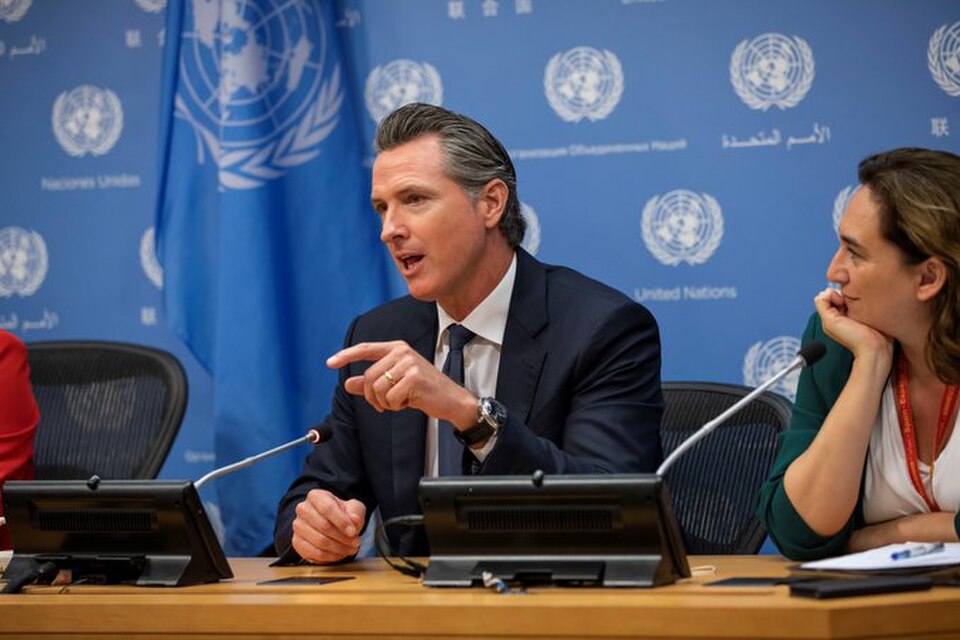
The 25th Amendment, ratified in 1967, provides a constitutional process for addressing presidential disability. It allows the vice president and a majority of Cabinet officials to declare that a president is unable to perform the duties of the office. Congress can also create a process to review a president’s ability to serve.
Newsom’s remarks were not an official effort to invoke the amendment but rather a political argument that Trump’s speech demonstrated what he described as serious concerns about the president’s mental state.
The governor has previously criticized Trump’s leadership style and policies, but his latest comments escalated the debate by suggesting that the constitutional mechanism for presidential incapacity should be considered. Several Democrats quickly supported Newsom’s statement.
Democratic influencer Harry Sisson wrote on social media that Newsom was correct to raise the issue, claiming Trump was “mentally deranged and unfit to be president.” Rep. Yassamin Ansari, D-Ariz., also renewed her support for exploring the 25th Amendment, arguing that Trump’s actions represented a serious concern.
Earlier in the year, Ansari joined other Democrats, including Rep. Jamie Raskin, D-Md., in supporting proposals that would create an independent review process to examine a president’s ability to serve.
Conservatives Accuse Democrats of a Double Standard
Republicans responded by turning the criticism back on Democrats, arguing that concerns about presidential fitness were ignored during Biden’s presidency.
The Republican National Committee criticized Newsom’s remarks, accusing Democrats of overlooking questions about Biden’s mental sharpness when he was president.
“You literally propped up a vegetable and lied to the American people about his cognitive decline for four years and never mentioned the 25th Amendment once,” the RNC wrote in a social media post.
The criticism refers to months of Republican arguments that Biden’s age and public appearances raised questions about whether he was capable of handling the demands of the presidency. Biden, who was 82 when he left office, faced increased scrutiny after a widely discussed debate performance during the 2024 election cycle.
Democrats rejected many of those claims at the time, arguing that Biden remained capable of performing his duties. Supporters pointed to his decades of public service and continued policy work as evidence that he could lead effectively.
Conservatives now argue that Democrats cannot demand constitutional action against Trump while dismissing similar concerns about Biden.
Trump’s Election Speech Becomes the Center of the Dispute
The clash began after Trump addressed the nation about election security issues. During the speech, Trump claimed his administration had uncovered vulnerabilities involving election systems and foreign interference.
He also discussed newly released documents that he said showed concerns involving China and election-related security issues Newsom questioned the motivation behind Trump’s speech, suggesting it was connected to upcoming elections. “He wants to rig the election in 2026. He knows he is going to lose,” Newsom said.
Trump and his supporters have rejected accusations that his election policies are designed to manipulate future results. They argue that efforts to strengthen election procedures are intended to increase public confidence and prevent illegal voting.
The disagreement reflects a broader political divide over election security, with Republicans emphasizing verification measures and Democrats warning against actions they believe could undermine trust in the voting process.
Debate Over the 25th Amendment Moves Into New Territory.
The 25th Amendment has rarely been at the center of serious political discussions. It has traditionally been viewed as a safeguard for situations involving severe illness, injury or a president’s inability to perform official responsibilities.
Using it as a political response to controversial speeches or disagreements over leadership would represent a major departure from how it has historically been understood.
Some conservatives warned that pursuing such action could create instability by allowing political opponents to challenge presidents they simply disagree with.
California Assemblyman Joe Patterson criticized Newsom’s position, questioning how calling for the removal of a democratically elected president could be considered an act of protecting democracy.
“Does anyone else think it’s weird that as he talks about Trump rigging an election, he simultaneously asks for the president’s Cabinet to remove a duly elected president?” Patterson wrote. The debate highlights how deeply divided American politics remains as both parties prepare for future elections.
For Democrats, Trump’s leadership style and statements raise concerns about his fitness to serve. For Republicans, Newsom’s comments represent what they see as another attempt to challenge a president chosen by voters.
The fight over the 25th Amendment may fade from the headlines, but the broader argument over presidential power, accountability, and trust in government is likely to continue shaping the political landscape.