Pot Roast Turns Fork-Tender When You Add This Bottle From Your Pantry
There’s nothing quite like a pot roast that falls apart at the touch of a fork. The meat is juicy, the vegetables are soft and the gravy tastes like it simmered all day, because it did. Yet many home cooks end up with a roast that’s dry, stringy or bland, even after hours in the oven.
The difference often comes down to what goes into the pot with the beef. Professional test kitchens have spent years perfecting pot roast, and one ingredient keeps showing up in their recipes. It’s probably sitting in your pantry or on your kitchen counter right now.
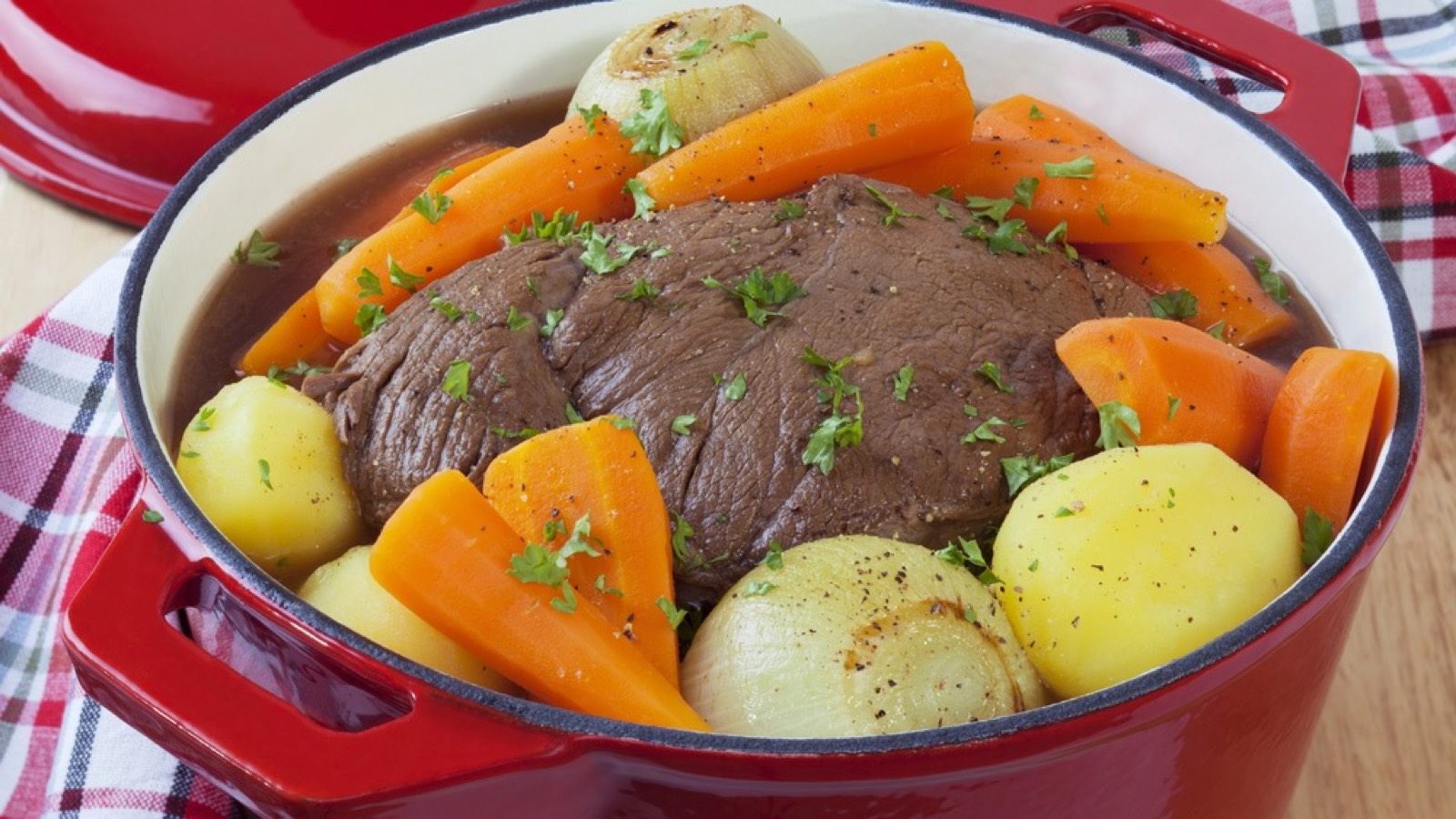
The Secret Bottle Is Dry Red Wine
The bottle is a dry red wine. America’s Test Kitchen’s classic pot roast recipe adds dry red wine to the braising liquid along with beef broth, then stirs in a little more wine when finishing the sauce. Its slow-cooker country-style version uses a full cup of red wine with chicken broth instead of water for a richer gravy.
You don’t need an expensive bottle. An inexpensive, drinkable dry red such as a cabernet sauvignon, merlot or a red blend works well. Avoid “cooking wine” sold near the vinegar, since it usually contains added salt and doesn’t taste as good.
What Really Makes Pot Roast Tender
Here’s the honest truth: the wine alone doesn’t turn tough beef tender. Pot roast becomes fork-tender because of the cut you choose and the way you cook it. Cuts from the shoulder, such as chuck roast, are full of collagen, the tough connective tissue that makes them chewy when cooked quickly.
When that collagen cooks slowly in moist heat for several hours, it breaks down into gelatin. That’s what gives braised beef its silky, fall-apart texture and makes the gravy rich and glossy. America’s Test Kitchen recommends a well-marbled chuck-eye roast for this reason, noting that it’s full of collagen and well suited to braising.
Why Red Wine Makes Such a Difference
So why add wine at all? The braising liquid is where most of a pot roast’s flavor comes from, and red wine gives it depth that broth or water alone can’t match. Its acidity balances the richness of the beef, and its fruity, savory notes blend with onions, garlic and herbs.
Wine also helps you capture the browned bits stuck to the bottom of the pot after searing the meat. Pouring it in and scraping those bits loose is called deglazing, and it adds a deep, roasted flavor to the sauce. As the roast cooks, the liquid reduces and concentrates into a gravy that tastes like it came from a restaurant.
How to Use Red Wine in Pot Roast
Start by patting the roast dry and seasoning it generously with salt. America’s Test Kitchen even salts the meat and lets it rest for an hour before cooking, which helps it season more deeply. Then brown the roast well on all sides in a heavy Dutch oven and set it aside.
Cook chopped onions, carrots, celery and garlic in the same pot until softened. Stir in a spoonful of tomato paste, then pour in about half a cup to a cup of dry red wine and scrape up all the browned bits. Add beef broth, a bay leaf and a sprig of fresh thyme, then return the roast to the pot.
Cover the pot and cook it low and slow. America’s Test Kitchen braises its classic pot roast in a 300-degree oven for 3½ to 4 hours, until a sharp knife slips easily in and out of the meat. Resist the urge to rush it, since tough connective tissue needs time to melt.
Other Pantry Bottles That Help
If you don’t keep wine at home, other pantry bottles can add a similar boost of flavor. A splash of balsamic vinegar adds sweetness and acidity, and America’s Test Kitchen stirs a tablespoon into its finished pot roast sauce. Red wine vinegar works too, but use it sparingly because it’s sharper than wine.
Worcestershire sauce and soy sauce are also popular additions. Both are rich in savory, umami flavor that makes beef taste meatier. Just a tablespoon or two is enough, and you may want to reduce the added salt since both are salty.
Can You Skip the Wine?
Absolutely. If you prefer not to cook with alcohol, you can use extra beef broth with a tablespoon of balsamic or red wine vinegar for acidity. Some cooks also use unsweetened grape juice or cranberry juice with a splash of vinegar, though the flavor will be slightly sweeter.
Keep in mind that not all of the alcohol cooks off during braising, even after a long time in the oven. The Exploratorium science museum notes that cooked food can retain anywhere from 5 to 85 percent of the original alcohol, depending on the method and cooking time. If you’re cooking for children, anyone avoiding alcohol for health or personal reasons, or someone in recovery, the alcohol-free version is the better choice. The roast will still turn out tender as long as you braise it low and slow.
Common Pot Roast Mistakes to Avoid
The most common mistake is choosing the wrong cut. Lean roasts such as eye of round don’t have enough collagen or fat, so they tend to turn dry and stringy when braised. Stick with chuck roast, chuck-eye roast or another well-marbled shoulder cut.
Another mistake is cooking at too high a temperature or taking the roast out too soon. If the meat feels tough, it usually needs more time, not less. Many kitchen tricks can save time, but pot roast is one dish that rewards patience.
Finally, don’t skip the browning step. Searing the meat creates deep, savory flavors that carry through the whole dish. Skipping it can leave you with a roast that tastes more boiled than braised.
Make It Ahead for Even Better Flavor
Pot roast is one of those dishes that often tastes even better the next day. America’s Test Kitchen notes that chilling the whole cooked pot roast overnight improves its flavor and makes it moister and easier to slice. You can skim the fat from the top of the chilled liquid, then gently reheat the meat in its sauce.
That also makes pot roast perfect for busy weeks and family gatherings. Cook it on the weekend, refrigerate it and enjoy an easy, comforting dinner later in the week. Leftovers can become sandwiches, hash or a hearty beef and vegetable soup.
A Classic Worth Mastering
Pot roast has been a centerpiece of American family meals for generations. For many people, it’s tied to memories of Sunday dinner at Grandma’s house, with the whole family gathered around the table. A splash of red wine is a small change that can make that classic taste even better.
Next time you make pot roast, grab that bottle of dry red from the pantry and give it a try. Choose a well-marbled chuck roast, brown it well and let it braise low and slow. Do you have a secret ingredient that makes your family’s pot roast special?