Rosie O’Donnell Had $100 Million in the Bank, Then Rejected Another Fortune for a Reason Hollywood Couldn’t Understand
Rosie O’Donnell did something almost unthinkable at the height of her television power. She looked at a successful daytime empire, heard that another enormous payday was waiting, and decided she had already earned enough.
The comedian and former talk-show host revealed that she had about $100 million in the bank when she chose to end The Rosie O’Donnell Show. Warner Bros. was reportedly prepared to pay her another $100 million for two additional years, but O’Donnell declined. She walked away because the number on her account had stopped representing security and was threatening to become the focus of her life.
A Bank Balance Became Her Exit Sign
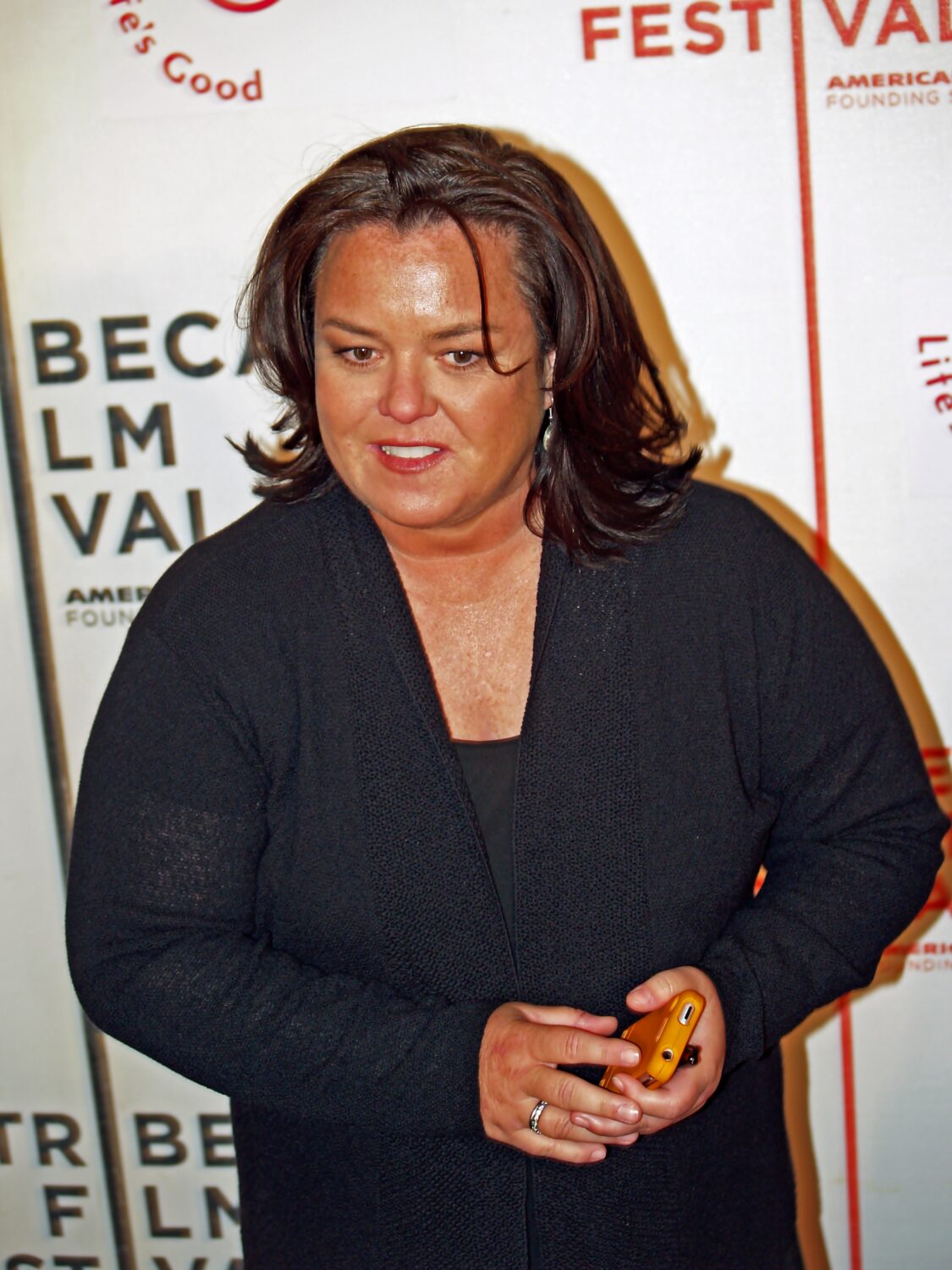
For most entertainers, reaching nine figures would be proof that the machine was working and a reason to keep it running. O’Donnell viewed it differently. She told Page Six that hearing she had reached $100 million produced an immediate reaction: “OK, now I’m done.”
She had achieved financial safety on a scale few people experience. Continuing merely to enlarge the total no longer felt like ambition. To her, it risked becoming excess without purpose.
Warner Bros. Put Another $100 Million on the Table.
The rejected offer makes the story especially striking. The Rosie O’Donnell Show became one of daytime television’s defining programs during its six-season run from 1996 to 2002. Its success was strong enough for Warner Bros. to offer O’Donnell another $100 million to remain for two more years.
Studio executives reportedly struggled to understand why she would turn it down. In Hollywood, the usual response to a hit is more seasons, money, and visibility. O’Donnell chose an ending instead.
She Wanted the Moments Television Could Not Replace
The money had already enabled O’Donnell to care for her family, support charitable work, and help people beyond her immediate circle. What it could not return was time.
She wanted to attend her children’s softball games and school plays. Those ordinary moments carried more value than another contract, even one worth $100 million. A television season can be renewed, while a child’s childhood cannot. Once those games and performances pass, no future paycheck can recreate them.
She Left While the Show Was Still a Daytime Giant
O’Donnell was not escaping a sinking production. Her show had become a cultural fixture built around celebrity interviews, Broadway performances, audience interaction and the host’s enthusiastic “Queen of Nice” image.
The program won five consecutive Daytime Emmy Awards for outstanding talk show, while O’Donnell won four consecutive awards as outstanding talk-show host. That record explains why the studio wanted her to stay. She left from a position of power, refusing to let success decide her future.
The Public Story Was Bigger Than Money Alone

The $100 million figure offers a dramatic explanation, but O’Donnell has also described emotional reasons for ending the show. In a 2022 interview with The New Yorker, she said that after the September 11 attacks, maintaining a relentlessly cheerful television persona became difficult. She no longer felt able to feel happy every day in a changed country.
Her departure reflected a need to live honestly, protect her family life, and leave a role that no longer felt fully authentic.
Her View of Wealth Challenges Hollywood’s Usual Script
O’Donnell’s explanation carried a broader criticism of extreme wealth. She said, “I don’t get the billionaires,” questioning why some people continue measuring achievement by money rather than by what that money can do for others.
It is a provocative message from someone who acknowledges possessing a huge fortune. Money had bought security, freedom, and the ability to give. Her point was that wealth should eventually provide an exit from endless accumulation, rather than become a trap that demands permanent pursuit.
Walking Away Did Not Mean Disappearing
Leaving daytime television did not end O’Donnell’s career. She later joined The View, hosted The Rosie Show on OWN, and acted in projects including American Gigolo and The L Word: Generation Q. She also remained a vocal public figure whose opinions frequently generated headlines.
The difference was control. She no longer had to carry a daily program or maintain the upbeat identity that made her famous. Financial independence allowed her to choose work based on interest and personal meaning rather than necessity.
Ireland Became Part of Her Next Chapter
O’Donnell moved to Ireland with her youngest child, Clay, after Donald Trump won the 2024 presidential election. She described the relocation as political and personal, saying she wanted to protect her peace and create a supportive environment for Clay, who is autistic and nonbinary.
Life in Ireland also became the subject of her stage work. Rather than retreating permanently, O’Donnell used the move as a reset, turning displacement, motherhood, politics and family history into a new creative chapter.
“Common Knowledge” Brings Her Story Back to New York
O’Donnell is returning to New York with Rosie O’Donnell: Common Knowledge, a one-woman show scheduled for a limited Off-Broadway run at the Daryl Roth Theatre from July 22 through August 8, 2026. The 75-minute production follows performances in Dublin, Edinburgh, Australia, Ireland, and Glasgow.
The show examines her childhood, public life, move abroad, and experience raising Clay. It lets O’Donnell revisit fame without returning to the format that once consumed her days.
Motherhood Sits at the Center of the Decision

O’Donnell lost her mother to breast cancer when she was 10, a wound that shaped much of her life and creative work. She has described Common Knowledge as a story about how a motherless daughter learned to mother her own children.
That theme explains why the rejected fortune still matters. O’Donnell did not merely quit a show after becoming rich. She chose presence over expansion. Raising Clay later gave her another perspective on how fame affected her parenting and how intimacy changes when a child needs additional support.
A Fortune Was Enough, but a Life Still Needed Living
Rosie O’Donnell’s decision remains startling because celebrity culture rarely celebrates stopping. Success is usually framed as something that must be multiplied, protected, and stretched for as long as possible.
She made the opposite calculation. With $100 million secured, another $100 million could not compete with family milestones, personal honesty, or freedom from a daily performance that had run its course. Her story is not really about how much money she possessed. It is about recognizing the moment money has done its job and refusing to let the chase consume everything it was supposed to protect.