Senate Votes to Limit Trump’s Iran War Powers in Rare Rebuke
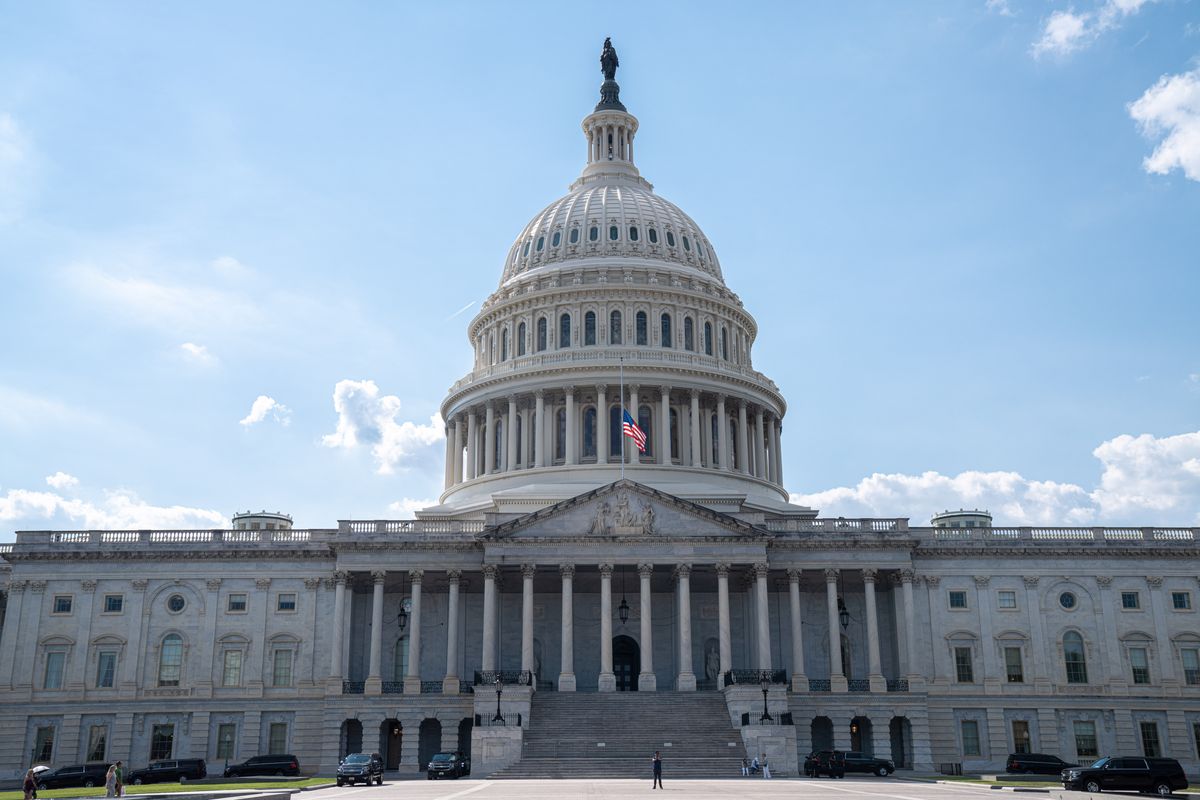
The Senate delivered one of the sharpest foreign policy rebukes of President Donald Trump’s second term, voting 50-48 to adopt a war powers resolution aimed at limiting his authority to continue military action against Iran without direct congressional approval. The vote immediately turned a long-running constitutional argument into a public political rupture, with lawmakers from both parties signaling that the White House no longer has a free hand to define the scope, cost, and duration of the Iran conflict on its own terms.
We are seeing a familiar Washington fight with unusually high stakes. Presidents often argue that they need flexibility to respond to threats abroad, especially when U.S. troops, allies, and strategic interests are involved. Congress, however, holds the constitutional power to declare war and control federal spending. The Senate vote matters because it moves the fight out of closed briefings and legal memos and into a recorded public vote, where every senator had to choose between executive power and congressional restraint.
Four Republicans Break With Trump as War Fatigue Spreads
The most politically damaging part of the vote for Trump was not just the final tally. It was the Republican breakaway. Susan Collins, Lisa Murkowski, Bill Cassidy, and Rand Paul joined most Democrats in backing the resolution, giving the measure enough support to pass despite opposition from the president’s allies. Their votes suggest that unease over Iran is no longer limited to Democrats, anti-war progressives, or Trump’s usual critics.
Rand Paul’s support aligns with his longstanding skepticism toward undeclared wars and expansive presidential war powers. Collins and Murkowski have often positioned themselves as institutional Republicans willing to break with party leadership on high-stakes votes. Cassidy’s support added another layer of concern because it showed the issue had moved beyond predictable dissenters. For the White House, the message was uncomfortable: even within the GOP, patience with an open-ended posture toward Iran has limits.
Democratic Sen. John Fetterman voted against the measure, giving the vote a more complicated shape than a simple party-line clash. Still, the broader political picture remains clear. The Senate majority, including four Republicans, put itself on record against continuing hostilities with Iran without explicit congressional authorization.
Why the War Powers Resolution Hits at Trump’s Strongman Image
The vote lands directly on one of Trump’s core political arguments: that he alone can project strength abroad and force adversaries into submission. For months, the administration has framed its Iran policy as a display of deterrence, pressure, and military seriousness. The Senate vote challenges that story by raising a sharper question: strength for what purpose, at what cost, and under whose authority?
War powers fights are never just about procedure. They are about who gets to decide when American military force moves from temporary action to sustained conflict. Trump’s critics argue that the Iran conflict has moved far beyond the limited emergency response that presidents often claim as commander in chief. Supporters of the resolution say the administration must come to Congress if it wants to keep U.S. forces engaged in hostilities.
That makes this vote a constitutional rebuke and a political one. It tells Trump that even a Republican-led Washington cannot fully erase Congress from decisions involving war, funding, casualties, diplomacy, and the risk of escalation.
The House Vote Set the Stage for the Senate Showdown
The Senate action followed an earlier House vote that adopted the Iran war powers measure by a narrow margin. That earlier vote showed that opposition was already building in the lower chamber, where a handful of Republicans joined Democrats to push back against the administration. Once the House passed the measure, pressure shifted to the Senate, where the final vote became a test of whether Republican dissent would grow or collapse under party pressure.
It did not collapse.
The result was a rare moment where both chambers moved in the same direction against a sitting president’s war posture. That does not happen often, especially when the president’s own party still controls major levers of power. It becomes even more striking because foreign policy votes often trigger intense party discipline, with lawmakers reluctant to appear weak on national security.
What the Resolution Actually Tries to Do
The resolution directs the president, under the War Powers Resolution, to remove U.S. armed forces from hostilities with Iran unless Congress authorizes the action. It leaves room for defensive military action if U.S. forces face an imminent threat, but it rejects the idea that the president can continue a broader campaign without clear approval from lawmakers.
That distinction matters. Congress is not saying the United States cannot defend itself. It is saying that sustained hostilities with Iran cannot be treated as one man’s decision. If the administration believes the war is necessary, the Senate vote suggests it should make the case openly, secure authorization, and accept the political responsibility that comes with it.
For everyday Americans, the issue reaches beyond Washington procedure. War powers affect troop deployments, defense spending, oil markets, diplomatic risk, veterans’ care, and the possibility of a wider regional conflict. The Senate vote gives voters a clearer view of where lawmakers stand when the question is not abstract patriotism, but real authority over real war.
The Vote Is Symbolic, but Symbolic Does Not Mean Weak
Supporters of Trump quickly argued that the resolution may not legally force the president’s hand. That argument has weight because war powers law has long been contested, and presidents from both parties have resisted congressional efforts to limit military action. The White House has also rejected the measure’s force, framing it as unconstitutional or nonbinding.
Still, calling the vote symbolic does not make it meaningless. In Washington, symbolism can shape negotiations, funding battles, party unity, court fights, and public opinion. A president can ignore a resolution more easily than a funding cutoff, but ignoring both chambers of Congress carries political risk. It gives critics a simple message: the president was warned, and Congress voted to pull back.
The vote also creates a paper trail. If hostilities resume or expand, lawmakers now have a recorded position to point to. That matters in future debates over defense spending, authorizations, investigations, and election-year messaging.
Iran Policy Now Becomes a 2026 Political Liability
The timing could make the vote even more damaging for Trump. With the country already divided over foreign policy, inflation, federal spending, and domestic priorities, the conflict with Iran risks becoming a political burden. Voters who supported Trump for a tougher foreign policy may still question a prolonged war with unclear costs. Voters already skeptical of him may see the Senate vote as proof that even some Republicans think the administration crossed a line.
The political danger grows because foreign conflicts can quickly collide with household concerns. If military spending rises, if energy prices jump, if U.S. troops remain exposed, or if diplomacy stalls, the war powers vote becomes part of a larger story about priorities. Opponents can argue that Washington is spending heavily abroad while Americans face pressure at home. Supporters of Trump can argue that Congress is weakening the president during sensitive negotiations. Both arguments are likely to shape the next round of political messaging.
Trump’s Iran Strategy Faces Pressure From Congress and Public Opinion
The Senate vote also shows that Trump’s Iran strategy faces pressure from more than lawmakers. Public unease over the conflict has been building, and that matters because wars become harder to defend when voters stop believing the cost is worth it. Even presidents with strong party loyalty can struggle when a foreign conflict begins to look expensive, open-ended, or poorly explained.
The White House wants to frame the Iran issue around deterrence, security, and negotiating leverage. Critics want to frame it around unauthorized war, constitutional overreach, and the danger of another Middle East conflict without a clear exit. The Senate vote gives the critics a stronger platform, especially because the resolution passed with Republican votes.
That bipartisan element is what makes the rebuke stand out. A purely Democratic vote would have been easier for Trump to dismiss as partisan theater. A vote that includes GOP senators is harder to brush aside.
Congress Is Testing Whether It Still Has War-Making Power
At its core, this fight is about whether Congress still has meaningful authority over war. The War Powers Resolution was created after the Vietnam era to prevent presidents from dragging the country into prolonged conflicts without legislative consent. Over the decades, however, presidents have repeatedly stretched, challenged, or bypassed those limits.
The Iran vote is a test case for whether Congress is willing to do more than complain after military action has already begun. It is also a test of whether lawmakers will defend their institutional role even when doing so creates friction with a president from their own party.
That is why the vote will echo beyond Iran. Future presidents will watch how Trump responds. Future Congresses will watch whether the resolution changes anything. Courts may eventually face questions about enforceability. Voters will watch whether lawmakers who supported the resolution follow through with funding limits, oversight hearings, or new authorization demands.
A Rare Rebuke That Could Shape the Next Phase of the Iran Conflict
The Senate vote does not immediately end the Iran conflict, nor does it settle decades of debate over presidential war powers. It does something more immediate: it puts Congress on record. It tells the White House that the Iran file is no longer just a matter for the Situation Room, Pentagon briefings, or presidential statements. It is now a full political fight inside the legislative branch.
For Trump, the resolution creates a fresh problem at a sensitive moment. If he escalates, critics will say he ignored Congress. If he pulls back, opponents will argue that the vote forced pressure on the White House. If he seeks authorization, he risks a bruising public debate over the war’s purpose, costs, and endgame.
For Congress, the vote creates its own challenge. Passing a resolution is easier than enforcing one. Lawmakers who voted to limit the war will now face pressure to prove that the vote was more than a headline. That may mean oversight, funding restrictions, legal action, or renewed pressure for a formal debate over military authorization.
What makes this moment unusual is not just that the Senate challenged Trump. Is it enough that Republicans joined Democrats to make the challenge real? In a deeply polarized Washington, a 50-48 vote on war powers sends a blunt message: even a president with a loyal base can face resistance when military action stretches too far, too long, and too far beyond Congress.