Should Members of Congress Go to Prison for Profiting From USAID Fraud? Evidence Must Come First
Prison is a criminal sentence, not a button people press when a political allegation goes viral.
If a member of Congress knowingly accepted bribes, manipulated federal funding, or secretly profited from fraudulent USAID contracts, that lawmaker should face the same investigation, prosecution, and possible prison sentence as anyone else. A congressional pin is not a “get out of jail free” card.
There is just one major problem with the claim currently circulating online: the publicly available evidence reviewed for this article does not establish that unnamed members of Congress personally profited from a USAID scam.
Real USAID fraud cases exist. Some are enormous. But turning documented misconduct by agency officials and contractors into an accusation against members of Congress requires evidence that has not yet been publicly produced.
The explosive congressional allegation arrives without receipts
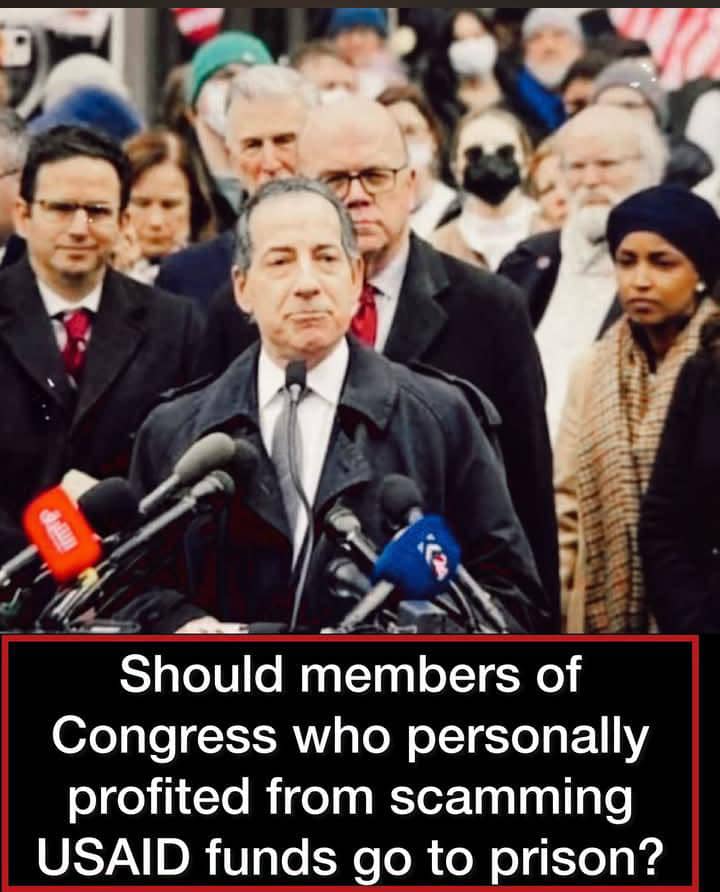
A June 2026 article claimed that “several members of Congress” were under formal review after organizations connected to lawmakers allegedly received USAID grants or contracts. However, the story did not name the lawmakers, identify the recipient organizations, or provide case numbers, ethics complaints, financial records, or links to the documents supposedly proving personal profit.
The article itself acknowledged that no charges had been filed and that ethics panels had not confirmed how much money was connected to individual lawmakers. Its source list consisted largely of general descriptions, such as a GAO audit, congressional filings and a watchdog database, without direct links or enough details to independently locate the alleged evidence.
That does not prove the allegation is false. It means the allegation remains unsupported. In a corruption story, phrases such as “organizations connected to lawmakers” can cover everything from an actual financial interest to a former staffer serving on a nonprofit board. Those situations are not legally or ethically identical.
There is also reason to handle viral USAID claims carefully. One widely shared allegation said Nancy Pelosi’s vineyard received $14 million from USAID. PolitiFact traced the claim to a satirical account and found no USAID spending records showing that Pelosi or the vineyard received the money.
The lesson is simple: hashtags are not evidence, and outrage cannot substitute for bank records.
USAID fraud is real, but the verified defendants were not lawmakers
Anyone tempted to dismiss all concerns about USAID fraud would also be ignoring the record.
In June 2025, the Justice Department announced that former USAID contracting officer Roderick Watson and corporate executives Walter Barnes, Darryl Britt and Paul Young had pleaded guilty in a bribery scheme involving at least 14 prime contracts worth more than $550 million. The companies Apprio and Vistant also admitted criminal liability. None of the four defendants identified by prosecutors was a member of Congress.
According to court documents summarized by prosecutors, Watson received more than $1 million in alleged bribes, including cash, electronics, mortgage down payments, event tickets and jobs for relatives. Prosecutors said he manipulated the procurement process, disclosed sensitive information and helped favored companies secure contracts.
U.S. Attorney Kelly Hayes said Watson was supposed to serve Americans rather than himself, adding that “corruption within a federal government agency is intolerable.” Matthew Galeotti of the Justice Department said the defendants sought to enrich themselves “at the expense of the American taxpayers.” USAID investigator Sean Bottary was equally direct: “Corruption in government programs will not be tolerated.”
That is what a substantiated corruption case looks like. It has names, companies, court documents, guilty pleas, financial details and prosecutors willing to attach their reputations to the allegations.
USAID’s inspector general has also documented serious oversight weaknesses. In March 2026 testimony, Associate Deputy Inspector General Adam Kaplan described delayed monitoring reports, inadequate staffing and poor visibility over sub-award recipients. He said investigators had uncovered unfinished roads reported as complete, food for children replaced with animal feed and deliveries that never arrived. His prescription was straightforward: investigators must “follow the money, ask difficult questions, and hold perpetrators accountable.”
GAO has similarly urged stronger fraud controls across foreign-assistance programs, reporting that dozens of recommendations remained unresolved.
Prison should follow proof, prosecution, and conviction
Federal law does not give members of Congress permission to turn government programs into personal businesses.
The House Ethics Manual says members may not use their positions for personal gain. It also states that members may not enjoy benefits under contracts with the federal government or receive compensation produced by improperly using congressional influence.
Title 18, Section 431 of the U.S. Code prohibits a member from directly or indirectly holding or benefiting from a contract made with the United States. The statute provides for fines, invalidation of the contract, and repayment of federal money. More serious conduct involving bribery, fraud, money laundering, false statements, or conspiracy can expose a lawmaker to additional charges carrying possible imprisonment. Federal bribery law specifically includes members of Congress within its definition of public officials.
Removal from Congress would be a separate decision. The Constitution allows the House or Senate to expel one of its members with a two-thirds vote, while criminal prosecution remains the responsibility of law enforcement and the courts. Congressional punishment does not protect a lawmaker from prosecution.
So, should members of Congress who personally profited from scamming USAID funds go to prison?
Yes, if investigators prove criminal conduct and a court convicts them. They should also repay the money, lose any corrupt contracts and face congressional discipline.
But the country should demand the same standard from those making accusations as it demands from those spending taxpayer dollars: show the records, name the people and prove the case. Until that happens, declaring unnamed lawmakers guilty is not accountability. It is a verdict searching for evidence.