Should Trump Family Profits Be Used to Pay Down the National Debt? The Question Is No Longer Just Political Theater
There is a reason this idea keeps catching fire online: it is simple, angry, and easy to understand. If a president’s family gets richer while he is in office, some Americans want that money clawed back and sent straight to the Treasury. No committees. No velvet speeches. No “thoughts and prayers” for the national debt. Just take the gains and put them where taxpayers can see them.
The problem is that the real story is messier than the slogan. There is verified reporting that Donald Trump’s businesses received payments linked to foreign governments during his first term. There is also fresh financial disclosure reporting showing massive crypto-related income during his second term. But there is not a verified public accounting of “all wealth accumulated by the Trump family” across both terms, and no court has ordered a blanket seizure of those assets.
That distinction matters. This debate is not really about whether the money would erase America’s debt. It would not. The debt is enormous. As of June 3, 2026, total gross national debt stood at $39.20 trillion, according to the Joint Economic Committee’s debt update. The same update said the debt had been rising by an average of $8.19 billion per day over the previous year.
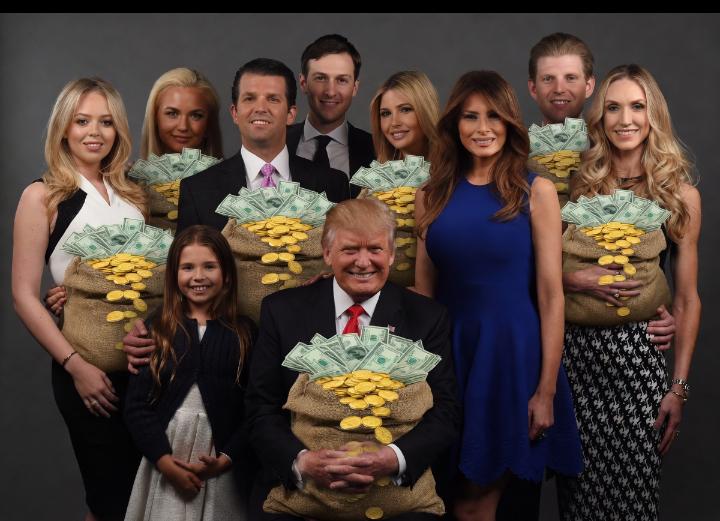
So this fight is less about arithmetic and more about trust. Americans are asking a blunt question: should public office be allowed to become a private jackpot?
The Money Trail Has Two Very Different Chapters
The first Trump term produced the original emoluments fight. In January 2024, Democrats on the House Oversight Committee released a report saying Trump received at least $7.8 million from 20 foreign governments through his businesses while president. The committee said those payments involved only four of the more than 500 entities Trump owned at the time, meaning the documented figure may not capture the full picture.
Rep. Jamie Raskin did not soften his language. He said Trump “repeatedly and willfully violated the U.S. Constitution” by failing to divest from his business empire and allowing his companies to accept payments from foreign governments. He also argued that “each dollar” accepted from foreign governments violated the Constitution’s ban on foreign emoluments without congressional consent.
The Constitution’s Foreign Emoluments Clause is not some obscure internet invention. The Library of Congress summarizes it plainly: no person holding an office of profit or trust under the United States may accept any present, emolument, office, or title from a foreign state without congressional consent.
Then came the second-term money story, and this one moved from hotel rooms and foreign delegations to crypto. Reuters reported that Trump’s 2025 financial disclosures showed more than $1.4 billion in income from family crypto ventures. The filings showed nearly $800 million from World Liberty Financial, a crypto venture Trump co-founded with his sons, plus $635 million from sales of Trump meme coins. Reuters also estimated that the Trump family has made at least $2.3 billion from crypto-related projects since Trump returned to the White House in 2025.
That is why the “seize it and pay down the debt” argument is getting louder. It feels like a clean answer to a dirty-looking problem.
Seizing the Money Sounds Simple, But the Law Is Not a Sledgehammer
Here is the catch: frustration is not the same thing as legal authority. Even if voters believe the Trump family should not profit from presidential power, the government cannot simply grab assets because the public is furious. There would need to be a legal basis, a process, and likely a court fight.
That is where the story becomes awkward. Presidents and vice presidents are exempt from the main federal conflict-of-interest statute that applies to many executive branch officials. Don Fox, a former acting head of the federal ethics office, told Reuters that every post-Watergate president had managed finances as though conflict rules applied, but “with Trump, those norms are just totally out the window.”
The White House rejects the conflict-of-interest framing. Spokesperson Anna Kelly told Reuters, “Neither the President nor his family has ever engaged, or will ever engage, in conflicts of interest,” adding that Trump’s actions were taken “in the best interest of the American people.”
Trump has also defended himself directly. After the disclosure, he told reporters, “I don’t get involved … We have funds that run my money.” He added, “You know why I’m profiting? Because the stock market’s going up, everybody’s profiting.”
That response may satisfy his supporters, but it does not close the ethics debate. The key issue is not whether Trump had businesses before politics. Of course he did. The issue is whether a sitting president, his family, or companies tied to them should be allowed to benefit from industries and foreign relationships shaped by the administration’s own policies.
If Congress wanted to force repayment, disgorgement, or tighter restrictions, it would likely need legislation or aggressive oversight. If prosecutors or litigants wanted assets clawed back, they would need a specific legal claim. “It looks bad” may be politically powerful, but courts generally need more than that.
The National Debt Angle Is Symbolic, But It Still Hits Hard

Let’s be honest: even billions would barely dent a $39 trillion debt. If Reuters’ estimate of at least $2.3 billion in Trump family crypto-related gains since his If Reuters’ estimate of at least $2.3 billion in Trump family crypto-related gains since his return to office were somehow sent to the Trey of the recent average increase in the national debt.
But symbols matter in politics. A government that tells ordinary Americans to tighten their belts while politically connected families appear to cash in is asking for backlash. That backlash gets stronger when people are already worried about grocery prices, housing, medical bills, and taxes.
The sharper proposal may not be “seize everything tomorrow.” The sharper proposal is this: require full disclosure, ban presidents and vice presidents from holding certain high-risk assets while in office, force divestment or true blind trusts, and create a clear repayment mechanism for unconstitutional emoluments or proven office-related enrichment.
That would turn public anger into a workable rule. It would also prevent the same fight from returning every four years with new names, new businesses, and new excuses.
The Trump family wealth debate is not going away because it sits at the intersection of money, power, and public trust. People can argue over whether a seizure is too extreme. They can argue over whether the crypto profits were clever business or a glaring conflict. But the bigger point is harder to dodge: the presidency should not feel like a private tollbooth.
If money was earned legally and independently, prove it with sunlight. If money was earned because public office opened doors, the public has every right to demand it back.