Tired of “We Should Hang Out” Going Nowhere? Board Game Cafés Give Friends a Better Plan
Another dinner reservation, another round of drinks, another group chat that never quite produces an actual evening out. Board game cafés offer a different answer to the familiar question of what friends should do together: pick a table, choose a game, and let the activity guide the gathering. At businesses such as Snakes & Lattes and New York’s The Uncommons, customers can combine food and drinks with access to extensive game libraries, making the game itself part of the outing.
Their appeal isn’t that everyone suddenly wants to become a competitive strategist. It’s that the format combines a place to sit, something to do and people to do it with. In a 2024 article published by GV Wire, Greg May, founder of The Uncommons and a co-owner of Hex & Company, described the businesses as offering “a new type of community space.” The details explain why: these cafés accommodate everything from casual friend gatherings to organized clubs and special events.
The Game Gives Everyone Something to Talk About
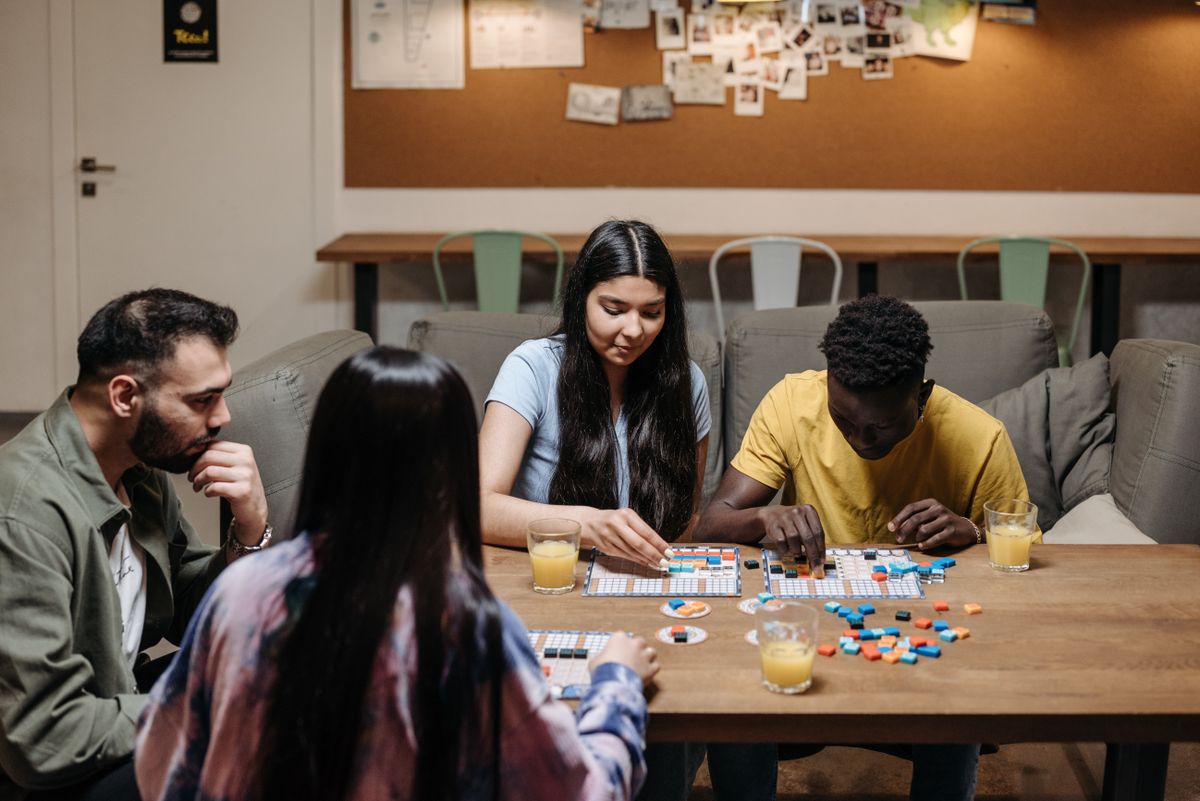
A board game café takes the basic coffee-shop gathering and adds a shared activity. The Uncommons describes its concept as bringingtogether coffee and games so people can eat, drink, and play, with a per-person fee providing access to its library. Its selection includes familiar classics alongside party, strategy, family-friendly, and cooperative games. That variety matters because an evening doesn’t have to revolve around the most experienced player’s favorite complicated game, or the same battered box everyone already owns.
For friends who want more than another conversation across a restaurant table, the attraction is participation. Everyone has something to respond to, whether that means interpreting a clue, making a move, or deciding what the group should try next. Anne-Marie De Witt, co-owner and founder of publisher Fireside Games, put it simply in the GV Wire article: “Board games are inherently social.” She explained that players can work together or compete within a shared set of rules and expectations.
That built-in activity can also be useful when the group doesn’t know one another particularly well. Drew Lovell, managing member and co-owner of Chicago’s Bonus Round Cafe, told the same publication that “board games themselves provide an easy icebreaker and way to fill awkward moments of silence.” His comments focused on first dates, but they highlight the format’s broader appeal:the evening comes with something to discuss besides deciding who should start the next conversation.
There’s an important distinction between that appeal and claiming these businesses have solved loneliness or replaced other social spaces. The available reporting offers owners’ observations and examples of customers gathering, not proof of a universal social benefit. What it does establish is a flexible setting for spending time together. Hex & Co., for instance, explicitly welcomes hobbyists, students, professionals, and families, and describes visits ranging from a quick coffee stop to a multi-hour game session.
You Don’t Have to Arrive Knowing the Rules
An enormous shelf of unfamiliar boxes can look less like entertainment and more like homework. At some cafés, staff help remove that hurdle. Snakes & Lattes says its Game Experts recommend titles, explain the rules, and help customers get started without having to work through lengthy rulebooks. That service is an important part of what distinguishes a staffed game café from simply bringing a box to an ordinary coffee shop and hoping someone remembers how it works.
It also gives newcomers permission to start somewhere other than the most elaborate-looking game in the room. The Uncommons lists party games, cooperative options, and family-friendly titles alongside more involved strategy games. Tell the staff what kind of evening you want, how many people are playing, and whether anyone is new to the hobby. At a café offering game recommendations, those details give the staff a practical starting point instead of leaving your group to judge every box by its cover.
Libraries offer another useful distinction: customers can explore games without buying each one first. The Uncommons’ FAQ describes access to more than 1,000 games through its gaming fee, while Hex & Co. also advertises an open library of more than 1,000 titles. Those are the businesses’ own stated collection sizes, not an industry-wide standard. Still, they illustrate why the outing can interest both regular players looking for variety and beginners who haven’t developed a personal collection.
The people helping customers navigate those choices deserve attention, too. In Gizmodo’s 2023 reporting about organizing efforts at Hex & Co.,game designer and performer Dillin Apelyan credited employees with making the space welcoming. “The reason Hex & Co. is such a wonderful environment is because of the staff most of all,” Apelyan said. That perspective adds an important layer to the cheerful café concept: the experience depends on people providing hospitality and game knowledge, not just shelves full of colorful boxes.
Related: Stop Wasting Money: 10 Airport Purchases That Could Be Draining Your Wallet
A Good Evening Starts With Checking the Details
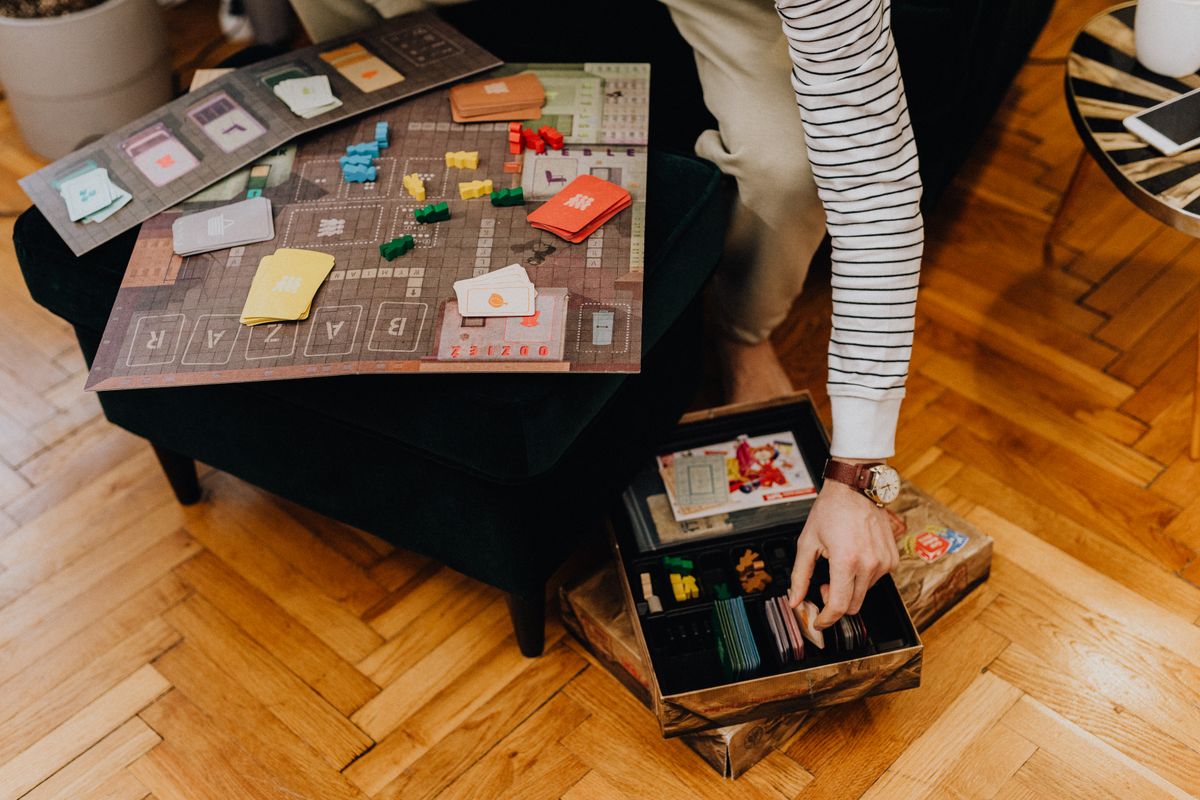
These cafés aren’t necessarily free-to-linger coffee shops, so check the house rules before inviting everyone. The Uncommons currently lists a $15-per-person gaming fee, with a three-hour limit during peak periods, on its About page. Snakes & Lattes says admission prices vary by location. Food and drink offerings also vary by location. Knowing the gaming charge and any time restrictions beforehand makes it easier to choose a place that fits the group’s budget and plans.
Reservations are another detail worth settling rather than leaving to chance. Snakes & Lattes recommends booking, especially for evenings and weekends, while accepting walk-ins when space allows. If you want to meet new people rather than arrive with an established group, look for a specifically advertised social event. The company lists social game nights, trivia and puzzle competitions; an ordinary table booking, by contrast, doesn’t itself promise introductions to other customers.
The strongest reason to try a board game café is also the least complicated: it turns an intention to spend time together into an actual activity. May’s examples include backgammon and mahjong clubs, team-building gatherings and engagement parties, different occasions connected by a shared table. You don’t need to become the friend who owns 40 games or understands every strategy. You just need a gathering that offers more direction than “we should do something,” with a game ready when everyone arrives.