Trump Panics New Democratic Plan Could Leave the Republican Party ‘DEAD’
Donald Trump rarely sounds afraid of a political fight. He attacks, mocks, threatens, and declares victory before the first punch is fully thrown. But his latest reaction to a Democratic proposal targeting the U.S. Supreme Court carried a different tone: not confidence, but alarm. After reports surfaced that progressive House Democrats had drafted a resolution calling for major Supreme Court changes, Trump erupted online with a blunt warning: “They do this, and the Republican Party is DEAD!” The proposal, according to the report he shared, would push for term limits for Supreme Court justices, additional seats on the Court, a stronger ethics code, and elimination of the Senate filibuster.
That reaction is the real story. A proposal with steep political odds does not usually provoke a death notice for an entire party. Yet Trump’s response suggests that Democrats may have touched the one institution that now sits at the center of Republican political power: the 6-3 conservative Supreme Court majority.
Why Trump’s Supreme Court Outburst Hit So Hard
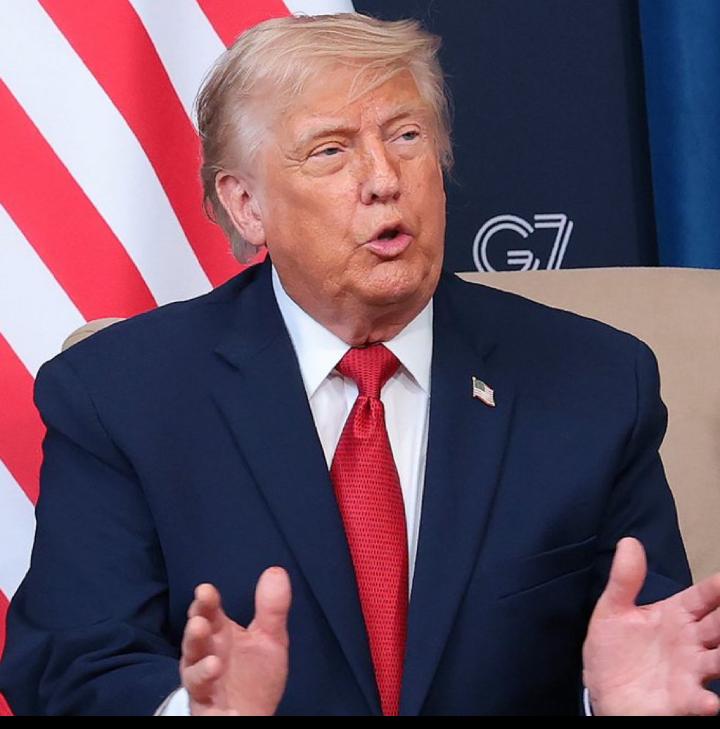
Trump’s warning was dramatic because the Democratic proposal is far from becoming law. Court expansion remains divisive even among Democrats. Term limits raise serious constitutional and legislative questions. Eliminating the filibuster would require Senate support that is far from guaranteed. Yet Trump did not treat the plan like a symbolic progressive wish list. He treated it like an existential threat.
That matters because the modern Republican Party has benefited enormously from the current Supreme Court. Trump appointed three justices during his first presidency, helping cement a conservative majority that has reshaped major areas of American law. The majority has influenced decisions on abortion, gun rights, campaign finance, executive power, administrative agencies, affirmative action, environmental regulation, and voting rights. So when Democrats begin talking openly about changing the Court itself, Trump hears something larger than procedural reform. He hears the possibility that Republicans could lose the long-term judicial advantage they spent decades building.
The Democratic Plan Targets the Court’s Power Structure
The Democratic resolution reportedly includes several major ideas: Supreme Court term limits, adding more justices, a binding ethics code, and ending the Senate filibuster. Each one would represent a direct challenge to the current structure of judicial power. Term limits would weaken the lifetime-control model that allows justices to serve for decades. Court expansion would dilute the current conservative majority by adding new seats. Ethics reform would respond to years of scrutiny surrounding gifts, travel, political connections, and public trust. Ending the filibuster would remove the 60-vote barrier that currently blocks most major Senate legislation.
Together, these ideas point to a single message: some Democrats are no longer satisfied with merely criticizing Supreme Court rulings. They are now discussing whether the Court’s structure itself should change. That is why Trump’s reaction was so intense. He understands that the Supreme Court is not just another political issue. It is the institution that can preserve conservative victories even when Republicans lose elections.
The Voting Rights Act Decision Lit the Fuse
The Democratic proposal did not appear in isolation. It came after the Supreme Court’s April 2026 decision in Louisiana v. Callais, a case that sharply weakened the role of Section 2 of the Voting Rights Act in redistricting disputes. The Supreme Court held that Louisiana’s creation of a second majority-minority congressional district was an unconstitutional racial gerrymander because the Voting Rights Act did not require that map. The official opinion stated that no compelling interest justified Louisiana’s use of race in creating the district.
Voting rights advocates viewed the decision as a devastating blow. The Brennan Center said the ruling “substantially rewrote Section 2” and undermined longstanding protections against racial discrimination in voting maps. The Washington Post reported that the decision weakened a key provision of the landmark law and could help trigger new Republican redistricting efforts, especially in the South. For Democrats, the ruling became another example of a conservative Court changing the rules of democracy from the bench. For Trump, the Democratic response became a warning that the party out of power may eventually try to change the rules around the Court.
The Filibuster Fight Is Really About Future Control
Trump also warned that Democrats would “TERMINATE THE FILIBUSTER” if they regained full power. That statement reveals another layer of the conflict. The filibuster is often described as a Senate tradition that protects the minority party. In practice, it also blocks major reforms unless one party can reach 60 votes. For Democrats who want voting rights legislation, abortion protections, labor reform, or Supreme Court changes, the filibuster is a wall. For Republicans who fear Democratic majorities, it is a shield.
Trump’s position has long been flexible depending on political convenience. When the filibuster blocks Republican goals, he wants it gone. When Democrats might use its removal to pass sweeping reforms, he warns of disaster. That contradiction is why this moment is politically revealing. Trump is not defending the filibuster as a sacred institution. He is warning Republicans that the tool protecting them today could become useless tomorrow if Democrats decide to play more aggressively.
Republicans Built Power Through the Courts
To understand Trump’s panic, we need to understand the long game Republicans played. For decades, conservative legal organizations, Senate Republicans, and GOP presidents worked to transform the federal judiciary. The most famous turning point came in 2016, when Senate Republicans refused to consider Merrick Garland’s Supreme Court nomination during Barack Obama’s final year in office. Trump later filled that seat with Neil Gorsuch. He then appointed Brett Kavanaugh and Amy Coney Barrett, creating the conservative majority that now defines the Court.
From a Republican perspective, this was a historic achievement. From a Democratic perspective, it was proof that Republicans were willing to use institutional hardball to secure lasting power. That is why Democratic talk of court reform has grown louder. Some progressives argue that Republicans already changed the norms, so Democrats should stop pretending the old rules still exist. Trump’s “Republican Party is DEAD” warning shows that he understands the danger of that argument. If Democrats fully embrace institutional hardball, the Court may no longer be a permanent Republican fortress.
The Supreme Court’s Legitimacy Crisis Is Fueling Reform Talk
Public debate over Court reform has also grown because trust in the Supreme Court has been under pressure. The Brennan Center has argued that today’s Court has wielded enormous power for decades with limited accountability, while proposals such as 18-year term limits would create regularized appointments and reduce the randomness of vacancies. Ethics concerns have added fuel to the debate. Critics argue that lifetime tenure, weak accountability, and ideological polarization have made the Court feel less like an independent guardian of law and more like another partisan battlefield.
Republicans reject that framing. They argue that court expansion is “court packing” and would destroy judicial independence. But Democrats counter that the Court has already been politicized through nomination battles, timing games, and rulings that reshape national policy. This is the fight Trump’s outburst exposed. We are no longer watching a narrow legal debate. We are watching a struggle over whether the Supreme Court should remain structurally untouched while its rulings transform American politics.
Trump’s Warning Exposes the GOP’s Dependence on the Court
Trump’s reaction may have been exaggerated, but it revealed a serious political truth. The Republican Party’s future does not depend only on elections. It also depends heavily on the courts.
A conservative Supreme Court can uphold Republican-backed maps, limit federal regulatory power, expand executive authority, restrict civil rights enforcement, weaken campaign finance limits, and block Democratic legislation. That makes the Court a political asset even when Republicans do not control Congress or the White House. So when Trump says the Republican Party would be “dead” if Democrats changed the Court, he is not only complaining about reform. He is admitting how important the current Court is to Republican survival.
A New Supreme Court War Has Begun
The Democratic proposal may not become law soon, but it has already achieved one thing: it forced Trump to reveal what he fears. He does not fear Democrats merely criticizing the Supreme Court. He has lived with that for years. He fears Democrats deciding that the Court’s structure is no longer untouchable. He fears a future majority willing to do what Republicans have done for decades: use power to build more power.
That is why this fight will not disappear. The Supreme Court now sits at the center of America’s deepest political conflicts: voting rights, presidential power, race, democracy, corruption, abortion, money, and representation. Trump’s warning was meant to frighten Republicans into action. But it also gave Democrats a roadmap. If one proposal can make the president declare that the Republican Party is “DEAD,” then the real vulnerability may not be Democratic overreach. It may be that the GOP’s greatest strength the Supreme Court it built has also become its most fragile political dependency. Trump Panics New Democratic Plan Could Leave the Republican Party ‘DEAD’
Donald Trump rarely sounds afraid of a political fight. He attacks, mocks, threatens, and declares victory before the first punch is fully thrown. But his latest reaction to a Democratic proposal targeting the U.S. Supreme Court carried a different tone: not confidence, but alarm. After reports surfaced that progressive House Democrats had drafted a resolution calling for major Supreme Court changes, Trump erupted online with a blunt warning: “They do this, and the Republican Party is DEAD!” The proposal, according to the report he shared, would push for term limits for Supreme Court justices, additional seats on the Court, a stronger ethics code, and elimination of the Senate filibuster.
That reaction is the real story. A proposal with steep political odds does not usually provoke a death notice for an entire party. Yet Trump’s response suggests that Democrats may have touched the one institution that now sits at the center of Republican political power: the 6-3 conservative Supreme Court majority.
Why Trump’s Supreme Court Outburst Hit So Hard
Trump’s warning was dramatic because the Democratic proposal is far from becoming law. Court expansion remains divisive even among Democrats. Term limits raise serious constitutional and legislative questions. Eliminating the filibuster would require Senate support that is far from guaranteed. Yet Trump did not treat the plan like a symbolic progressive wish list. He treated it like an existential threat.
That matters because the modern Republican Party has benefited enormously from the current Supreme Court. Trump appointed three justices during his first presidency, helping cement a conservative majority that has reshaped major areas of American law. The majority has influenced decisions on abortion, gun rights, campaign finance, executive power, administrative agencies, affirmative action, environmental regulation, and voting rights. So when Democrats begin talking openly about changing the Court itself, Trump hears something larger than procedural reform. He hears the possibility that Republicans could lose the long-term judicial advantage they spent decades building.
The Democratic Plan Targets the Court’s Power Structure
The Democratic resolution reportedly includes several major ideas: Supreme Court term limits, adding more justices, a binding ethics code, and ending the Senate filibuster. Each one would represent a direct challenge to the current structure of judicial power. Term limits would weaken the lifetime-control model that allows justices to serve for decades. Court expansion would dilute the current conservative majority by adding new seats. Ethics reform would respond to years of scrutiny surrounding gifts, travel, political connections, and public trust. Ending the filibuster would remove the 60-vote barrier that currently blocks most major Senate legislation.
Together, these ideas point to a single message: some Democrats are no longer satisfied with merely criticizing Supreme Court rulings. They are now discussing whether the Court’s structure itself should change. That is why Trump’s reaction was so intense. He understands that the Supreme Court is not just another political issue. It is the institution that can preserve conservative victories even when Republicans lose elections.
Republicans Built Power Through the Courts
To understand Trump’s panic, we need to understand the long game Republicans played. For decades, conservative legal organizations, Senate Republicans, and GOP presidents worked to transform the federal judiciary. The most famous turning point came in 2016, when Senate Republicans refused to consider Merrick Garland’s Supreme Court nomination during Barack Obama’s final year in office. Trump later filled that seat with Neil Gorsuch. He then appointed Brett Kavanaugh and Amy Coney Barrett, creating the conservative majority that now defines the Court.
From a Republican perspective, this was a historic achievement. From a Democratic perspective, it was proof that Republicans were willing to use institutional hardball to secure lasting power. That is why Democratic talk of court reform has grown louder. Some progressives argue that Republicans already changed the norms, so Democrats should stop pretending the old rules still exist. Trump’s “Republican Party is DEAD” warning shows that he understands the danger of that argument. If Democrats fully embrace institutional hardball, the Court may no longer be a permanent Republican fortress.
The Supreme Court’s Legitimacy Crisis Is Fueling Reform Talk
Public debate over Court reform has also grown because trust in the Supreme Court has been under pressure. The Brennan Center has argued that today’s Court has wielded enormous power for decades with limited accountability, while proposals such as 18-year term limits would create regularized appointments and reduce the randomness of vacancies. Ethics concerns have added fuel to the debate. Critics argue that lifetime tenure, weak accountability, and ideological polarization have made the Court feel less like an independent guardian of law and more like another partisan battlefield.
Republicans reject that framing. They argue that court expansion is “court packing” and would destroy judicial independence. But Democrats counter that the Court has already been politicized through nomination battles, timing games, and rulings that reshape national policy. This is the fight Trump’s outburst exposed. We are no longer watching a narrow legal debate. We are watching a struggle over whether the Supreme Court should remain structurally untouched while its rulings transform American politics.
Why the Proposal Is Unlikely but Still Dangerous for Republicans
The Democratic plan faces major obstacles. Court expansion does not have unanimous Democratic support. Ending the filibuster is politically difficult. Term limits could require careful statutory design or constitutional arguments. A binding ethics code would face institutional resistance. But politics is not only about what can pass today. It is also about what ideas become acceptable tomorrow.
A decade ago, expanding the Supreme Court was a fringe conversation. Today, it is part of mainstream progressive debate. Term limits once sounded radical to many voters; now they are frequently discussed as a possible legitimacy reform. The filibuster was once defended by both parties; now each side fears what the other would do if it disappeared. That shift is what should worry Republicans. The proposal may not pass now, but it signals a growing Democratic willingness to challenge the structures that protect conservative judicial power.