Trump Says One Phone Call Changed California Politics. The Claim Is Sparking Debate.
Donald Trump has reignited a familiar political firestorm after suggesting that a single phone call from him was enough to shift California’s election results and alter the trajectory of a competitive race. The claim delivered in typical Trump fashion, as both assertion and anecdote has quickly become the subject of debate among election experts, political opponents, and supporters who see it as either political bravado or evidence of extraordinary influence.
What makes the statement particularly combustible is not just what was said, but what it implies: that the outcome of a complex, statewide democratic process in the nation’s most populous state can be meaningfully changed through direct presidential intervention.
In California’s tightly regulated electoral system, where millions of ballots are cast by mail and counted over several days, that suggestion collides sharply with how elections are actually administered. Yet in the political arena, perception often travels faster than process.
A Claim That Centers on a Single Call
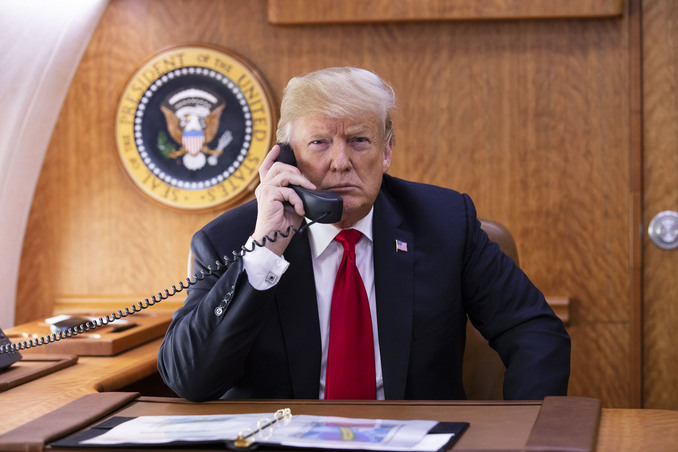
At the heart of the controversy is Trump’s assertion that he intervened directly in California politics by phone, influencing the outcome of a key election. He framed the call as decisive, suggesting it helped reshape the competitive landscape in favor of a Republican candidate during a closely watched race.
The details, however, remain vague. No transcript has been released, no official record has confirmed any direct electoral intervention, and California election authorities have not indicated any procedural changes tied to external political pressure.
Still, the framing itself has proved powerful. In a political environment where narrative often matters as much as verification, the idea of a single conversation altering electoral momentum has captured attention far beyond the specifics of the race.
For supporters, the claim reinforces a long-standing belief that Trump possesses unusual leverage over political systems and institutions. For critics, it raises concerns about misinformation and the normalization of exaggerated influence over democratic processes.
California’s Election System Doesn’t Work That Way
To understand why the claim has generated skepticism, it helps to understand how California actually counts votes.
The state operates one of the most methodical and decentralized election systems in the United States. The vast majority of ballots are cast by mail, and those ballots are verified, signature-checked, and processed over several days following Election Day. In close races, results can shift significantly as late-arriving mail ballots are included in the final tally.
Election analysts often refer to this as the “blue shift” or “counting curve,” where early Republican leads narrow or disappear as Democratic-leaning mail ballots are counted later in the process.
In this environment, outcomes are not determined by a single moment or event. They are built gradually through procedural verification, layered oversight, and public transparency requirements designed to ensure accuracy over speed.
Election officials have repeatedly emphasized that no outside figure, regardless of political status, can alter vote counts or directly influence certified results. Ballots are processed through county registrar offices, not federal political channels.
That reality stands in stark contrast to the idea of a decisive phone call reshaping an election outcome.
The Power of Narrative Over Process
Yet Trump’s statement resonates not because it aligns with procedural fact, but because it aligns with political narrative.
In modern American politics, especially in the post-2016 landscape, elections are often discussed in dual terms: the official process of voting and counting, and the perceived forces that shape outcomes behind the scenes.
Trump has long positioned himself as a figure who operates outside institutional limits, someone who can exert influence through personal relationships, direct communication, and political pressure. In that framework, a phone call is not just a form of communication. It is an intervention.
This framing is powerful because it simplifies complexity. Instead of a multi-day vote-counting process involving millions of ballots, hundreds of staff, and strict legal safeguards, the story becomes a single action with a single cause and effect.
That narrative simplicity is politically potent even when it conflicts with how elections actually function.
The Stakes of the California System

California is not just any state in this debate. It is one of the most electorally significant jurisdictions in the country, with 52 congressional seats and a voting population larger than many countries.
Its top-two primary system, in which all candidates compete on the same ballot regardless of party affiliation, often produces unexpected runoff matchups and strategic campaigning. This system already generates confusion among voters unfamiliar with its structure, making it fertile ground for competing interpretations of election outcomes.
In close races, especially congressional contests, small shifts in turnout or mail ballot timing can dramatically change which candidates advance.
That complexity is part of why claims about “instant” electoral influence tend to gain traction. The system is real, but it is also difficult for voters watching from the outside to follow intuitively.
Officials Emphasize Institutional Guardrails
Election administrators in California operate under strict legal and procedural guardrails designed to prevent precisely the kind of influence Trump’s claim implies.
Ballot handling is conducted at the county level, with bipartisan observation requirements and chain-of-custody documentation for every stage of processing. Signature verification, ballot curing processes, and public reporting rules ensure that results can be audited and traced.
Even when political figures attempt to exert pressure through public statements, legal challenges, or informal communication, those actions do not alter the statutory requirements governing how votes are counted and certified.
Certification itself is a formal legal process conducted by county officials and later confirmed at the state level. Once certified, results become part of the official record unless overturned through judicial processes.
In that framework, the idea of a single call altering an outcome stands outside established election mechanics.
Why the Claim Still Matters Politically
Despite questions about accuracy, the claim has already achieved something politically significant: it has entered the conversation.
That matters because modern political influence is measured not only by policy outcomes or legal rulings but also by narrative reach. A statement repeated, debated, and dissected becomes part of the broader ecosystem in which voters interpret institutions.
For Trump, who has built much of his political identity around challenging institutional credibility, the suggestion of direct influence reinforces a core theme: that political systems are more flexible and more responsive to pressure than they appear on the surface.
For opponents, the concern is different. The risk is not that the claim is literally true, but that it contributes to a broader erosion of trust in electoral processes by implying outcomes can be externally manipulated.
That tension between perceived influence and procedural reality has become one of the defining features of contemporary American political discourse.
The Debate Over Influence and Interpretation
The controversy also highlights a deeper divide in how political statements are interpreted.
Some view Trump’s remarks as rhetorical exaggeration, a familiar pattern of self-aggrandizing storytelling that should not be read literally. Others see them as part of a more deliberate strategy to reshape public understanding of institutional legitimacy.
In this case, the ambiguity is part of the impact. The claim need not be proven effective; it only needs to be believed by some and questioned by others to generate political momentum. That dynamic is increasingly common in a media environment where statements circulate faster than verification can keep pace, and where interpretation often outruns fact-checking.
A Familiar Pattern With New Stakes
While the specifics of this claim are tied to a California election, the broader pattern is familiar. Trump has repeatedly made sweeping assertions about political influence, election dynamics, and institutional responsiveness that challenge conventional explanations of how government processes operate.
Each instance adds another layer to a larger political narrative in which power is portrayed as more personal than procedural. But California’s electoral system remains grounded in process, not personality. Ballots are counted through structured systems, results are certified through legal frameworks, and outcomes are determined through accumulated votes rather than singular interventions.
That gap between narrative and mechanism is where the current debate lives.
Between Power and Perception
At its core, the controversy over Trump’s claim is not just about one election or one phone call. It is about how modern political stories are formed, and how they compete with institutional reality.
Elections in California will continue to be counted the same way they always have, methodically, transparently, and over time. But the stories told about those elections now move on a different timeline entirely. And in that parallel space between what happens and what is believed to have happened, a single phone call can become more than communication.
It becomes a political event in its own right.