Trump’s California Election Fraud Claims Put 2026 Midterms on a Knife-Edge
California’s slow ballot count has once again become the spark in America’s election fight, and this time the flames are reaching straight into the 2026 midterms.
President Donald Trump has revived his familiar claim that California elections are being “rigged,” pointing to the state’s drawn-out vote-counting process as proof of cheating. But election officials and voting experts say the delay is not evidence of fraud. It is the result of California’s mail ballot system, signature verification rules, and legal deadlines that allow eligible ballots to be checked before final results are certified.
That explanation may sound procedural, but the politics around it are anything but calm. California is not just another blue state in this midterm cycle. It is one of the central battlegrounds for control of the U.S. House, with newly redrawn congressional districts giving Democrats a possible path to flip seats now held by Republicans.
That makes every late-counted ballot feel heavier. Every shifting vote total becomes a political weapon. Every delay becomes a storyline, and Trump knows exactly how powerful that storyline can be.
California’s Slow Count Becomes a National Flashpoint

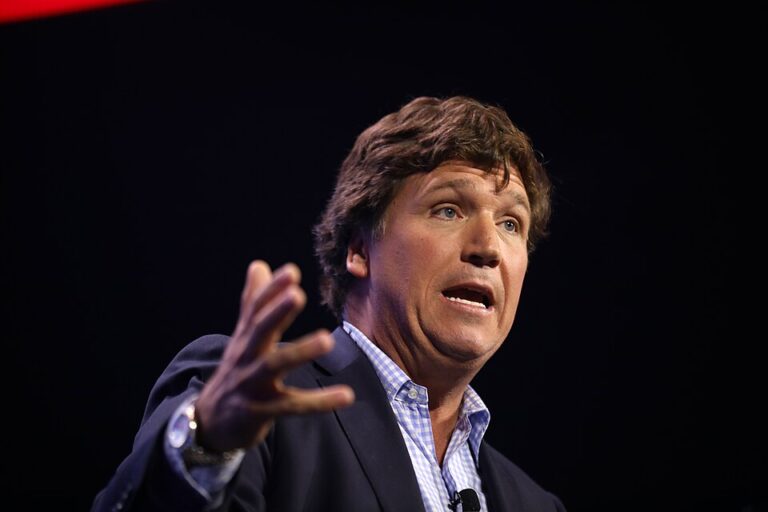
Gage Skidmore, CC BY-SA 3.0, via Wikimedia Commons
California elections often take days, and sometimes weeks, to fully resolve. That is partly because millions of voters cast ballots by mail, and state law gives counties time to verify signatures, process late-arriving ballots that were postmarked by Election Day, and allow voters to fix signature problems.
To election workers, this is routine democracy. To critics, it looks like a mystery box. Trump has seized on that gap between process and perception. When early returns show Republicans ahead and later ballots narrow or erase those leads, he frames the shift as suspicious. His supporters hear a familiar warning. His opponents hear a familiar falsehood.
The danger is not only that some voters may believe the claim. The greater danger is that the claim is made before the count is finished, shaping public opinion while facts are still being processed.
That is why California now sits at the center of a bigger national argument. Is a slow count a sign of caution or a sign of corruption? Election officials say it is caution. Trump says it is corruption. The midterms may be fought in the space between those two stories.
Why 2026 Makes the Fight More Explosive
The 2026 midterms are already carrying enormous stakes. The party that controls the House will decide the shape of Trump’s second term, from investigations to spending battles to the future of federal power.
California could be decisive because all of its House seats are on the ballot, and several Republican held districts are under intense pressure after redistricting. Democrats see the state as one of their best opportunities to cut into the GOP majority. Republicans see Trump’s warnings about mail voting and ballot counting as a way to energize voters who already distrust California’s election system.
That creates a volatile political formula. For Democrats, Trump’s accusations may be used as proof that Republicans are trying to undermine confidence before votes are even counted. For Republicans, the slow count may become a rallying cry for tighter election rules, faster reporting, stricter voter identification, and limits on mail ballots.
In close races, perception can become almost as powerful as the result itself. A candidate who loses by a narrow margin may not need hard evidence to keep supporters angry. A delayed count, a changed lead, and a viral post can be enough to keep doubt alive for months.
The Local Impact: Voters Get Caught in the Crossfire
For ordinary Californians, the fight is not just about party control in Washington. It reaches into the simple act of voting.
A working parent who mails a ballot late in the week wants to know it will still count. An elderly voter who forgets to sign an envelope wants a fair chance to fix the mistake. A first-time voter wants the system to be easy enough to use and trustworthy enough to believe in.
But when national figures describe the process as crooked before the official count is complete, local voters are left wondering whether their ballot is being protected or politicized.
County election offices also face more pressure. Workers who once handled quiet administrative duties now operate under public suspicion, online attacks, and the possibility that routine delays will be turned into national accusations. That is the hidden cost of the fraud narrative. It not only attacks politicians. It casts a cloud over local clerks, poll workers, volunteers, and voters.
Trump’s Strategy Is About More Than California
Trump’s focus on California is not accidental. The state is large, Democratic leaning, slow-counting, and symbolically powerful. To his base, California represents everything they distrust about liberal governance. To Democrats, it represents the scale and diversity of modern voting access.
By attacking California’s system, Trump is also attacking mail voting more broadly. That matters because mail ballots can be crucial for seniors, rural voters, shift workers, disabled voters, military families, caregivers, and people who cannot easily stand in long lines on Election Day.
The fight is not simply about whether California counts quickly. It is about who gets to vote conveniently, how much federal power can reach into state election systems, and whether delayed results are accepted as normal or treated as suspicious by default.
Trump’s critics argue that his accusations are designed to prepare supporters to reject unfavorable outcomes. His allies argue that he is exposing weaknesses in a system that takes too long to produce confidence. Either way, California has become a testing ground for the election battles likely to dominate November.
A Knife-Edge Moment for the Midterms
The phrase “knife edge” fits because the country is not only divided by party. It is divided by trust.
One side sees California’s count as proof that voting access and ballot verification can work together, even if the process is slow. The other sees the delay as a warning sign that elections are too opaque, too dependent on mail ballots, and too vulnerable to manipulation.
The truth voters need is less dramatic but more important. Slow counting is not automatically fraud. Fast counting is not automatically secure. A healthy election system must be accurate, transparent, and trusted enough to survive close results.
That is the real test facing California in 2026. If the state can explain its process clearly, count ballots carefully, and withstand the political noise, it may become a model for election resilience. If suspicion overwhelms the facts, California may become the match that lights another national crisis over voting.
The midterms are still months away, but the battle over their legitimacy has already begun. And in California, the count is no longer just a count. It is a preview of the fight America is about to have with itself.