Virgin Atlantic Cuts U.S. Flights by 14% as 4 Major Cities Lose Service
Virgin Atlantic is cutting planned U.S. capacity by roughly 14% during September and October 2026, leaving travelers in 4 major cities with fewer flights from London Heathrow. Boston and Miami will lose half of their planned daily service, while Las Vegas and San Francisco will each lose 3 flights a week.
The British carrier is not abandoning the United States, but the numbers show a clear retreat from its earlier expansion plans. Virgin Atlantic expects to operate about 19 daily departures from Heathrow to 11 U.S. destinations during the 2-month period, down from approximately 22 daily flights under its previous schedule.
For U.S. travelers, the difference between a route cancellation and a frequency cut is significant. All 4 cities will remain connected to London, but fewer departures can mean tighter availability, less flexibility after disruptions, and more competition for lower-priced seats on peak travel dates.
Four U.S. cities will lose Virgin Atlantic flights.

Boston faces one of the biggest reductions, dropping from as many as 2 Virgin Atlantic flights per day to just 1. Instead of operating separate Airbus A330neo and Boeing 787 services, the carrier plans to consolidate the route onto a single Airbus A350-1000.
That aircraft switch keeps a large number of seats in the market because Virgin Atlantic’s A350-1000 can carry 335 passengers. Still, replacing 2 daily departures with 1 removes an entire flight time from the schedule, which matters to business travelers, connecting passengers, and families trying to coordinate onward journeys.
Miami will also fall from 2 daily flights to 1, cutting Virgin Atlantic’s planned frequency by 50%. The airline will continue to use its 335-seat Airbus A350-1000, but the second daily rotation will be suspended during September and October.
Las Vegas and San Francisco will each drop from 10 weekly flights to 7, a 30% reduction in frequency on both routes. In practical terms, each city will lose 3 weekly departures while retaining a predictable once-daily service.
Bengaluru, India, is also part of the schedule reset. Virgin Atlantic had planned 13 weekly Heathrow flights but will operate 7 instead, a reduction of approximately 46% that brings the route back to a single daily departure.
The fall 2026 changes
- Boston: Up to 14 weekly flights reduced to 7
- Miami: 14 weekly flights reduced to 7
- Las Vegas: 10 weekly flights reduced to 7
- San Francisco: 10 weekly flights reduced to 7
- Bengaluru: 13 weekly flights reduced to 7
Across the 4 U.S. markets, Virgin Atlantic is reducing its weekly departures by up to 20 compared with earlier plans. That does not automatically mean 20 canceled passenger bookings, because airlines revise schedules months in advance, but it represents a meaningful decline in available flight choices.
The Las Vegas reversal is the most revealing change.
The Las Vegas cut stands out because Virgin Atlantic had announced the opposite plan only months earlier. The airline previously said it would increase the number of weekly flights on the route from 7 to 10, beginning August 31, 2026, citing strong demand in September and October.
The carrier is now returning the route to 7 weekly departures during the same period it had expected to support 10. That 3-flight reversal suggests the airline’s updated booking data, operating costs, or aircraft priorities no longer support the extra capacity.
Airlines can publish schedules 9 to 12 months in advance, but those timetables are not permanent promises. Carriers regularly adjust capacity as actual reservations replace early forecasts, and a route that looks strong in January can appear far less attractive by July.
Las Vegas is heavily dependent on discretionary spending, conventions, and entertainment travel. Even when planes carry high passenger loads, profitability can suffer if travelers book lower fares, shorten their stays, or avoid premium cabins.
Virgin Atlantic has not released a detailed route-by-route explanation for the latest reductions. Its earlier expansion announcement referenced strong demand, making the move from 10 weekly flights back to 7 one of the clearest signs that conditions changed quickly.
These cuts begin after the World Cup rush ends.
The timing adds another important angle. The 2026 FIFA World Cup runs from June 11 through July 19, while Virgin Atlantic’s largest reductions begin in September, roughly 6 weeks after the final in New Jersey.
That means the cuts should not be viewed simply as a verdict on World Cup traffic. The tournament may temporarily boost demand in June and July, but it cannot guarantee that airlines will fill the same number of seats during the quieter September and October shoulder season.
U.S. Travel expects international visits to rise 3.4% in 2026 to 70.6 million, supported partly by the World Cup. However, that figure would still remain below the 79 million international visits recorded in 2019, and a full recovery is not expected until 2029.
International inbound spending is forecast to reach $178 billion in 2026, up 1.6% from 2025. After inflation, however, spending would remain 18% below its 2019 level, indicating that a major sporting event cannot erase all weaknesses in the broader travel economy.
The latest U.S. arrival numbers show real weakness.
International air traffic has not collapsed, but several indicators for 2026 are moving in the wrong direction. U.S.-international air passenger traffic totaled 22.7 million travelers in May, down 1.2% from the same month in 2025.
Non-U.S. citizen air arrivals totaled 4.5 million in May, a 4.5% year-over-year decline. That figure reached only 82.4% of the May 2019 level, meaning a substantial share of America’s pre-pandemic inbound market has yet to return.
The narrower overseas visitor category looked even weaker. The United States received approximately 2.8 million overseas visitors in May, down 6.5% from 2025 and equal to just 78.6% of the May 2019 volume.
Traffic between the United States and the United Kingdom reached 1.9 million passengers in May, making the U.K. America’s largest overseas air market. Even so, that total was 2.3% lower than a year earlier, a particularly relevant statistic for an airline built around London-to-U.S. travel.
The numbers also reveal an important split. U.S. citizen departures abroad reached 6.8 million in May, only 0.5% lower than in 2025 and 22.7% above the May 2019 level, while foreign arrivals remained considerably weaker.
In other words, Americans are still traveling overseas in large numbers, but international visitors are not entering the United States at the same pace. That imbalance can hurt foreign airlines whose economics depend heavily on filling both directions of a round-trip route.
Travel spending is rising even as passenger volume softens.
The most unusual part of the 2026 travel economy is that people are spending more money even as several travel volumes decline. U.S. travel spending rose 3.8% in May to $119.8 billion, even as air passenger traffic, hotel demand and overseas arrivals weakened.
That divergence can create a misleading impression of strength. Higher fares, hotel prices, fuel costs, and service charges can push total spending upward even when fewer travelers are booking trips.
For airlines, the number of occupied seats matters as much as the money moving through the wider economy. A carrier can face weaker load factors on a particular route even when national travel spending is up by billions of dollars.
Visa delays are another pressure point. U.S. Travel reported an average global visa interview wait of 112 days, while applicants in India faced waits of up to 221 days, creating additional uncertainty for travelers planning expensive international trips.
The Indian number does not prove that visa delays caused Virgin Atlantic’s reduction in Bengaluru service, especially since many passengers travel only between India and Britain. However, a 221-day wait can weaken connecting demand among travelers who might otherwise continue on to the United States from Heathrow.
Jet fuel has turned every marginal flight into a bigger gamble.
Demand is only half the story, as the cost of operating a wide-body aircraft has surged. IATA expects jet fuel to average $152 per barrel in 2026, nearly 70% above the $90 average recorded in 2025.
The global airline fuel bill is forecast to jump from $252 billion in 2025 to $350 billion in 2026. That $98 billion increase represents a rise of almost 40% in a single year.
Fuel is expected to consume 31.4% of airline operating expenses in 2026, up from 25.4% in 2025. At that level, removing 1 lightly booked long-haul flight can protect far more money than trimming a handful of smaller expenses.
IATA now forecasts global airline profits of $23 billion for 2026, nearly half the $45 billion estimated for 2025. The industry’s projected net margin is just 2%, leaving little room for routes that are full of discounted seats but weak in higher-paying traffic.
The expected profit per passenger is only $4.50 in 2026, down from $9.10 in 2025. When the average customer generates less than $5 in net profit, airlines have a strong incentive to combine 2 weaker flights into 1 fuller departure.
The industry is still expected to fill a record 84% of available seats in 2026. That figure helps explain why carriers are cutting frequencies rather than preserving extra flights and accepting lower occupancy.
Boston shows how Virgin can cut flights without surrendering the market.
Boston is a useful example of how an airline can reduce its own schedule while maintaining a wider commercial presence. Virgin Atlantic will operate 1 daily A350-1000, while partner Delta Air Lines also serves the Heathrow-Boston market.
Delta owns 49% of Virgin Atlantic, while Virgin Group controls the remaining 51%. The 2 airlines also participate in a transatlantic joint venture with Air France-KLM, allowing them to coordinate schedules and connections more closely than they could with unrelated competitors.
Through its partnership network, Virgin Atlantic can connect customers to more than 200 cities worldwide. That gives the airline more flexibility to remove 1 Virgin-operated flight without completely giving up access to Boston passengers or onward U.S. connections.
The strategy may protect the combined network, but it still leaves travelers with fewer Virgin Atlantic choices. A passenger who preferred a specific departure time, aircraft type, or cabin layout may now be reassigned to another flight or partner airline.
The aircraft changes reveal where Virgin sees value.
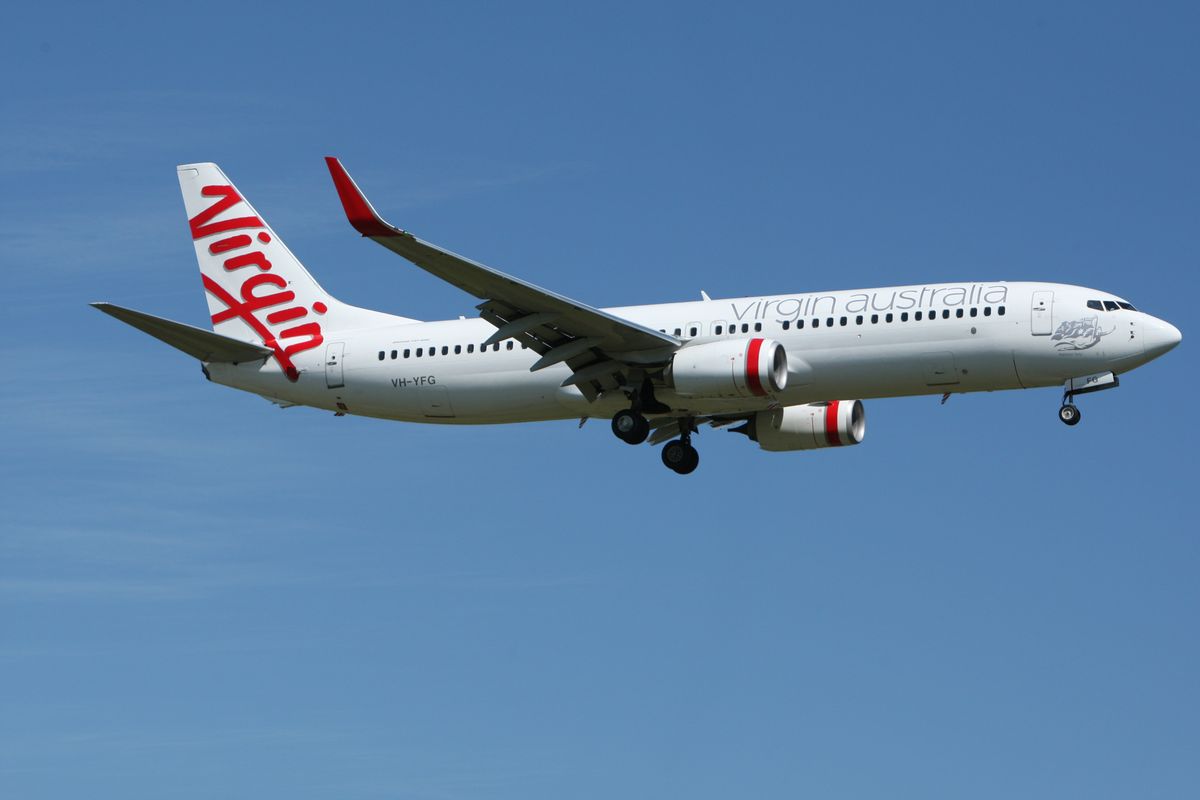
Virgin Atlantic’s Boeing 787-9 carries 258 passengers in its published configuration, including 31 Upper Class seats, 35 Premium seats and 192 Economy seats across its Economy categories.
Its standard Airbus A350-1000 carries 335 passengers, including 44 Upper Class seats, 56 Premium seats, and 235 Economy seats. That is 77 more total seats than the carrier’s published 787-9 layout.
Using a 335-seat A350 on Boston allows Virgin Atlantic to preserve substantial capacity while eliminating 1 daily aircraft movement. The route loses frequency, but the larger plane softens the total seat reduction.
The number of premium cabins is equally important. One A350 can offer up to 100 seats across Upper Class and Premium, giving Virgin Atlantic a larger pool of higher-priced inventory on a single departure.
Airlines do not make money from passenger counts alone. A flight carrying 300 customers at heavily discounted fares can perform worse than one carrying 250 travelers with stronger Premium, Upper Class, and cargo revenue.
Fewer flights could affect fares and recovery from disruptions.
A route with 14 weekly flights offers twice as many departure opportunities as a route with 7. When Virgin Atlantic halves Boston and Miami to once daily, customers lose 7 weekly alternatives in each market.
That reduction does not guarantee higher fares because British Airways, American Airlines, Delta, United, and other competitors still influence pricing. However, removing capacity can reduce the number of cheaper seats available under Virgin Atlantic’s own fare inventory.
Irregular operations may also become more frustrating. When an airline operates 2 flights a day, passengers from a canceled morning service may have a same-day evening option, but a once-daily route can push rebooking into the following day.
The 30% reductions in Las Vegas and San Francisco are less severe than the 50% cuts in Boston and Miami. Still, losing 3 weekly flights can affect travelers whose plans depend on specific weekdays.
Passengers booked for September or October should check their reservations well before departure. Schedule changes can alter flight numbers, seat assignments, aircraft types, and connection times even when the final destination remains unchanged.
This is a pullback, not a retreat from America.
Virgin Atlantic will still serve 11 U.S. cities and operate approximately 19 daily departures from Heathrow during the affected period. The United States therefore remains the largest and most important region in the airline’s long-haul network.
The 14% capacity reduction is meaningful but targeted and temporary. New York, Orlando, Los Angeles, Atlanta, Tampa, and Washington remain part of the broader network alongside the 4 cities losing frequencies.
The airline is also investing heavily in its future fleet. Virgin Atlantic plans to operate 45 next-generation aircraft by 2028, including 19 Airbus A330-900neos, 12 Airbus A350-1000s and 14 Boeing 787-9s.
That $17 billion fleet transformation shows the carrier is preparing for long-term growth, even as it makes short-term cuts. A modern aircraft order and a reduced autumn schedule can coexist because airlines plan their fleets over decades but adjust their schedules every season.
What the Virgin Atlantic cuts really tell us
The strongest conclusion is not that Americans have stopped traveling or that every U.S. route is failing. The better reading is that 2026 has created a difficult mix of softer inbound demand, 70% higher jet fuel prices, and razor-thin airline profit margins.
Virgin Atlantic is responding by removing up to 20 weekly departures across 4 U.S. routes, reducing total American capacity by about 14% and concentrating more passengers onto fewer aircraft.
The cuts also expose a sharp change in expectations. Las Vegas moved from a planned 43% expansion, from 7 weekly flights to 10, back to the original 7-flight schedule in a matter of months.
For travelers, the red Virgin Atlantic tail is not disappearing from Boston, Miami, Las Vegas, or San Francisco. What is disappearing is choice, including up to 7 weekly departures in the hardest-hit cities.
For the airline, the calculation is brutally simple: with industry profits falling to $4.50 per passenger and fuel accounting for 31.4% of operating costs, an extra long-haul flight must do more than just attract travelers. It must make money.