Woman and Infant Die After Boat Capsizes Near Statue of Liberty, 12 Others Rescued
A woman and an infant died after a boat capsized near the Statue of Liberty in New York Harbor, while 12 others were rescued and the Coast Guard began investigating the cause.
A summer night on New York Harbor turned into a deadly emergency within sight of one of the world’s most familiar landmarks. A woman and an infant died after a boat capsized near the Statue of Liberty, while 12 other people were rescued from the water. Police divers and aviation teams responded after authorities received a 911 call at about 10:25 p.m. on Saturday, August 8. The U.S. Coast Guard then moved quickly into the next phase, trying to determine why the vessel overturned.
The basic facts are stark, but the unanswered questions are just as important. Twelve people survived, two people did not, and authorities had not announced a cause in the first hours after the accident. The NYPD said no arrests had been made, while the Coast Guard said investigators were heading to interview the vessel’s captain. That leaves the public with a tragedy that is clear in its outcome but still incomplete in its explanation.
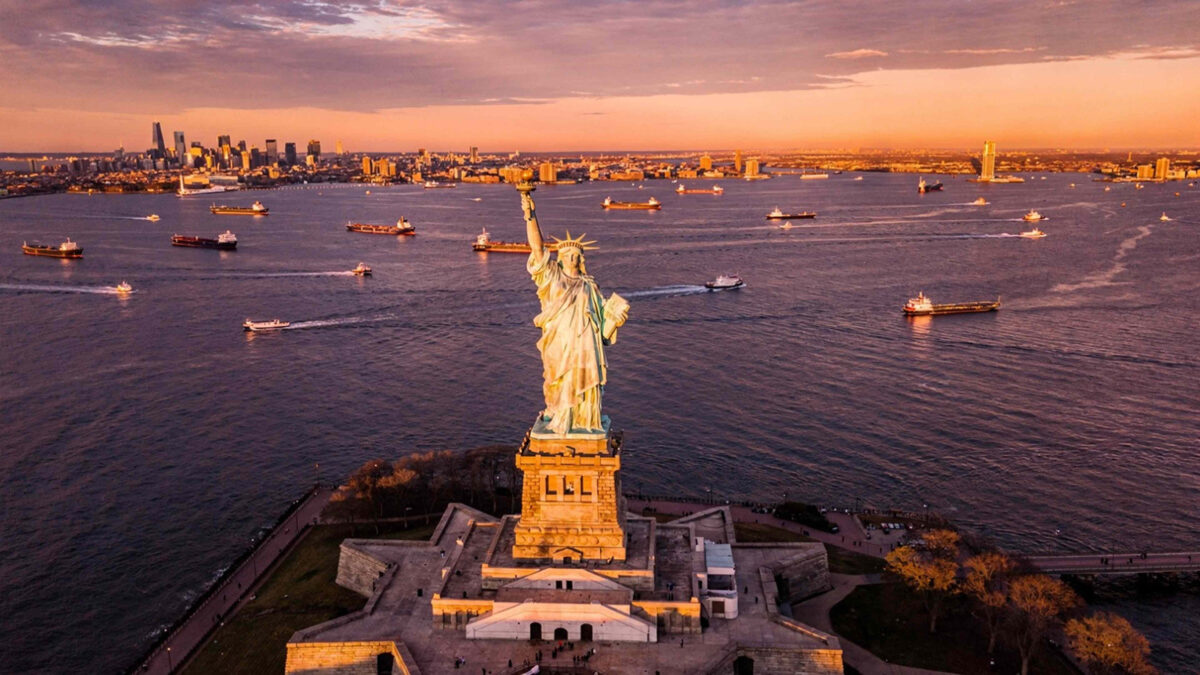
The location gives the incident added public significance without changing the facts of what happened. Liberty Island sits inside a working harbor used by ferries, commercial vessels, sightseeing boats, and recreational craft, all against the backdrop of the Statue of Liberty. An accident there can become instantly visible because the setting is so recognizable, but visibility should not become a substitute for evidence. For now, the boat capsizing near the Statue of Liberty is both a rescue story and an active investigation whose most important findings are still ahead.
The harbor changed in a matter of minutes.
The emergency began late Saturday, when calls came in reporting an overturned vessel near Liberty Island. Police divers and aviation teams responded after the 911 call at about 10:25 p.m. Twelve people had been rescued, while two others remained in the water as the response continued. Divers later located a woman and an infant, and both were taken to a hospital where they were pronounced dead.
Those numbers explain the scale of the response, but they do not fully capture its complexity. Fourteen people were connected to the incident, which meant rescuers had to account for everyone while working on dark harbor waters. The survival of 12 people shows that much of the emergency response succeeded in getting people out of immediate danger. The two deaths, however, turned the capsizing from a large rescue into a fatal maritime investigation.
The scene also illustrates how quickly an ordinary trip on the water can become an emergency. New York Harbor is familiar to millions through ferry rides, photographs, and views of the city skyline, yet it remains an active maritime environment. Boats of very different sizes and purposes move through its waters, and safe operation remains important regardless of how familiar the surroundings appear. Nothing released so far establishes what caused this accident. However, the boat capsizing near the Statue of Liberty underscores why routine outings still depend on preparation, equipment, and sound vessel operation.
Twelve people came back from the water; two did not.
The rescue of 12 people deserves attention because it represents the largest part of what happened that night. Those survivors had already been pulled from the water as police continued searching for the remaining two people. Authorities had not publicly detailed every individual rescue or the condition of each survivor in the initial reporting. That absence of detail makes it important not to invent a dramatic sequence that investigators and witnesses have not yet established.
The deaths of the woman and infant also require restraint in the way the story is told. Their identities had not been released in the initial reporting, and authorities had provided little public information about their relationship to the other people aboard. Reporting can acknowledge the seriousness of the loss without assigning emotions, motives or family circumstances that are not known. In a case like this, precision is more respectful than speculation.
The contrast between 12 survivors and two fatalities is nevertheless central to understanding the event. It raises questions about where people were positioned, how the vessel overturned, what flotation equipment was available and how quickly assistance reached different passengers. Those are reasonable investigative questions, but they are not answers. Until authorities release findings, the boat capsizing near the Statue of Liberty should not be attributed to overcrowding, weather, mechanical trouble, operator error or any other unconfirmed factor.
The biggest fact in the story is still missing.

After the rescue ended, the investigation became the most important part of the story. The Coast Guard said investigators were heading to interview the captain as they worked to establish what caused the vessel to capsize. The NYPD said no arrests had been made at that stage, which is an important distinction from a finding of wrongdoing. A fatal accident can trigger intense scrutiny without automatically becoming a criminal case.
A captain’s account can help investigators establish a timeline of a vessel’s movements before an accident. Investigators can also examine physical evidence and compare witness accounts with information about the vessel and its operation. National Coast Guard data show that boating incidents can involve many contributing factors, including operator inattention, improper lookout, operator inexperience, machinery failure and navigation-rule violations. Those national patterns provide context, but none of them has been identified as the cause of Saturday’s capsizing.
This distinction between context and evidence matters because early accident coverage often creates pressure for a simple explanation. A photograph, weather observation, or passenger count can easily become the center of speculation before investigators complete their work. Maritime investigations exist in part to determine which apparent clues actually contributed to an incident and which did not. In the boat capsizing near the Statue of Liberty, the most responsible answer to the cause question remains unchanged: authorities had not yet determined it.
National data offers clues, but not a verdict.
The wider boating record shows why investigators consider multiple possibilities after a serious accident. The Coast Guard recorded 3,887 recreational boating incidents in 2024, involving 556 deaths and 2,170 injuries nationwide. The fatality rate stood at 4.8 deaths per 100,000 registered recreational vessels, down from 4.9 in 2023. The agency described the 2024 death total as the lowest since it began collecting recreational boating statistics more than 50 years ago.
That long-term improvement is significant because it shows that boating safety has advanced even though serious accidents continue. The Coast Guard reported that operator inattention, improper lookout, operator inexperience, machinery failure and navigation-rule violations were the five leading primary contributing factors in reported 2024 incidents. Alcohol was the leading known contributing factor in fatal accidents, accounting for 92 deaths that year. None of those statistics should be applied directly to the boat capsizing near the Statue of Liberty without evidence from the current investigation.
The latest complete annual dataset also has a timing limitation that matters in 2026. As of August 9, the Coast Guard’s boating statistics page listed the 2025 report as pending, with publication scheduled for August 31, 2026. That makes the 2024 report the newest complete national annual dataset currently available for broad comparison. It can describe patterns across thousands of incidents, but it cannot determine what happened to one vessel near Liberty Island on one Saturday night.
A previous Hudson River case shows why answers take time.

New York has experienced another fatal small-vessel capsizing that demonstrates how much can emerge after the first headlines fade. In July 2022, the vessel Stimulus Money capsized on the Hudson River, killing a 48-year-old woman and a 7-year-old boy. The Coast Guard later found that the vessel had operated as an illegal passenger operation and lacked the required Certificate of Inspection. The operator also lacked the required Coast Guard-issued merchant mariner credential for that passenger service.
The case did not end with the initial rescue and casualty reporting. Coast Guard Sector New York and the Coast Guard Investigative Service examined the operation before referring the matter to federal prosecutors. The vessel’s owner was later sentenced to 18 months in prison after pleading guilty in connection with the operation. Those findings emerged through an investigative and legal process rather than assumptions made on the day of the accident.
The 2022 case should not be treated as a template for the boat capsizing near the Statue of Liberty. There is no public evidence so far that Saturday’s vessel was an illegal charter, violated a capacity restriction, or involved the same operational failures. Its value as historical context lies elsewhere because it shows why investigators need time before assigning responsibility. Similar-looking accidents can arise from very different chains of events, and only evidence can establish which chain applies.
Safety rules matter most before anyone needs rescuing.
The national boating data also point to the preventive side of maritime safety. In 2024, the Coast Guard said drowning accounted for roughly three-quarters of recreational boating deaths where the cause of death was known. Among drowning victims whose life-jacket use was known, 87 percent were not wearing one. The agency consistently encourages properly fitted life jackets because flotation equipment offers the greatest protection when it is worn rather than carried aboard.
Education is another recurring theme in the Coast Guard’s safety work. The 2024 statistics showed that about 69 percent of deaths occurred on boats where the operator had not received boating safety instruction, when instruction status was known. Only 19 percent occurred on vessels where the operator had received a nationally approved boating safety education certificate. These figures support broad safety recommendations, but they do not tell us what training the captain in Saturday’s incident had received.
Capacity and vessel stability also receive attention in Coast Guard guidance because excessive weight can cause a boat to ride lower and reduce stability. The Coast Guard has advised boaters to respect maximum capacity information and understand the operating limits of their vessels. No official source has said overloading contributed to the boat capsizing near the Statue of Liberty, so that possibility should not be presented as a suspected cause. The broader lesson is that capacity rules address known maritime risks before investigators ever have to determine whether those risks contributed to a particular tragedy.
The setting makes the story visible, not simple.

The Statue of Liberty gives this accident a location that people immediately recognize. That familiarity can make the event feel unusually prominent even to readers who have never traveled through New York Harbor. Liberty Island is associated with tourism, immigration history, and one of the country’s most enduring public symbols. Yet the water surrounding it remains part of a functioning harbor rather than simply a backdrop for visitors.
That contrast helps explain why the story has attracted attention beyond New York. A boat capsizing near the Statue of Liberty combines an internationally recognizable setting with human loss and an unresolved investigation. The landmark becomes part of how the event is identified publicly, even though there is no suggestion that it played any role in causing the accident. Responsible coverage should preserve that distinction rather than allowing the famous location to overshadow the evidence.
The same principle applies to images of emergency lights, helicopters and rescue craft moving across the dark water. Local reports documented an extensive response after the vessel overturned, including police divers and aviation resources. Those scenes illustrate the urgency of the rescue, but they cannot establish why the boat capsized. The strongest reporting therefore stays with confirmed developments while leaving room for investigative findings that may later change the understanding of the night.
The next chapter belongs to investigators.
The captain’s interview is expected to become one part of a larger factual record. Investigators can compare statements with physical evidence, witness accounts, vessel information, and any relevant electronic or visual records that become available. They can also determine which rules applied to the vessel and whether any safety or operational issue contributed to the accident. The Coast Guard had not publicly announced a final cause or detailed findings in the immediate aftermath of the capsizing.
The public picture may also change as survivors, officials and investigators provide additional information. Early reports in major emergencies tend to focus on casualty numbers and rescue operations because officials can often confirm those details quickly. Technical conclusions usually require more investigation because several possible explanations may initially appear plausible. That is why the absence of an immediate cause should not itself become evidence for negligence, wrongdoing, or any other theory.
For journalists and readers, patience can be difficult when a case involves deaths and a famous location. Yet the boat capsizing near the Statue of Liberty is precisely the type of incident where caution protects accuracy. A wrong early assumption can follow survivors, families and a vessel operator long after evidence tells a different story. The stronger approach is to report each confirmed development while clearly separating facts from unanswered questions.
What this accident says about boating risk in America

Saturday’s tragedy occurred against a national picture that is more complicated than the headlines surrounding individual accidents may suggest. The United States has substantially reduced recreational boating fatalities over the long term, even as millions continue to use the country’s waterways. In January 2026, the Coast Guard said the 556 boating deaths recorded in 2024 represented a 77 percent reduction from the level when the Federal Boat Safety Act was enacted in 1971. That progress shows how regulation, education, equipment and enforcement can change safety outcomes over time.
Progress, however, does not eliminate risk. The Coast Guard recorded thousands of accidents and more than two thousand injuries in 2024 despite reaching a historic low in fatalities. Its data repeatedly identify human behavior, training, equipment, and operating conditions among the issues associated with serious boating incidents. That makes prevention a continuing responsibility rather than a problem that has already been solved.
The Coast Guard is also continuing to study how Americans use recreational boats through its 2026 National Recreational Boating Safety Survey. The agency says the information helps federal and state programs understand boating participation and decide how safety resources should be used. It estimates that the national Recreational Boating Safety Program has saved about 95,000 lives since its creation. The boat capsizing near the Statue of Liberty therefore belongs to a much larger conversation about how safety improvements translate from national policy to individual trips on the water.
Why one accident should not become a verdict on New York Harbor
Fatal incidents naturally generate concern about the safety of the place where they occur. Yet one capsizing does not establish that New York Harbor as a whole has suddenly become unsafe, just as a falling national death rate does not make every individual trip risk-free. Maritime safety depends on vessels, operators, passengers, equipment, traffic, weather and operating decisions interacting at particular moments. The challenge is to examine those factors without turning a specific tragedy into a sweeping claim unsupported by evidence.
New York’s waterways also have a long history of emergency response alongside their transportation and recreational roles. Harbor units, firefighters, Coast Guard personnel, ferry crews and other mariners have repeatedly participated in rescues across the region. Saturday’s operation again involved specialized personnel responding to people in the water after a sudden emergency. The fact that 12 people survived is an important part of the record, even while two deaths prevent the rescue from being described as an uncomplicated success.
That balance matters for an analytical account of the boat capsizing near the Statue of Liberty. The story contains tragedy, but it also contains rescue, institutional response, and an investigation designed to produce answers. Focusing only on the deaths would miss the scale of the rescue, while focusing only on the survivors would diminish the seriousness of the loss. A complete account has to hold both realities at the same time.
What remains now is the work of establishing a cause without forcing the evidence toward an easy narrative. The boat capsizing near the Statue of Liberty will ultimately be understood through interviews, physical evidence, and official findings rather than through the symbolism of its location. For the families and survivors, an investigation may provide answers, although answers cannot reverse what happened in New York Harbor. For the wider public, the lasting question is more difficult: what can be learned from one tragedy before another ordinary day on the water becomes an emergency?