7 Worst Foods to Eat on Thanksgiving Day
By the time the turkey is nearly ready, Thanksgiving kitchens tend to resemble air-traffic control with gravy. Someone needs the oven, someone else needs a burner, three serving dishes are missing, and a well-meaning relative is asking what they can do while standing directly in front of the drawer you need.
In that environment, a dish can taste perfectly good and still be a questionable menu choice. That is the standard for “worst” here: not bad food, but food that creates awkward timing, repetitive flavors, disappointing textures, or more work than the payoff justifies.
Family favorites get diplomatic immunity. But when building a menu from scratch, these seven dishes deserve a second look.
Stuffing Cooked Inside the Turkey
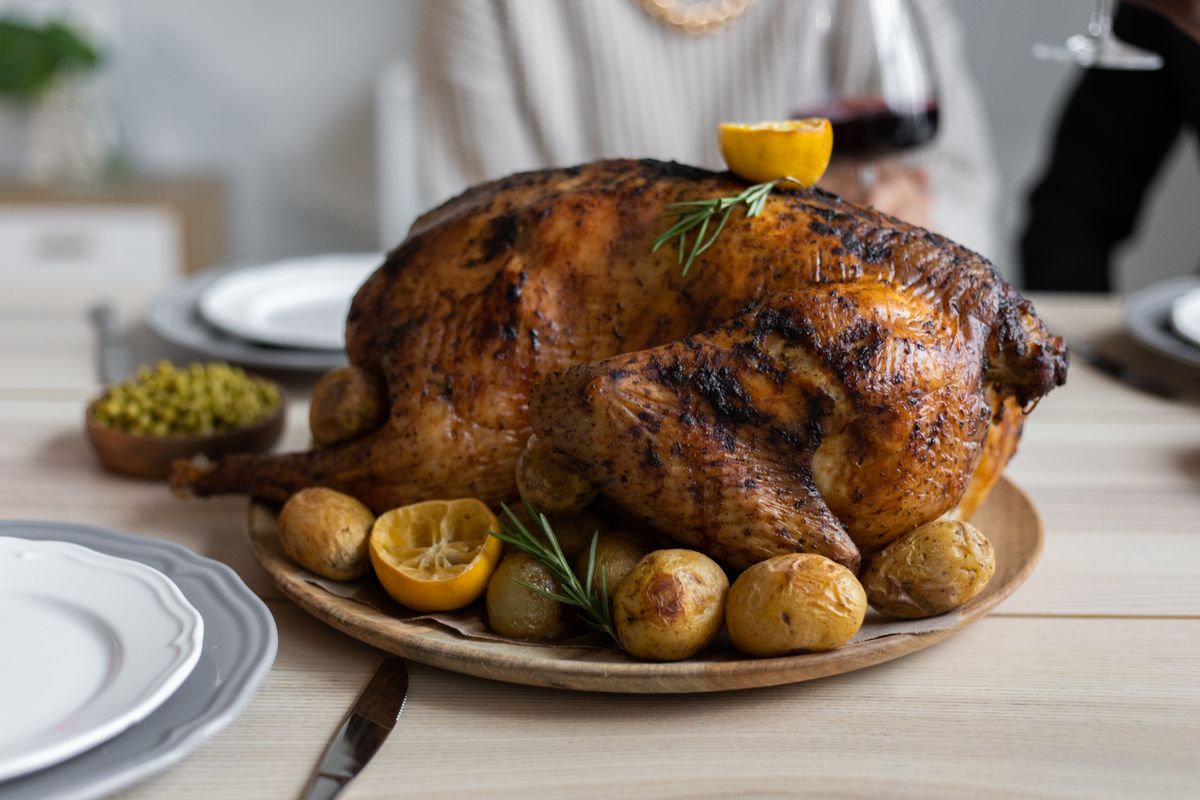
Stuffing absolutely belongs at Thanksgiving. The question is whether it needs to spend the holiday inside the turkey.
Cooking the stuffing in the bird can lengthen the cooking process and make an already complicated timeline harder to manage. Suddenly, two essential parts of dinner are tied to the same schedule, and the turkey already has enough pressure as the centerpiece.
USDA does not recommend stuffing a whole turkey, noting that it takes the turkey longer to cook and that the stuffing’s center must reach 165 degrees Fahrenheit. Cooking the stuffing separately gives the host one less interconnected problem to solve.
It can still arrive at the table right beside the turkey, where it belongs, without requiring the bird to manage another item’s calendar.
Salad
A fresh salad can be a welcome Thanksgiving side. A salad that demands immediate attention just as everything else is heading to the table is another matter.
The components and dressing can be prepared ahead, but dressing the salad is best left until the last minute if you want to avoid sogginess. Unfortunately, “the last minute” is also when the host may be transferring food to platters, finding serving spoons, checking the rest of dinner, and answering the question, “Are we eating yet?”
If your salad needs a perfectly timed finishing ceremony, consider whether Thanksgiving is the day to give yourself that assignment.
Related: 4 “Polite” Thanksgiving Habits Everyone Secretly Finds Rude
Canned Cranberry Sauce
Cranberry sauce already has a divided audience. In a 2023 Vacationer survey of 1,013 U.S. adults, 31.49% of respondents selected cranberry sauce as their most-disliked traditional Thanksgiving food.
That does not make cranberry sauce a Thanksgiving mistake. But serving the canned version exactly as it exits the container does very little to win over the undecided.
You know the presentation: a glossy red cylinder with every ridge still intact, sitting on a plate as though the can itself has merely become invisible.
If your family adores it that way, carry on proudly. Otherwise, the straight-from-the-can look may be one tradition worth giving a little presentation upgrade.
Sweet Potato Casserole
Sweet potatoes and yams were selected by 29.22% of respondents in that same Vacationer survey, making them another clearly polarizing part of the traditional spread.
But the bigger Thanksgiving problem is duplication.
A sweet potato dish can absolutely earn its place. Trouble begins when the casserole moves so far into sweet territory that it starts competing with dessert rather than contributing something distinctive to dinner.
Thanksgiving plates only have so much room. If several dishes are already delivering rich, sweet flavors, another one doing essentially the same job can make the menu feel crowded rather than generous.
Give the sweet potatoes a role. They do not need to audition for pie.
Green Bean Casserole
Green bean casserole came in close behind sweet potatoes in the Vacationer survey, with 28.04% of respondents selecting it among their disliked Thanksgiving foods. The same survey found cranberry sauce, sweet potatoes or yams, and green bean casserole were the three most-disliked traditional items among its respondents.
The survey allowed participants to select more than one food they disliked, so this is evidence of polarizing status, not a verdict that everyone hates them. Still, the real enemy here is not the casserole. It is time.
Part of the dish’s appeal is the contrast between the casserole underneath and the crispy topping above it. Leave it lingering too long, and that contrast can start disappearing. What should provide crunch begins blending into everything below.
“Since noon” may be an exaggeration, but every Thanksgiving table has dishes that peak before anyone actually sits down. If crispness is one of your casserole’s best qualities, treat timing like an ingredient.
Related: How to Prepare Your Home to Host a Beautiful Thanksgiving Celebration
Potato Dish
Mashed potatoes. Scalloped potatoes. Potato gratin. Roasted potatoes. Sweet potatoes. Any one of those can be excellent. All of them at once can turn Thanksgiving dinner into the Potato Cinematic Universe.
Make-ahead sides can help reduce Thanksgiving Day workload, and potato gratin is one dish that can fit that planning strategy. But this is less about preparation than menu space.
When several potato dishes arrive together, they begin competing for the same limited real estate on the plate while other flavors and textures get squeezed out.
There is no Thanksgiving law limiting you to one. But unless your family eagerly expects several versions, pick a potato champion and let it shine.
A High-Maintenance Dessert
After managing the turkey, sides, table, serving dishes, and everything else, dessert should feel like the victory lap.
So why choose one that requires another round of kitchen choreography?
Elaborate whipped-cream creations, fragile ice-cream pies, heavily decorated desserts, and anything requiring extensive last-minute assembly can turn the end of dinner into another production. Everyone else is relaxing, and the host is back in the kitchen performing dessert construction.
A make-ahead dessert that can simply be sliced or served has a major practical advantage on a busy holiday. That is especially useful when Thanksgiving foods already need active temperature management:
FoodSafety.gov advises holding hot foods above 140 degrees Fahrenheit and cold foods below 40 degrees. If dessert requires the culinary equivalent of a stage crew, Thanksgiving might be the perfect occasion to simplify.
Thanksgiving food is personal, and that is part of what makes the meal memorable. One person’s unnecessary side dish may be the thing another family talks about all year. Nobody needs to evict a beloved recipe for the sake of efficiency.
But if you are designing a menu from the beginning, more dishes do not automatically make a better feast. The strongest spread is one where each dish adds something worthwhile, arrives at the table at its best, and does not make an already busy kitchen harder to manage.