Zohran Mamdani Blocked From Speaking at Fallen NYC Soldier’s Funeral Despite Writing Speech: ‘He Was Never Called’ as Political Divide Reaches Sacred Moment.
A funeral meant to honor a fallen New York soldier became the center of a heated public debate after Mayor Zohran Mamdani attended with prepared remarks but was never invited to deliver them, sharpening the clash between grief, politics, and public life.
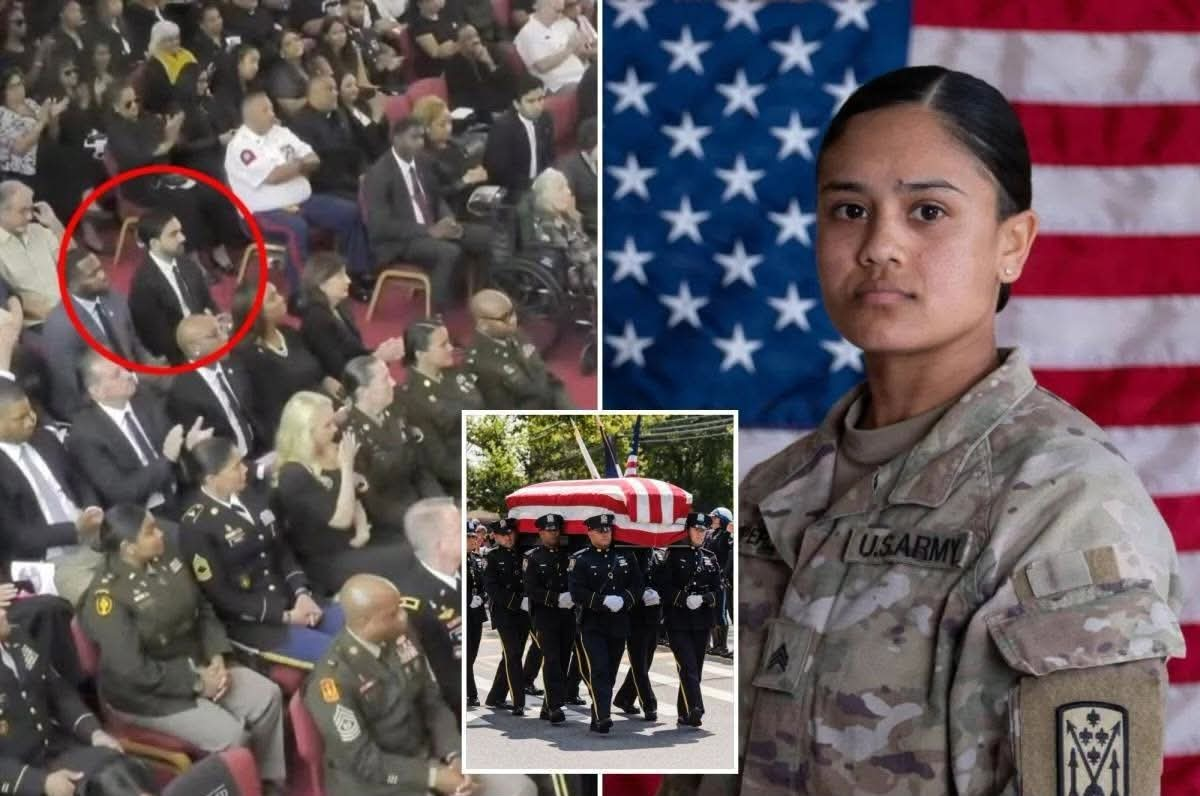
The funeral of Army Sgt. Angel Sarah Rampersad was supposed to focus on sacrifice, family, and remembrance. Instead, the decision to prevent New York City Mayor Zohran Mamdani from speaking has sparked questions about political divisions, the role of elected officials at military funerals, and the balance between honoring a grieving family’s wishes and recognizing public leadership.
Mamdani arrived at the Queens service prepared to pay tribute to Rampersad, a 28-year-old New Yorker who died while serving her country. He had written a speech honoring her military service and reflecting on the loss her family experienced. But as the ceremony moved forward, the mayor remained among the attendees.
“He was never called,” according to reports describing the moment when Mamdani’s expected tribute never happened.
Other public officials delivered remarks during the service, including New York Gov. Kathy Hochul and Queens Borough President Donovan Richards. Mamdani’s prepared words were later released by his office, giving the public the message he intended to share.
The unusual scene quickly turned the funeral into a broader conversation about whether political differences should shape who speaks at a ceremony honoring a fallen soldier. Fallen Soldier’s Funeral Becomes the Center of a Political Storm
Army Sgt. Angel Sarah Rampersad’s death brought grief to a community that had watched her grow from a Queens resident into a dedicated member of the U.S. military.
Rampersad was among three American service members killed in a July missile attack on a U.S. military facility in Jordan. Her death represented one of the painful reminders of the dangers faced by American troops serving overseas.
Friends and family remembered Rampersad as someone who represented commitment, discipline, and compassion. Before joining the Army, she built a strong academic and professional foundation, including graduating from John Jay College of Criminal Justice in New York City.
Her decision to serve followed a family connection to the military. Those close to her described her as someone who understood the meaning of duty and wanted to contribute beyond herself.
The funeral brought together relatives, fellow service members, law enforcement officers, community leaders, and elected officials. It was designed to provide closure for those who knew Rampersad personally while allowing the wider community to recognize her sacrifice.
But attention shifted when Mamdani, the city’s top elected official, was not included among those delivering remarks.
Why Mamdani’s Speech Was Never Delivered
The decision not to allow Mamdani to speak reportedly came from concerns about the political environment surrounding the mayor. Mamdani, a progressive Democrat, has become one of the most recognizable political figures in New York City. His positions on issues including foreign policy, policing, housing, and international affairs have drawn both strong support and intense criticism.
Sources cited in reports about the funeral suggested that Rampersad’s family did not want the ceremony connected to political debates. The family reportedly wanted the focus to remain on the soldier’s life, service, and sacrifice rather than on disagreements involving public officials.
Funeral ceremonies, especially those involving military members, often require careful consideration from organizers. Families typically have the final say over speakers, tributes, and the overall tone of the event.
For some observers, that decision represented a family exercising control over a deeply personal moment. They argued that grieving families deserve the ability to determine who represents their loved one during a farewell ceremony.
Others viewed the situation differently. Critics questioned why the mayor of New York City was not given a chance to offer a tribute to a fallen soldier from his own city.
They argued that military service represents the entire nation and that honoring a fallen service member should remain separate from political disagreements.
The Mayor’s Unspoken Tribute Reveals a Larger Debate

Although Mamdani never delivered his remarks inside the funeral service, the speech he prepared revealed the message he wanted to share.
His tribute focused on the personal cost of military sacrifice. He wrote about the future Rampersad would never experience, the memories she would never create, and the moments her family would never share with her.
The message centered on the human side of loss rather than political issues. It highlighted the reality that behind every military casualty is a person with dreams, relationships, and unfinished chapters.
The release of the speech added another layer of discussion. Some argued that the words showed a genuine attempt to honor Rampersad and should have been heard during the ceremony.
Others maintained that even respectful political figures must recognize that funerals belong first to families, not officials.
The disagreement reflects a challenge that often appears when public figures attend moments of tragedy. Leaders are expected to represent communities during difficult times, but they must also respect the wishes of those directly affected by loss.
Military Funerals Have Long Carried Special Meaning
Funerals for fallen service members hold a unique place in American culture. They are not only private moments for families but also public reminders of the sacrifices made by military personnel.
Throughout U.S. history, elected leaders have attended military funerals to show respect and solidarity. Presidents, governors, mayors, and other officials have often used such moments to recognize the courage of service members.
However, attendance does not automatically guarantee a speaking role.
Military funerals follow traditions designed to maintain dignity and focus. Organizers frequently carefully select speakers to ensure the ceremony reflects the family’s wishes and honors the deceased.
The controversy involving Mamdani highlights how complicated those decisions can become when public figures bring political identities into sensitive spaces. Even when an official’s intention is respectful, their presence can become part of a larger political conversation.
A Divided Political Climate Reaches a Moment of Mourning
The dispute over Mamdani’s speech reflects a broader struggle over how politics influences public life. Across the country, debates over elected officials, cultural issues, and national identity have increasingly entered spaces that were once viewed as separate from political conflict.
Military events, memorials, and community gatherings often represent shared values, but they also occur in a time when Americans hold sharply different opinions about leadership and government.
Supporters of keeping ceremonies free from political figures believe moments of grief require protection from outside disputes. They argue that the memory of the fallen should remain the only focus.
Those who defend public officials participating in these events believe leaders have a responsibility to stand beside communities during moments of pain. They argue that honoring service members should bring people together rather than create additional divisions.
The situation surrounding Mamdani’s appearance at Rampersad’s funeral captures that difficult balance.
The Soldier’s Sacrifice Remains Bigger Than the Controversy
Despite the debate surrounding who spoke and who did not, the central reason people gathered remained clear: to honor Sgt. Angel Sarah Rampersad.
Her family, fellow soldiers, and community members came together to remember a woman who dedicated herself to serving others.
Law enforcement officers participated in the farewell, and mourners gathered to recognize the impact of a life cut short. For those closest to Rampersad, the most important part of the day was celebrating who she was beyond politics.
The controversy surrounding Mamdani’s missing speech may continue to fuel discussion, but it does not diminish the sacrifice being remembered.
A soldier’s funeral represents a moment when communities confront loss and reflect on the cost of service. Preserve that respect even when political disagreements follow people into the room.
For Rampersad’s family and fellow soldiers, the lasting memory will not be about who stood at the podium. It will be about the young New Yorker who answered the call to serve and paid the highest price for it.