10 Damaging Ways Binge-Watching Is Ruining Your Health
One more episode sounds innocent until the clock quietly turns against us. We sit down for a quick escape, then three hours disappear, the snack bowl is empty, our backs feel stiff, and bedtime has slipped far past the line we promised ourselves we would not cross. Binge-watching feels relaxing because it asks so little from us, but that is also where the trap begins. The body is built for movement, light, social connection, steady sleep, and mental variety, yet a long streaming session can pull all of those away in one sitting.
The real danger is not one lazy Saturday with a good show. The problem starts when binge-watching becomes the default way we unwind, avoid stress, eat, stay up late, and shut out the world. Research links heavy screen viewing and long sedentary time with sleep problems, poorer mental well-being, digital eye strain, weight gain patterns, and higher disease risks. Adults still need at least 150 minutes of moderate-intensity activity each week, plus muscle-strengthening work on two days, yet binge-watching can quietly push exercise, outdoor time, and healthy routines to the edge of the calendar.
Binge-Watching Can Leave the Brain Foggy and Unfocused

A good show can hijack attention long after the screen goes dark. We replay scenes, predict endings, scroll fan theories, and think about the next episode during work, school, or family time. That mental spillover can make real tasks feel dull compared with the instant drama of a streaming world. When binge-watching becomes the reward for everything, everyday focus starts competing with a much stronger entertainment loop.
Heavy television viewing has also raised concerns for brain health. Research summaries have linked excessive TV watching with higher risks of cognitive problems, especially when screen time replaces mentally active habits such as reading, conversation, problem-solving, or creative work.
A 2024 Harvard Health review discussed research suggesting that four or more hours of daily TV viewing was associated with a greater risk of brain-related disorders such as dementia, depression, and Parkinson’s disease. That does not mean every viewer will face those outcomes, but it does show why passive screen time should not become the main mental diet.
Binge-Watching Wrecks Sleep Before the Body Can Recover
Sleep is often the first victim of binge-watching because streaming platforms are designed to make stopping feel harder than continuing. Autoplay removes the natural pause that once helped us decide to go to bed, and cliffhangers turn the brain into a little courtroom arguing for “just one more.”
By the time we finally switch off the screen, the body may be tired, but the mind is still alert, emotionally stirred, and full of unresolved plotlines. That state makes it harder to drift into deep, restorative sleep.
Health costs build quickly because sleep is not just rest. It supports immune function, memory, mood regulation, appetite control, and cardiovascular health. A study on binge viewing and sleep found that binge-watching was linked with poorer sleep quality, more fatigue, and higher pre-sleep arousal, which means the brain remains too activated when it should be winding down. Screen time before bed has also been linked with insomnia and shorter sleep, especially when viewing happens in bed or late at night.
Long Viewing Sessions Turn Sitting Into a Health Risk
A binge-watch session can lock us into the couch for hours, and the body does not treat that as neutral. Long sitting slows muscle activity, reduces energy use, affects blood flow, and can interfere with glucose and fat metabolism. The danger grows when sitting becomes the main posture of the day, especially for people who already work at a desk, commute by car, and relax in front of a screen at night. The couch starts to look comfortable, but the body reads it as inactivity layered atop inactivity.
Sedentary behavior has been linked with higher risks of heart disease, Type 2 diabetes, premature death, and other long-term health problems. The National Heart, Lung, and Blood Institute found that women who sat for more than 11 to 12 hours per day had a greater associated risk of premature death compared with those who sat less. Another study found that physically inactive adults who sat more than 10 hours a day had the highest mortality risk compared with physically active adults who sat less.
It Reduces Outdoor Time and Natural Light Exposure
A full day indoors can leave the body out of sync. Natural light helps regulate the circadian rhythm, which guides sleep, energy, appetite, and alertness. When binge-watching replaces morning sunlight, afternoon walks, or outdoor errands, the body loses one of its strongest signals for staying on schedule. That can make nights later, mornings harder, and energy levels more uneven.
Outdoor time also supports mood and movement. Even a short walk gives the body fresh air, light exposure, muscle activity, and a break from screen stimulation. Binge-watching does the opposite, trapping us indoors with curtains closed and snacks nearby. We can still enjoy shows, but the healthiest version of streaming does not replace daylight, movement, or contact with the outside world.
Binge-Watching Makes Mindless Eating Too Easy
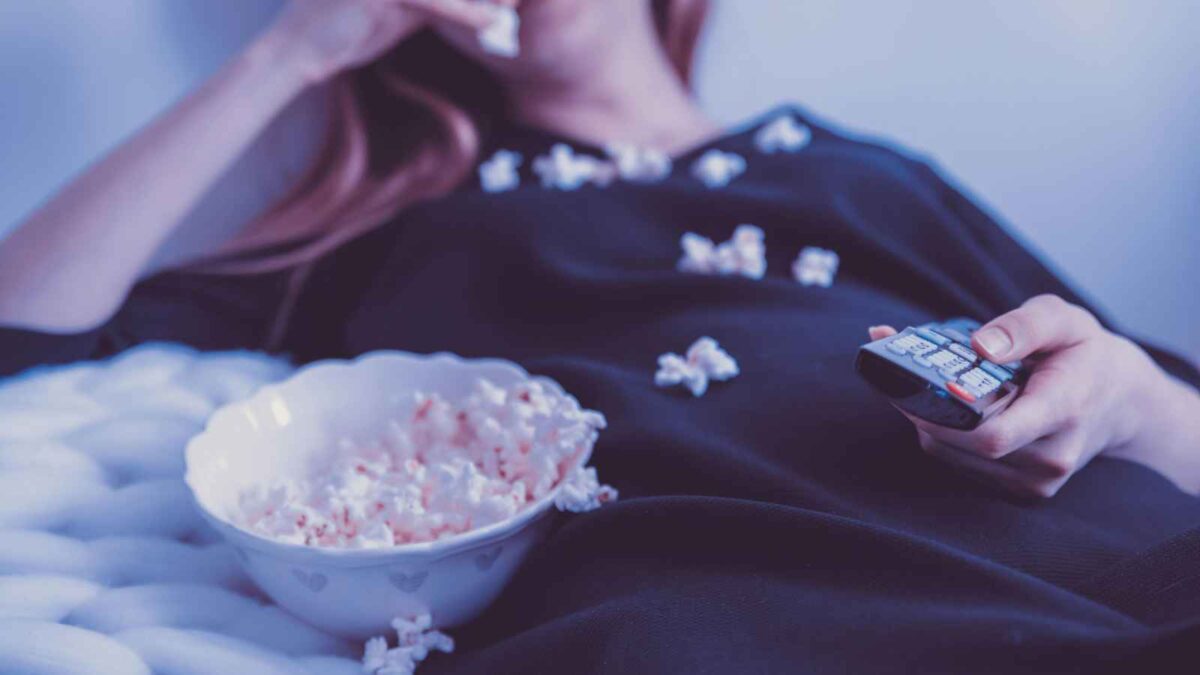
Streaming and snacking have become a dangerous partnership. When our attention is locked onto a screen, we stop listening closely to hunger cues, fullness signals, and portion size. A bowl of chips becomes “background food,” soda becomes part of the scene, and sugary snacks start disappearing without much awareness. The show absorbs the mind, and the hand keeps moving.
This matters because eating while watching television can increase food intake and encourage poor food choices. Research on television viewing and eating has linked screen-based meals with higher calorie intake, unhealthy snack patterns, and weight-related concerns. The risk becomes stronger when binge-watching turns into a nightly habit because the body begins to associate entertainment with constant grazing. Over time, that habit can make it harder to separate actual hunger from boredom, stress, or a simple screen routine.
Binge-Watching Creates a Habit Loop That Keeps Feeding Itself
The greatest danger of binge-watching is the cycle it creates. Stress pushes us to watch. Watching delays sleep. Poor sleep weakens focus and mood. Low energy makes exercise less appealing. Less movement and more snacking make the body feel worse. Then we return to streaming because we feel tired, bored, or emotionally drained.
That loop is powerful because binge-watching rewards us immediately. The next episode offers comfort now, while the health costs arrive slowly. Breaking the cycle requires friction. We can turn off autoplay, keep screens out of bed, choose a fixed stopping time, watch with someone who respects limits, stretch between episodes, keep snacks portioned, and avoid starting a new episode too close to bedtime. The goal is not to hate television. The goal is to stop letting television quietly manage our sleep, body, appetite, mood, and time.
It Pushes Exercise Out of the Day
Binge-watching does not always feel like a choice in opposition to exercise, but it often becomes one. An episode eats 45 minutes, then another takes the hour we could have used for a walk, gym session, stretching routine, or light household movement. After several episodes, the body feels heavy, and motivation drops. That is how a harmless viewing session quietly replaces the movement habits that protect our health.
We do not need extreme workouts to reduce the damage. Adults are advised to get at least 150 minutes of moderate-intensity physical activity each week, and even light activity is better than sitting still for long stretches. The American Heart Association also urges adults to spend less time sitting, as light-intensity movement can offset some of the risks of sedentary behavior. A healthier viewing habit means we break episodes with movement, stretch during credits, walk during phone calls, or set a hard limit before the body sinks into an all-night screen coma.
It Can Deepen Loneliness While Pretending to Cure It

Binge-watching can feel comforting because fictional worlds are easy to enter. Characters are always available, stories are predictable, and no one asks us to explain how we feel. That makes streaming tempting during stress, grief, boredom, or loneliness. The problem is that the same habit that soothes us for one night can also keep us away from real connection.
Binge-watching alone for hours can shrink social contact, reduce face-to-face conversation, and make isolation feel normal. A systematic review on binge-watching and mental health examined links with depression, loneliness, sleep problems, anxiety, and stress. Other research has connected problematic binge-watching with loneliness and depressive symptoms, especially when people use shows as an emotion-focused coping strategy rather than a planned form of rest.
Poor Posture Turns Entertainment Into Body Pain
Binge-watching posture usually starts comfortably and ends badly. We slide down the couch, twist our necks toward the screen, fold one leg under the body, or hold a phone at a harsh angle for long stretches. The longer we stay in one position, the more the muscles stiffen and the joints complain. Neck pain, lower back tightness, shoulder tension, and hip stiffness can all become part of the binge-watching aftertaste.
The posture problem becomes worse because passive viewing rarely reminds us to move. Unlike exercise or active hobbies, streaming does not require position changes, hand movement, walking, reaching, or balance. A simple fix is to treat each episode like a timer. When one ends, we stand, roll our shoulders, stretch our hips, walk around the room, refill water, or do a few minutes of light movement before deciding whether another episode is worth it.
Screens Can Strain the Eyes and Trigger Headaches
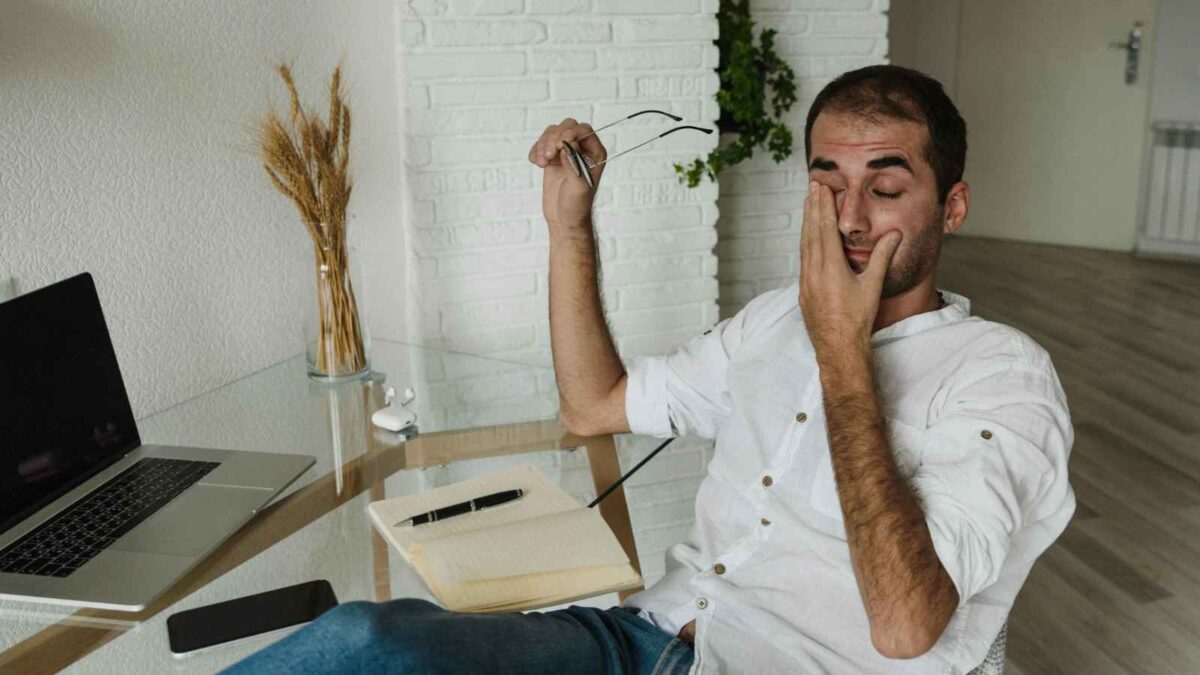
Our eyes were not designed to stare at bright screens for hours without breaks. During long viewing sessions, we blink less, focus at a fixed distance, and often sit in poor lighting. Many people also combine television with a phone, which forces the eyes to shift between screens, text sizes, and brightness levels. By the end of a binge, the show may be over, but the eyes feel dry, tired, blurry, or irritated.
Digital eye strain can include dry eyes, itching, watering, blurred vision, headaches, and discomfort around the neck and shoulders. The American Optometric Association recommends the 20-20-20 rule for screen use, which means every 20 minutes, we look at something 20 feet away for 20 seconds. That small break gives the eyes a chance to reset, especially during long screen sessions.