7 “Healthy” Foods That Can Quietly Work Against Your Diet Goals
A food can look clean, sound wholesome, and still carry more sugar, sodium, refined starch, or calories than we expected. That is the quiet trick behind many “healthy” grocery staples. They do not arrive with neon warning signs.
They show up in soft colors, leafy packaging, protein claims, “natural” language, and the kind of branding that makes us feel responsible before we even read the label.
The real issue is not that every item on this list is terrible. The issue is the health halo. Once a food gets labeled as light, plant-based, gluten-free, organic, high-protein, or made with real fruit, we often stop asking sharper questions.
Current nutrition guidance still points us back to the same pressure points: added sugars, sodium, saturated fat, refined grains, and overall processing.
The American Heart Association recommends limiting added sugar to no more than 6% of daily calories, and federal label guidance reminds shoppers that added sugars can come from syrups, honey, concentrated fruit juices, and other sweeteners hidden in plain sight.
Flavored Yogurt

Yogurt has one of the strongest health halos in the dairy aisle. We see words like probiotic, Greek, low-fat, fruit-on-the-bottom, and high-protein, and the cup starts to feel like a smart choice before the spoon even hits the lid.
Plain yogurt can be a strong food because it brings protein, calcium, and live cultures, but flavored versions often change the story. Strawberry, vanilla, peach, key lime, and dessert-style yogurts may contain added sugars that turn a small cup into a sweet snack while wearing a wellness costume.
The real problem is that the fruit flavor often comes with syrups, concentrates, or sweetened fruit preparations, so we get the idea of fruit without the fullness of eating actual fruit.
The smarter move is not to abandon yogurt. It is to stop letting flavor do the thinking for us. Plain Greek yogurt gives us a stronger base because it usually delivers more protein with fewer added sugars, so we can add berries, cinnamon, chopped nuts, or a drizzle of sweetness that we control.
The label should show a short ingredient list, a meaningful protein source, and little or no added sugar. If a yogurt needs candy pieces, cookie crumbs, syrup swirls, or a dessert name to sell itself, it belongs closer to the treat category than the everyday breakfast category.
Granola

Granola looks like the official food of hiking trails, yoga studios, and people who remember to drink water before noon. Oats, nuts, seeds, dried fruit, and clusters all sound like the kind of thing we should be eating more often.
The catch is that granola is usually dense, easy to overserve, and often held together with sweeteners and oils.
A tiny serving can look almost laughable in a cereal bowl, so we pour more, then add milk, yogurt, fruit, or nut butter, and suddenly the “light breakfast” has the energy of a full dessert.
That does not make granola bad, but it does make it one of the easiest healthy-looking foods to underestimate.
The best granola is treated like a topping, not the main event. We can sprinkle it over plain yogurt or oatmeal instead of filling half the bowl with it.
A better choice keeps added sugar low, uses recognizable ingredients, and offers real nuts or seeds rather than mostly sweetened clusters.
The Nutrition Facts label matters here because serving size can create a false sense of innocence. The FDA specifically points shoppers toward serving size, added sugars, sodium, and saturated fat because those numbers reveal what the front of the package usually tries to soften.
Protein Bars
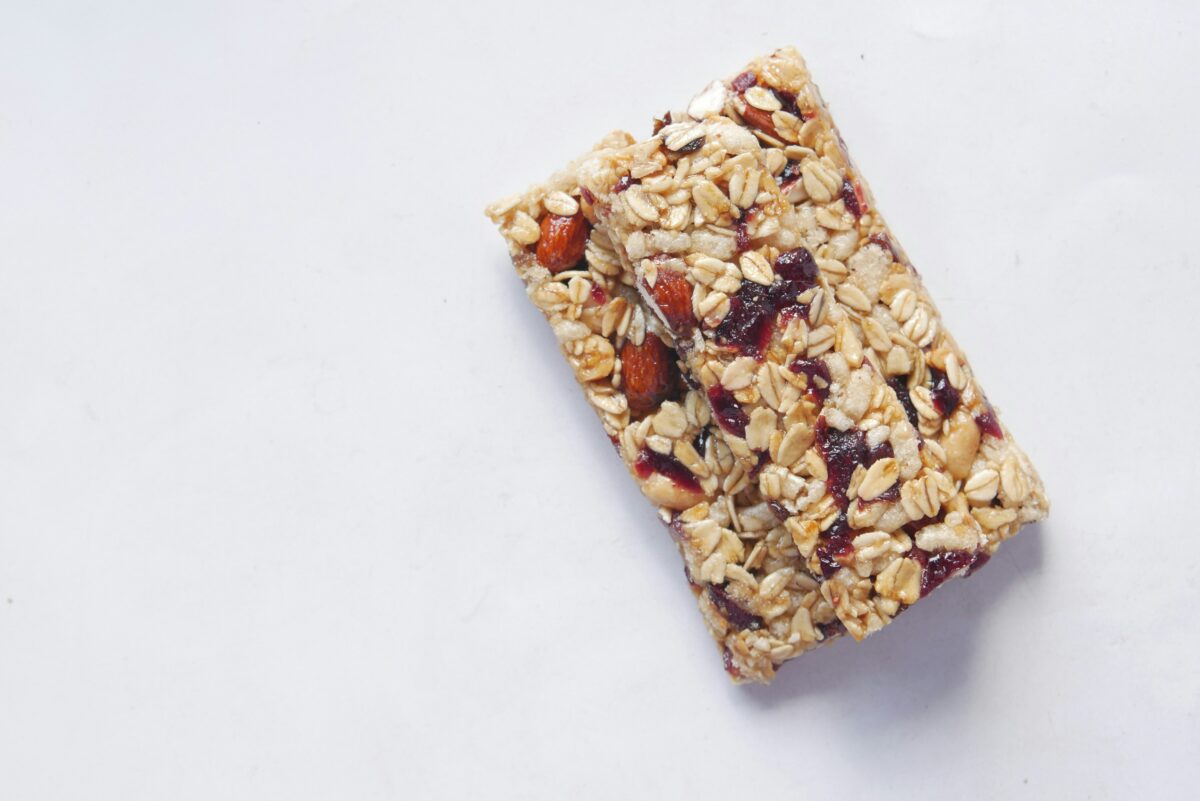
Protein bars have become the emergency food of modern life. We keep them in gym bags, glove compartments, office drawers, and backpacks because they promise discipline in a wrapper.
Some are genuinely useful, especially when they replace a worse option during a busy day. Others are closer to candy bars with added protein powder, sugar alcohols, chocolate coatings, syrups, and a long ingredient list that reads more like a lab inventory than a snack.
The word protein can make us forgive a lot, even when the bar is low in fiber, high in saturated fat, or loaded with sweeteners that leave us hungry again an hour later.
A better protein bar should earn its spot. As a snack, it should not need dessert-level sweetness to taste good. We want a clear protein source, enough fiber to help with fullness, modest added sugar, and saturated fat that doesn’t quietly creep up.
Choosing snack bars with no more than 2 grams of added sugar or 2 grams of saturated fat when possible, which is a much stricter filter than most shoppers use in the aisle.
If a bar tastes like a brownie, has a chocolate shell, and takes ten minutes to read the label, we should treat it as a convenience food, not a daily health ritual.
Bottled Smoothies
Smoothies feel virtuous because they speak the language of fruit. Mango, berry, banana, greens, chia, coconut, and immunity blends make the bottle sound like a farmer’s market got blended into breakfast.
The problem is that many bottled smoothies pack several servings of fruit into one drink, sometimes with juices, purees, sweetened yogurt, or added sugars. Drinking fruit is not the same as eating it.
We do not chew, we do not slow down, and we may not feel as full as we would after eating whole fruit with protein and fiber. That is how a smoothie becomes a fast-moving calorie stream with a halo on top.
A better smoothie has structure. We should build it around whole fruit, vegetables, protein, and an unsweetened liquid base instead of fruit juice.
Avoid adding sugars in smoothies, including fruit juice, and use water, milk, or unsweetened alternatives as the base. The most useful smoothie is closer to a small meal than a sweet drink before a meal.
If we buy one bottle, the label should show fiber, protein, and no added sugar. If it has more fruit juice than whole fruit, it is closer to a sweet beverage than the clean breakfast it pretends to be.
100% Fruit Juice

The phrase “100% juice” sounds like a clean win. No soda, no artificial color, no obvious junk. Still, juice strips away one of the fruit’s greatest gifts: fiber.
Whole fruit slows us down. It makes us chew, fills space in the stomach, and delivers sweetness in a package that takes time to eat. Juice moves differently.
A glass of orange, apple, grape, or cranberry juice can deliver fruit sugar quickly, but not with the same fullness. That becomes especially tricky in the morning, when juice sits next to cereal, toast, flavored yogurt, or pastries, quietly adding another sweet layer to the meal.
Whole fruit is almost always the better everyday choice. Bottled juices, even when labeled 100% fruit juice, lack fiber and are quickly digested, making them less satisfying than whole fruit.
We do not need to panic over a small glass of juice, but we should stop treating it like a free health pass. If we want orange flavor, eating an orange usually gives us more fullness and better pacing.
If we drink juice, smaller portions work best, especially when paired with protein or a balanced meal rather than swallowed like water.
Veggie Chips

Veggie chips are masters of suggestion. The bag shows beets, spinach, sweet potatoes, tomatoes, or kale, and our brain fills in the rest. We imagine something close to vegetables, only crispier and more fun.
Many veggie chips, however, are still salty, processed snack foods made with starches, oils, seasonings, and vegetable powders.
Some are not much different from regular chips when it comes to calories, sodium, and fat. The color may come from vegetables, but the eating experience often comes from oil and salt.
This is where sodium becomes the quiet troublemaker. Eating too much sodium can raise blood pressure and increase the risk of heart disease and stroke.
Consuming about 3,400 milligrams of sodium per day on average is well above the recommended limit of less than 2,300 milligrams. If veggie chips are the only way someone enjoys vegetables, they can be a bridge.
But they should not replace roasted vegetables, raw vegetables with hummus, air-popped popcorn, or actual sweet potato wedges. A chip made from vegetables is still a chip, even if the label says so.
Gluten-Free Snacks
Gluten-free has become one of the most misunderstood phrases in the grocery store. For people with celiac disease or gluten sensitivity, it matters deeply. For everyone else, gluten-free does not automatically mean healthier, lighter, cleaner, or more nutritious.
Many gluten-free cookies, crackers, breads, muffins, and snack packs rely on refined starches like rice flour, potato starch, tapioca starch, and corn starch.
These ingredients can create a soft texture and a familiar crunch, but they do not always provide fiber, protein, or lasting fullness. The package may remove gluten without adding much nourishment.
We should judge gluten-free foods the same way we judge every other packaged food. Does it have fiber? Does it have protein? Is the ingredient list built around whole grains, beans, nuts, seeds, or vegetables, or is it mostly refined starch and sugar?
Gluten-free oatmeal, quinoa, beans, lentils, buckwheat, nuts, seeds, fruits, and vegetables can all be strong choices. Gluten-free cupcakes and crackers are still cupcakes and crackers. The label does not become healthier just because one protein has been removed.
The Cleanest Rule for Spotting Fake-Healthy Foods

The healthiest-looking food is not always the healthiest choice. We should flip the package over before we let the front label make the sale. “Organic” does not erase sugar. “Plant-based” does not erase sodium. “Gluten-free” does not add fiber. “High-protein” does not cancel saturated fat. “Made with fruit” does not mean the product behaves like fruit in the body.
The practical rule is simple: check added sugar, sodium, saturated fat, fiber, protein, and serving size before trusting the glow.
Ultra-processed foods make up a large share of the American diet, with adults across age groups getting more than half of their calories from them. That does not mean every packaged food deserves suspicion, but it does mean we need sharper eyes.
The most powerful everyday foods are usually designed to look boring on purpose: plain yogurt, oats, beans, eggs, fish, fruit, vegetables, nuts, seeds, lentils, whole grains, and simple proteins. They do not need a health halo because the food itself does the work.
Conclusion
The grocery store is full of foods that whisper the right words and hide the harder truths. Some of them can still fit into a balanced diet, but they should not be given automatic trust just because the packaging sounds wholesome.
Once we start reading the back label with the same attention we give the front, the fog clears quickly. We see which foods nourish, which merely support wellness, and which deserve a smaller role on the plate.
A healthy diet is not built on perfect choices. It is built on repeated honest ones. The goal is not fear, guilt, or a pantry purge. The goal is clarity.
When we learn to spot the difference between real nourishment and clever marketing, we stop letting the grocery aisle write our health story for us.