700 Drones Seized Near World Cup Events, but White House Says None Were Weaponized
Hundreds of drones entered restricted airspace above FIFA World Cup stadiums and fan zones across the United States, creating a security challenge that unfolded largely out of sight of the millions watching below.
Federal authorities recovered or seized approximately 700 drones during the tournament. Despite the scale of the violations, a senior White House counterterrorism official said investigators found no weaponized aircraft among them.
The announcement offers relief after months of warnings about the threat drones could pose to packed stadiums. It also exposes a different problem: ordinary operators repeatedly flew into protected airspace without understanding, or respecting, federal restrictions.
Officials Found Carelessness, Not an Organized Attack
Sebastian Gorka, the White House deputy assistant to the president and senior director for counterterrorism, addressed the incidents during a drone industry conference in Washington.
“No weaponized drones were seized,” Gorka told reporters. Officials determined that many of the operators were hobbyists or visitors who apparently did not know about temporary flight restrictions. Authorities found no evidence in the recovered aircraft of a coordinated plot to attack a stadium or fan gathering.
That distinction matters, but an unarmed drone can still create danger. It can collide with another aircraft, fall into a crowd, interfere with emergency operations or force security teams to redirect resources from more serious threats.
A drone also does not need to carry an explosive device to create panic. Above a tightly packed stadium, an unidentified aircraft can trigger emergency procedures before officials determine who controls it or what it is carrying.
World Cup Skies Became No Drone Zones
The Federal Aviation Administration created temporary flight restrictions around every U.S. World Cup stadium on match days. Unless specifically authorized by air traffic controllers, aircraft could not operate within three nautical miles of a venue or below 3,000 feet above ground level.
Fan zones received their own protected airspace. Drones were prohibited within one nautical mile and up to 1,000 feet above designated public gatherings.
Those boundaries turned large sections of 11 host cities into temporary no-drone zones. The U.S. matches were held in Atlanta, Boston, Dallas, Houston, Kansas City, Los Angeles, Miami, the New York and New Jersey area, Philadelphia, the San Francisco Bay Area and Seattle.
The restrictions were designed to create enough space for authorities to detect an unknown aircraft, identify its operator and intervene before it reached a crowded venue. The presence of approximately 700 unauthorized drones shows how frequently those protective boundaries were tested.
Drone operators risked far more than losing their equipment. Earlier federal warnings said unauthorized flights could lead to criminal prosecution and penalties of up to $100,000.
More Than 1,600 Drones Reportedly Approached Restricted Areas
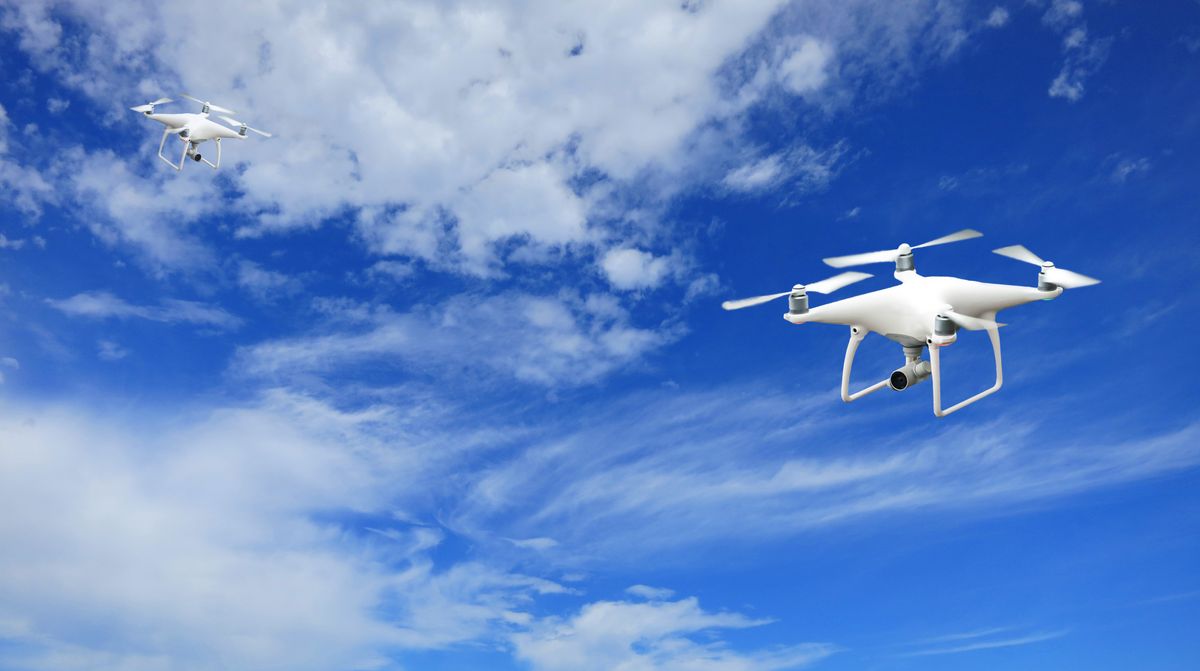
The 700 recovered drones represented only part of the aerial activity detected during the tournament. Federal officials reportedly identified more than 1,600 drones attempting to enter restricted zones around World Cup venues.
Some aircraft may have turned away, remained outside the most sensitive areas, or been handled without confiscation. Others were neutralized or traced to operators on the ground.
The FBI described the operation as the most extensive airspace protection and drone mitigation campaign conducted in the United States. Agents worked alongside the Department of Homeland Security, Transportation Security Administration, FAA, and local law enforcement agencies.
The government also established its first counter-unmanned aircraft training school before the tournament. Officers from across the country learned how to identify unauthorized drones, track operators and deploy mitigation equipment around major public events.
That effort supported security across what officials described as the equivalent of dozens of Super Bowls staged over several weeks. The White House’s FIFA World Cup Task Force coordinated federal planning for 11 U.S. venues, base camps, fan festivals and other gatherings.
A $115 Million Security Test Played Out Above Fans.
Months before the tournament, the Department of Homeland Security announced a $115 million investment in counter-drone technology. The department also created an office focused on rapidly acquiring and deploying drone detection and mitigation systems.
The World Cup became a major test of that investment. Authorities had to distinguish recreational aircraft from news drones, public safety equipment and possible hostile devices, often in dense urban environments filled with electronic signals.
Detection software played a central role. Gorka said the government must know what is flying, arguing that software-based awareness will remain essential as consumer drones become cheaper and more capable.
Counter-drone work involves more than simply knocking an aircraft from the sky. Officials must consider where it could fall, whether signal interference could affect lawful systems, and whether disabling it would create a greater hazard for spectators below.
Federal law also limits which agencies can intercept or disable drones. That complicated authority has fueled debate in Congress over whether more local and state agencies should receive counter-drone powers.
The Absence of Weapons Does Not Erase the Risk
The discovery that none of the seized drones carried weapons is unquestionably positive. The United States completed the tournament without the type of aerial attack that security planners feared.
Yet the number of violations remains difficult to dismiss. If hundreds of recreational operators could enter restricted airspace, officials must consider whether a determined hostile actor could attempt to blend into the same traffic.
Every harmless drone forces security personnel to make a rapid judgment. Teams cannot assume an aircraft belongs to an uninformed tourist until it has been identified and examined.
The incidents therefore created a costly distraction even when no malicious intent existed. Each detection required monitoring, coordination and, in many cases, personnel on the ground to locate the pilot.
The Homeland Security Department plans to release a report detailing the government’s counter-drone operations during the tournament. Its findings could shape security planning for the 2027 Super Bowl and the 2028 Summer Olympics in Los Angeles.
A Warning for America’s Next Major Events
The World Cup demonstrated that counter-drone defenses can protect enormous gatherings without automatically turning every unauthorized flight into a public emergency. It also showed that technical defenses must be paired with clearer education and stronger enforcement.
Drone manufacturers and mobile applications could help by delivering prominent alerts whenever temporary restrictions activate. Geofencing technology may prevent some aircraft from taking off near protected venues, although such systems are not universal and can be bypassed.
Operators, meanwhile, remain responsible for checking federal airspace restrictions before every flight. Owning a small recreational drone does not create permission to fly above a stadium, concert, fan festival or emergency scene.
No weaponized drones were found among the 700 aircraft recovered during the World Cup. That is the reassuring headline. The more lasting lesson, however, is that America’s airspace is becoming crowded faster than many people understand the rules governing it.