Trump Rejects Iran Link to Minnesota Water Cyberattacks and Blames State Leadership
A cyberattack targeting more than 30 Minnesota water systems has become the center of an explosive political dispute. President Donald Trump rejected suggestions that Iran may have been involved and instead blamed Minnesota’s government for what he described as serious incompetence.
The president offered no evidence identifying the attackers or explaining how state officials caused the intrusions. Federal investigators, meanwhile, have not publicly concluded who carried out the coordinated attacks.
The unresolved attribution question matters far beyond Minnesota. Similar incidents have surfaced in several states, raising concerns that attackers are exploiting weaknesses shared by small and medium-sized American water utilities.
Trump Turns a Cyber Investigation into a Political Fight

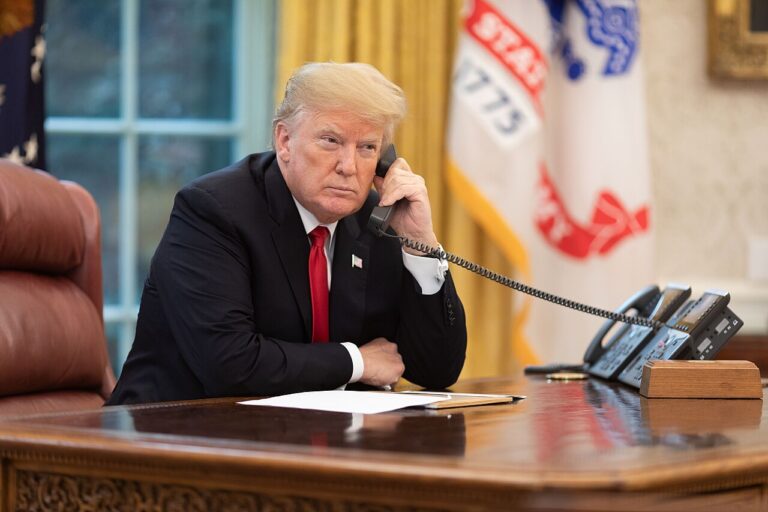
Trump addressed the Minnesota attacks during a Cabinet meeting at Camp David on July 31. He said he did not believe Iran was responsible, despite reports that federal officials were examining possible connections to Iranian or Iranian-affiliated hackers.
“I think I blame it on Minnesota because they’re grossly incompetent,” Trump said. He specifically criticized Democratic Gov. Tim Walz but did not identify another suspect.
The White House did not provide additional evidence supporting the president’s assessment. It also did not explain whether his comments reflected classified intelligence, an investigative update or his personal judgment.
Trump’s statement created an immediate divide between presidential messaging and the cautious language used by investigators. The FBI has confirmed its involvement but has not formally assigned responsibility to Iran, Minnesota officials or any specific hacking group.
Walz Says Minnesota Was Not the Only Target
Walz rejected Trump’s accusation and said the president knew that other states had experienced similar attacks. The governor argued that the incidents illustrated the expanding role of cyber operations in modern conflict.
He also blamed federal staffing and funding decisions for weakening the country’s defenses. Walz claimed reductions connected to the Department of Government Efficiency had damaged the Cybersecurity and Infrastructure Security Agency’s ability to protect critical systems.
The governor said Minnesota specialists identified the vulnerability and worked with local communities to contain it. State officials reported no continuing requests for residents to reduce water consumption after the immediate disruptions ended.
The political exchange produced sharply different explanations. Trump framed the incident as a failure of Minnesota leadership, while Walz presented it as a broader national security threat that required stronger federal support.
Neither political argument answers the central forensic question. Investigators must still determine who entered the systems, how access was obtained, and whether the attackers coordinated the intrusions across multiple states.
More Than 30 Water Systems Came Under Attack
Minnesota IT Services said attackers targeted over 30 public water systems during incidents reported on Sunday and Monday. The intruders focused on technology used to monitor and control water equipment remotely.
Among the apparent targets were programmable logic controllers, commonly called PLCs. These industrial computers manage physical processes such as pumps, pressure levels, valves, filtration systems and chemical treatment.
An attacker who gains access to a controller may be able to change settings, disrupt automatic operations or lock legitimate employees out of the system. Even when drinking water remains safe, the intrusion can force utilities to rely on manual procedures while technicians recover control.
Communities including Braham and Plymouth experienced disruptions. Braham’s well and treatment plant controls reportedly went offline temporarily, leaving the community dependent on water already stored in its tower.
Residents in some affected locations were asked to limit water use while officials investigated. Minnesota authorities later said there were no active conservation requests and no known continuing effects on water service.
Similar Incidents Spread Beyond Minnesota

The threat was not confined to one state. The FBI and Environmental Protection Agency issued a nationwide warning after water systems in at least seven states reported related incidents.
Georgia and Michigan were among the states examining similar activity, according to ABC News. Michigan officials received a federal alert and later collected nine reports that appeared to match the described pattern.
Security alerts warned that attackers were targeting programmable logic controllers and changing passwords to lock out utility workers. Some affected systems reportedly experienced pressure problems, software disruptions or other operational difficulties.
The broader pattern weakens the idea that Minnesota alone explains the attacks. Poorly protected equipment may have created an opportunity, but exploiting that opportunity still requires an outside actor.
Security failures and foreign involvement are not mutually exclusive. A hacker can take advantage of weak passwords, outdated software or exposed equipment regardless of whether the attacker works for a government, a criminal group or independently.
Why Investigators Are Examining a Possible Iran Connection
U.S. authorities have repeatedly warned that Iranian-affiliated hackers are interested in American water and wastewater infrastructure. These groups have previously targeted industrial equipment accessible through the internet.
A 2023 campaign linked to Iran affected water utilities that used certain Israeli-made controllers. One intrusion at a Pennsylvania facility forced employees to switch to manual operations, although officials reported no threat to drinking water.
The latest Minnesota attacks reportedly displayed characteristics resembling techniques associated with Iranian cyber actors. Federal officials briefed state and local leaders about the possibility of an Iranian connection, but that possibility remains under investigation.
Suspecting a country is not the same as formally attributing an attack to its government. Cyber investigators must analyze malicious software, infrastructure, digital fingerprints and operational patterns before making a reliable determination.
Attackers can also disguise their locations or imitate another group’s methods. That makes premature attribution particularly dangerous during heightened tensions between Washington and Tehran.
America’s Small Water Utilities Remain Exposed
Many American water systems operate with limited budgets, small technical staffs and aging equipment. Some rely on remote access because employees must monitor facilities spread across large geographic areas.
That convenience can become a serious weakness when control systems remain connected to the internet without strong security. Default passwords, old software, and insufficient network separation can give attackers a path into equipment controlling physical processes.
Large utilities may employ dedicated cybersecurity teams, but smaller communities often cannot afford the same protection. A town with only a few thousand residents still provides an essential service, yet its defenses may depend on a small group of workers already managing several responsibilities.
The result is a national security problem distributed across thousands of local facilities. An attack does not need to shut down an entire state to cause fear, financial damage or pressure on emergency services.
Federal and state agencies have urged utilities to change default passwords, limit remote connections and preserve manual control options. Those basic steps can block many intrusions, but aging infrastructure will require sustained investment rather than one emergency warning.
The Political Argument Cannot Replace the Investigation.

Trump’s decision to blame Minnesota before investigators announced an attacker risks turning a technical security crisis into another partisan confrontation. Walz’s response, focused on federal cuts and Iran, has deepened that divide.
The public deserves a clearer answer based on evidence. If Iranian-affiliated hackers launched the attacks, officials must explain the extent of the campaign and how the United States will respond.
If criminals or independent hackers were responsible, authorities must identify their motive and determine whether they intended to disrupt water service. If simple security failures allowed opportunistic intrusions, communities need resources to close those gaps before another attacker finds them.
For now, Minnesota’s water continues to flow, and officials report no major effect on water quality. Yet the attack delivered a warning that cannot be dismissed through political blame: the digital systems controlling America’s most basic services may be reachable from far beyond the communities that depend on them.