8 Holiday Foods From the 1960s That Have Quietly Disappeared From Family Tables
Picture a holiday table in 1964. The good china is out, the tablecloth has been ironed, and the turkey sits in the middle like a trophy. Around it are dishes that took hours to make and that everyone expected to see, year after year, because that is what the holidays tasted like.
Many of those dishes are still with us. Turkey, stuffing, mashed potatoes and pumpkin pie haven’t gone anywhere. But a surprising number of the foods that once crowded the 1960s holiday table have slipped away so gradually that most families didn’t notice until someone asked, “Whatever happened to Grandma’s ambrosia?” These are the holiday foods from the 1960s that have quietly disappeared, and the reasons they faded.
1. The Relish Tray
No holiday meal in the 1960s was complete without a relish tray, usually a long glass dish with separate sections. It held celery sticks stuffed with cream cheese or pimento cheese, black and green olives, sweet pickles, radishes cut into roses and sometimes pickled watermelon rind. Kids would put olives on their fingertips and eat them one by one.
The relish tray was a way to keep guests happy while the turkey finished and to make the table look full and festive. Today, it has been replaced by charcuterie boards and veggie platters with dip. The old cut-glass relish dishes now turn up at estate sales, often still in their original boxes.
2. Ambrosia
Ambrosia was a sweet, creamy fruit salad made with mandarin oranges or fresh oranges, pineapple, shredded coconut and mini marshmallows. Some families added maraschino cherries, pecans and sour cream or whipped topping. In the South, many cooks made it with fresh oranges and coconut alone, the way their mothers had.
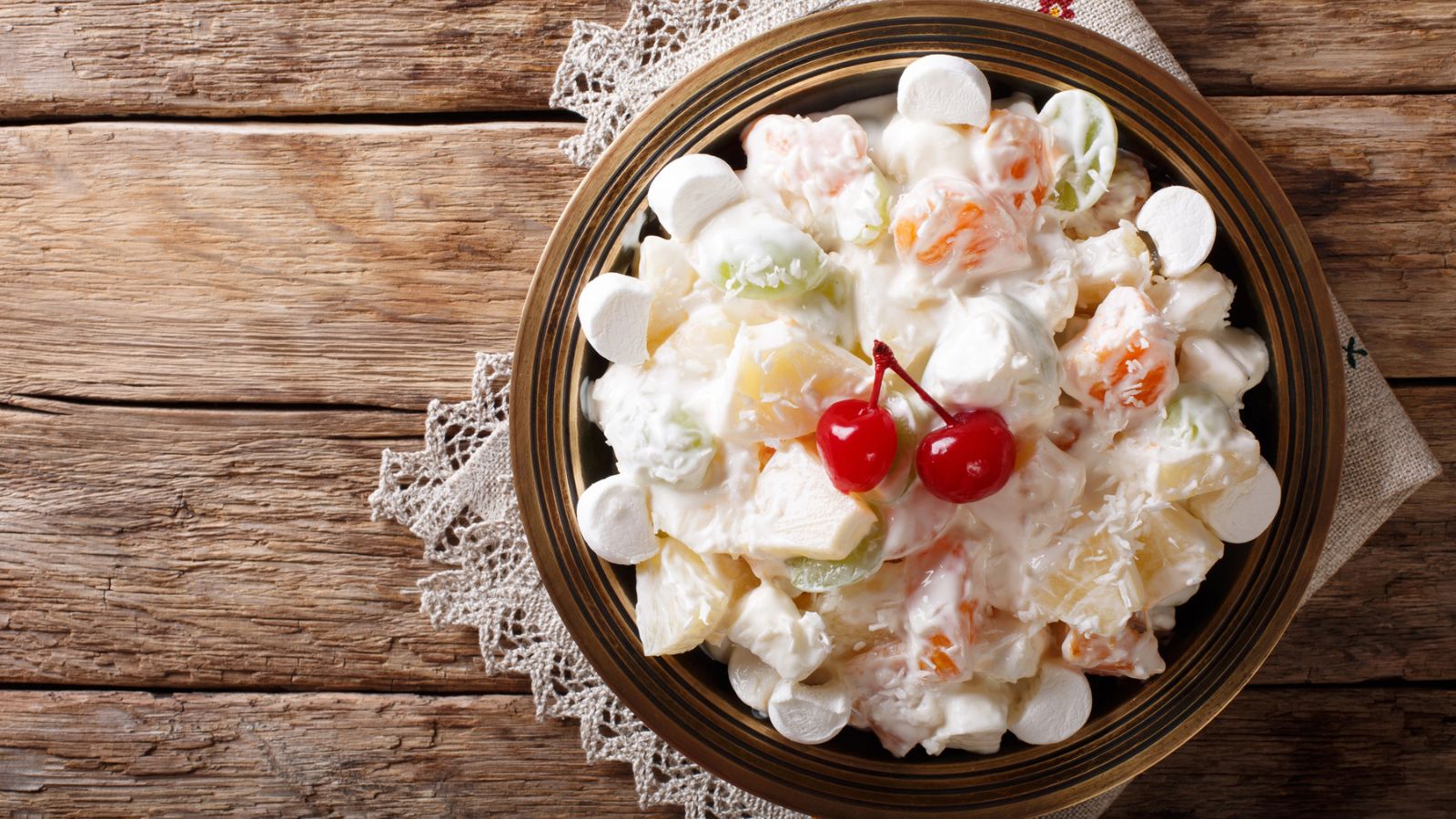
It was served as a side dish or a dessert, depending on who you asked. Younger guests often find ambrosia confusing, since it sits somewhere between salad and candy. While some families still make it every year, it has vanished from most holiday tables, and recipes for it are now often described as “retro.”
3. Creamed Onions
Small white pearl onions in a rich white sauce were once a fixture on Thanksgiving and Christmas tables, especially in New England and the Midwest. Cooks peeled dozens of tiny onions by hand, simmered them until tender and folded them into a sauce of butter, flour and milk, finished with a dash of nutmeg.
Peeling all those onions was a chore that brought tears, literally. Frozen creamed onions made the job easier for a while, but the dish slowly lost its place to newer sides. Green bean casserole, created in a Campbell’s test kitchen by Dorcas Reilly in 1955, became the creamy vegetable of choice for many families instead.
4. Oyster Dressing
Oysters were once common and cheap enough that many American families added them to their holiday stuffing. Oyster dressing was especially popular along the coasts, in the Chesapeake Bay region and in parts of the South. The briny oysters mixed with bread, celery, onion and butter gave the dressing a rich flavor that people either loved or refused to touch.
As oysters became more expensive and fewer people grew up eating them, the dish faded. Today, most families stick with bread or cornbread dressing. Oyster dressing still shows up in coastal homes and old family cookbooks, but it is far from the holiday standard it once was.
5. Mincemeat Pie
Mincemeat pie has roots going back centuries in England, and early versions really did contain meat. By the 1960s, many American families made it with jarred mincemeat, a dark, spicy mix of chopped apples, raisins, currants, suet, spices and sometimes brandy. It was a must-have pie for grandparents who had grown up with it.
Younger family members often found it too rich, too spiced or simply strange, especially after hearing the name. Pumpkin, pecan and apple pies gradually pushed it off the dessert table. Jars of mincemeat are still sold around the holidays, but you will usually find them on a bottom shelf, and fewer people reach for them each year.
6. Homemade Fruitcake
Fruitcake has become a punchline, but in the 1960s many women made it with real pride. They started weeks before Christmas, packing a heavy cake with candied cherries, citron, nuts and raisins, then wrapping it in cheesecloth soaked in brandy or rum. The cakes were “fed” with more liquor every week until the holidays.
Store-bought fruitcakes, often dry and loaded with brightly colored candied fruit, helped give the cake its bad reputation. Jokes about fruitcakes being regifted for decades did the rest. Homemade fruitcake still has loyal fans, but it is no longer a standard on most family tables.
7. The Tom and Jerry
Before eggnog cartons filled the dairy case, many families served a hot holiday drink called a Tom and Jerry. It was made with a thick, sweet batter of beaten eggs, sugar and spices, mixed with hot milk or water and often a splash of brandy and rum. It was especially popular in the upper Midwest, in places such as Wisconsin and Minnesota.
Families kept special Tom and Jerry bowls and mugs, often decorated with the drink’s name in gold or red letters. Those sets still turn up at thrift stores. While a few bars and families keep the tradition alive, most younger people have never heard of the drink, let alone tasted it.
8. Divinity and Homemade Ribbon Candy
Holiday candy-making was a serious affair in the 1960s. Divinity, a fluffy white candy made from sugar, corn syrup and egg whites whipped to stiff peaks, was a test of skill. Many cooks swore it would never set on a humid day, and they were often right. Plates of divinity, fudge and peanut brittle were passed around and given as gifts.
Ribbon candy, with its glossy waves of color, sat in a glass dish on many coffee tables, often fused into one big clump by New Year’s. Homemade divinity has become rare as fewer people make candy at home, and many younger people have never tasted it.
Why These Dishes Faded
Several things changed holiday menus over the past sixty years. Families got smaller, women entered the workforce in larger numbers and had less time for labor-heavy dishes, and grocery stores offered more ready-made options. Tastes changed too, moving away from heavy, sweet and creamy dishes toward lighter food.
Still, many people are rediscovering these old recipes and bringing a dish or two back to the table for nostalgia’s sake. If you want more ideas, take a look at these Christmas foods many boomers loved but rarely see today. Which of these holiday foods did your family serve, and would you make it again this year?