8 Signs American culture is making people meaner
America does not feel angry only on cable news anymore. It feels angry in the grocery store when someone blocks the aisle with their cart and acts like they own the cereal section. It feels angry in traffic when a driver tailgates like they are late for surgery.
It feels angry in comment sections, airport lines, school board meetings, customer service desks, family group chats, and neighborhood apps where someone is always furious about a barking dog, a parking spot, or a trash can left out too long. That is the strange mood hanging over American life now.
People are still kind. Strangers still help each other. Neighbors still shovel sidewalks. Friends still show up with casseroles. But there is also a sharper edge in the culture, a sense that everyone is tired, suspicious, overstimulated, and one inconvenience away from snapping.
It is showing up in how people drive, talk, post, argue, shop, date, work, and treat strangers. Recent stress data shows many adults feel isolated from others, and a disconnected culture rarely becomes a gentler one.
Public patience is disappearing.

Americans used to joke about waiting in line. Now waiting feels like a personal insult. A slow cashier, a delayed flight, a wrong coffee order, a long pharmacy line, or a restaurant running behind can turn ordinary adults into unpaid courtroom attorneys arguing their case to anyone in a name tag.
The problem is not frustration itself. Everyone gets frustrated. The problem is how quickly frustration can turn into disrespect.
People are busy, overworked, overstimulated, and used to instant everything. Phones load fast. Food gets delivered. Packages arrive at the door. Streaming skips commercials. Apps solve problems in seconds. Then real life asks people to wait, and suddenly basic patience feels like an outdated social skill.
That shift matters because public life depends on tiny acts of restraint. Letting someone merge. Saying excuse me. Waiting for your turn. Not yelling at the teenager making minimum wage because the fries are cold. When those little restraints disappear, daily life becomes more hostile.
Recent polling found that many Americans think public behavior has grown ruder since the pandemic, which helps explain why errands now feel like social experiments nobody agreed to join.
The internet has trained people to speak without consequences.
The internet did not invent cruelty. It made cruelty faster, easier, and more entertaining.
A person can insult a stranger before breakfast, mock someone’s appearance at lunch, argue with a grieving parent by dinner, and go to bed feeling like they “won” because a few people liked the comment. The screen creates distance, and distance makes people braver in the worst possible way.
This behavior does not stay online. After years of posting hot takes, clapbacks, insults, sarcasm, and instant judgment, people start carrying that tone into real life. They talk to waiters like comment sections. They talk to relatives as if they were political enemies. They talk to coworkers as if every disagreement had to have a winner.
Online harassment is not rare either. Survey data has found that many Americans have experienced online harassment, which shows how normal digital cruelty has become.
The ugly part is that meanness often gets rewarded. The calm comment disappears. The cruel one spreads. The thoughtful person logs off. The loudest person gets attention. Over time, the culture learns the wrong lesson: kindness is quiet, but cruelty performs.
Politics turned disagreement into disgust.
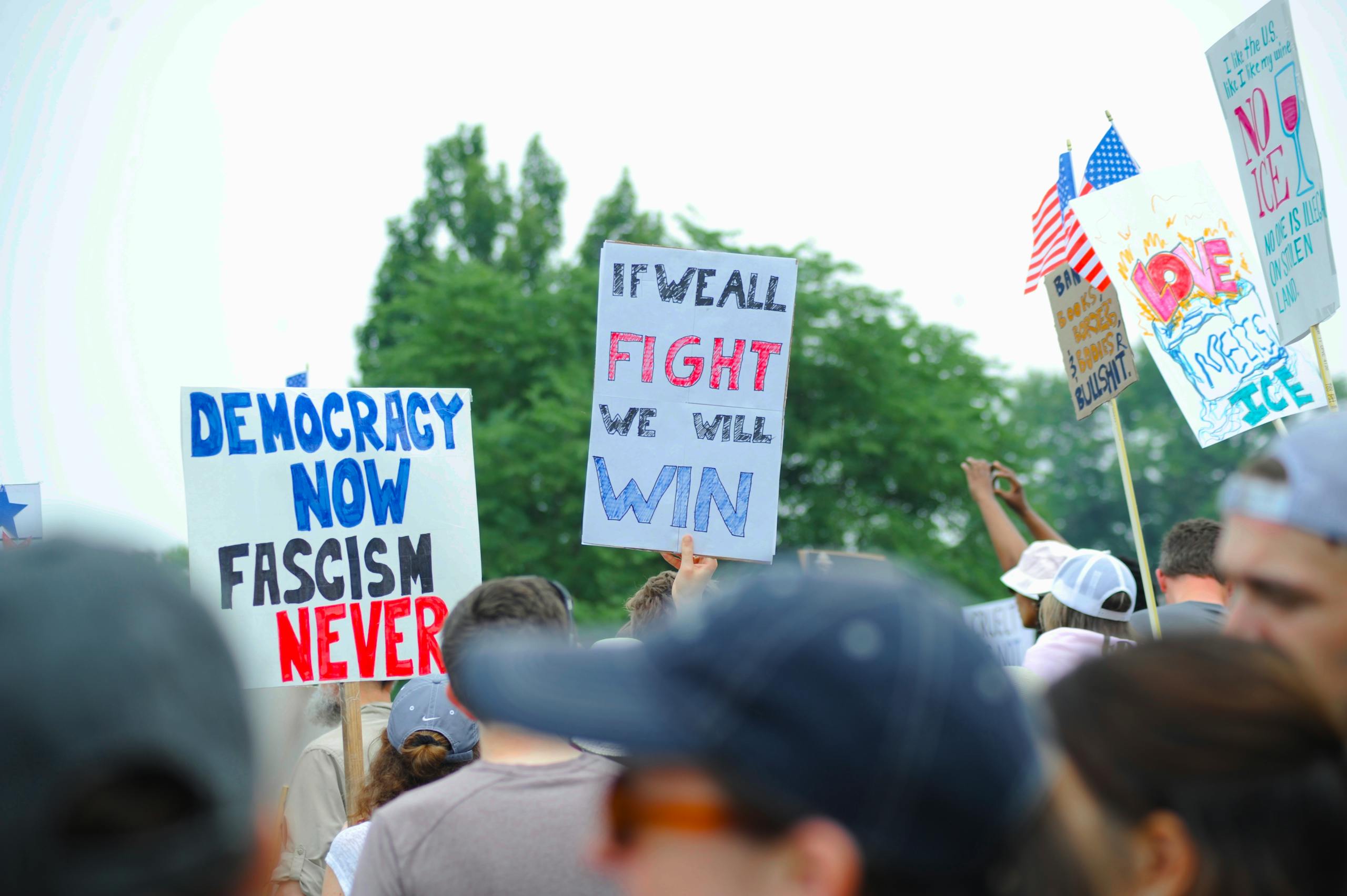
Americans have always argued about politics. The difference now is that disagreement often feels like moral contamination.
It is no longer just, “I think your policy is wrong.” It becomes, “You are evil.” “You are brainwashed.” “You hate America.” “You hate freedom.” “You hate families.” “You hate people like me.” Once politics turns people into symbols, basic decency gets easier to abandon.
This is why family dinners, friendships, churches, classrooms, workplaces, and neighborhood conversations feel more fragile. People are not only debating taxes, immigration, guns, schools, abortion, religion, or healthcare. They are debating whether the person across from them is still safe to love.
The emotional cost is real. National stress data show that politics causes strain between family members, which helps explain why so many ordinary conversations now feel like stepping near a live wire.
A culture becomes meaner when people stop seeing opponents as wrong and start seeing them as enemies. That mindset may feel satisfying in a comment section, but it is poison in a country where people still have to share roads, schools, offices, hospitals, and Thanksgiving tables.
Road rage has become almost normal.
Nothing reveals American anger faster than a merge lane. A driver gets cut off, and suddenly, the highway becomes a battlefield. Horns blare. Hands fly. Cars tailgate. People brake-check, speed up, refuse to let others in, and act like the left lane is a personal inheritance. The disturbing part is how common this has become.
Recent research on driving found that 96% of drivers admitted to engaging in at least one aggressive driving behavior in the past year. That is not a tiny group of reckless people. That is nearly everyone admitting they have brought anger behind the wheel.
Road rage is scary because the stakes are higher than a rude comment. A bad mood at 65 miles per hour can become a crash, injury, arrest, or death. A person who would never scream in a grocery store may suddenly behave like a villain because someone changed lanes too slowly.
Traffic has become a pressure cooker for modern American culture. People are late, stressed, expensive gas is burning, someone is texting, someone is speeding, someone is camping in the passing lane, and everybody thinks they are the reasonable one.
A country’s mood is easy to spot when the light turns green, and someone waits half a second too long.
Customer service has become a punching bag.

Customer service workers have become the front line for America’s bad mood. Cashiers, flight attendants, nurses, teachers, servers, baristas, delivery drivers, hotel clerks, call-center workers, and retail employees absorb the anger of people who are usually mad at something bigger than them.
High prices, long waits, bad policies, broken systems, understaffing, confusing apps, and corporate decisions all get dumped on the person standing closest. That is one of the ugliest signs of cultural meanness.
Many customers know the worker did not set the price, cancel the flight, design the website, deny the insurance claim, or understaff the restaurant. But anger needs a target, and the person in uniform becomes a convenient one.
Workplace strain is also becoming more visible. Recent reporting found that many workers noticed more confrontational behavior among coworkers, suggesting the meanness problem is not confined to public spaces. It follows people into offices, breakrooms, Zoom calls, and group chats.
A culture becomes meaner when people start treating service workers like emotional trash cans. The person scanning groceries, pouring coffee, or answering the phone may be the only human face attached to a frustrating system, but that does not make them the enemy.
Loneliness is making empathy harder.
Lonely people are not automatically mean. But a lonely culture can become sharper.
When people feel disconnected, they lose some of the daily practice that keeps empathy alive. Small talk, neighborly favors, casual friendships, church groups, local clubs, shared meals, workplace bonds, and family support all teach people how to care about someone beyond themselves.
When those connections thin out, strangers become easier to dismiss. Recent data shows that about one in six adults often feel lonely or isolated, with younger and lower-income Americans especially likely to report those feelings. That matters because loneliness not only hurts the lonely person. It changes how people move through public life.
A lonely person may become defensive. A stressed person may become impatient. A disconnected person may assume rejection before it happens. A person who feels unseen may be more likely to snap when life adds another frustration.
America’s meanness problem is partly an isolation problem. People are not getting enough soft human contact, so every hard interaction feels harder.
Nobody trusts anyone anymore.

Distrust makes people mean before anything even happens. If someone assumes the government is lying, the media is manipulating, the neighbor is selfish, the boss is exploiting them, the school is hiding something, and every stranger has an agenda, they walk through life armored.
That armor may feel protective, but it also makes kindness harder.
Trust is the social glue that lets people give each other the benefit of the doubt. Without it, everything becomes suspicious. A mistake looks like disrespect. A delay looks like incompetence. A disagreement looks like corruption. A stranger’s different opinion is often taken as proof that they are stupid, evil, or dangerous.
Public trust has been low for years, and recent data shows trust in government remains near historic lows. Trust in news is also fragile, with fewer adults saying they have trust in mass media to report accurately and fairly.
That kind of distrust changes the culture. People stop assuming good intent. They stop listening. They stop giving grace. They treat every interaction like a possible scam, trap, insult, or power play. A country that cannot trust becomes a country that cannot relax.
Neighborhood life is quietly disappearing.
People are meaner when nobody feels familiar. A neighbor you know is Mrs. Jenkins from two doors down. A neighbor you do not know is the person with the loud dog, the ugly fence, the political sign, the suspicious guests, and the trash cans that somehow offend the entire block.
That difference matters. Neighborhood life once forced people into light social contact. Porch waves. Borrowed tools. Kids playing outside. Mailbox conversations. Cookouts. Yard work. Someone noticed that an elderly neighbor had not been seen in a few days.
Now, many Americans pull into garages, close the door, and disappear indoors. They may know online strangers better than the people living ten feet away.
Recent findings show that only about a quarter of adults say they know all or most of their neighbors, and regular neighborly socializing has declined sharply. That loss makes communities colder.
When people do not know each other, small conflicts grow faster. A parking issue becomes a feud. A barking dog becomes a neighborhood app war. A messy yard becomes a moral judgment. Familiarity does not solve everything, but it softens people. Strangers are easier to attack than neighbors whose names you know.
How Americans can stop becoming meaner\

The answer is not pretending everyone should be cheerful all the time. Americans have real reasons to be frustrated. Life is expensive. Politics is exhausting. Work can be brutal. Healthcare is stressful. Housing is hard. Social media is toxic. Many people are lonely, tired, and scared about the future.
But frustration does not have to become cruelty. People can start small. Let someone merge. Say thank you. Stop filming strangers for content. Read the full story before attacking.
Do not make a cashier pay emotionally for a corporate policy. Call a friend instead of doomscrolling. Learn a neighbor’s name. Pause before turning a disagreement into a character assassination. Kindness sounds soft, but in a mean culture, it becomes a form of resistance.
Conclusion
American culture is making people meaner because too many parts of daily life now reward impatience, suspicion, outrage, and emotional distance.
Traffic rewards aggression. Social media rewards cruelty. Politics rewards contempt. Customer service absorbs public frustration. Loneliness weakens empathy. Distrust makes everyone defensive. Neighborhoods no longer soften strangers into familiar faces.
That does not mean Americans are bad people. It means many are tired, overstimulated, isolated, and trained by modern life to react faster than they reflect.
The country does not need fake niceness. It needs basic decency to return to normal. People do not have to agree on politics, religion, culture, parenting, money, or anything else to stop treating one another like enemies. A meaner America is not inevitable.
It starts changing the moment people remember that the stranger in traffic, the cashier at the counter, the neighbor across the street, and the person on the other side of the argument are still human beings, not obstacles to their bad day.