10 Traditions That Are Surprisingly Modern and How They Shaped Society
Society thrives on traditions, those repeated practices that give structure and meaning to our lives. While many are assumed to be centuries old, several traditions we consider timeless are actually recent inventions, born from marketing campaigns, cultural shifts, or societal trends.
These modern customs reveal how quickly practices can be established, celebrated, and assumed to be ancient.
Understanding their origins offers a deeper look at how culture evolves and how perceptions of “heritage” can be shaped by commerce and social engineering.
Below, we explore ten traditions that are far newer than most people realize, uncovering the surprising stories behind them.
Diamond Engagement Rings
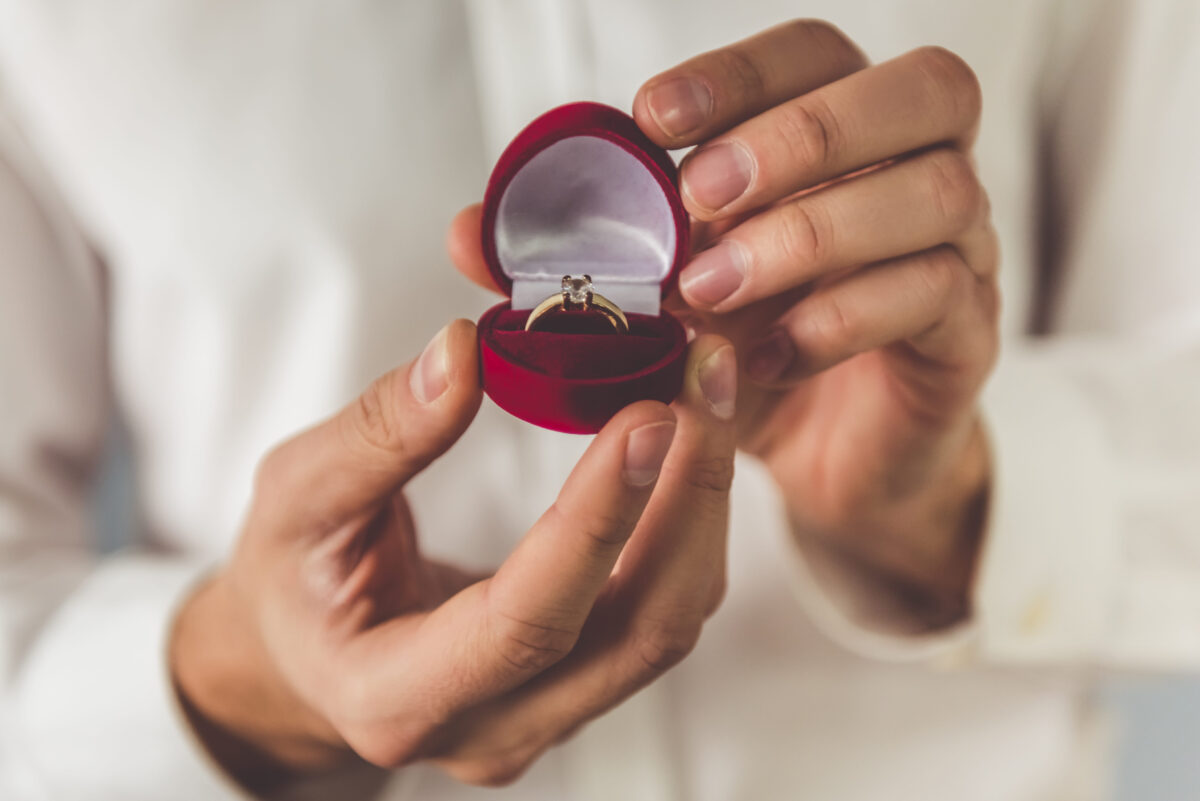
The iconic diamond engagement ring, a symbol of everlasting love, was not an age-old practice but a calculated marketing creation.
In the early 20th century, De Beers Consolidated Mines controlled nearly all of the world’s diamond supply, yet demand for diamonds was low despite their scarcity.
The solution was a brilliant advertising campaign in the 1930s and 1940s that linked diamonds to romance, commitment, and social status. Phrases like “A Diamond is Forever” transformed a common gemstone into an emblem of eternal love.
Today, millions pay thousands for a ring rooted in a commercial strategy rather than an ancient tradition.
This innovation demonstrates the power of advertising in shaping societal norms. What feels like a deeply ingrained cultural practice is, in fact, a century-old marketing phenomenon.
From celebrity engagements to Hollywood portrayals, the diamond ring narrative was carefully curated, embedding itself in public consciousness as a “timeless” tradition.
It serves as a reminder that even seemingly natural customs can have entirely modern, commercially driven origins.
Gender-Specific Toys
For most of history, children’s toys were largely unisex. Boys and girls played with similar objects without societal scrutiny.
The stark division into pink and blue toys emerged only in the 1980s when toy manufacturers and catalogs began marketing items specifically for each gender.
This strategic categorization drove sales and reinforced cultural stereotypes about femininity and masculinity. Dolls, LEGO sets, and even home computers were assigned gender identities, embedding the idea that play was inherently divided by sex.
The long-term impact of this artificial segregation shaped childhood experiences for decades.
Gender-specific marketing influenced social expectations, career interests, and consumer behavior, making what seems like a natural preference actually a product of recent commercial strategy.
Even today, attempts to undo these divisions show how resilient modern traditions can become once culturally ingrained.
Happy Birthday Song

The “Happy Birthday” song is ubiquitous in celebrations, yet its history is surprisingly recent. Written and published in the early 20th century, it remained under copyright for decades, generating royalties each time it was performed publicly.
The lyrics and melody that millions know today were crafted to standardize birthday celebrations, gradually replacing a variety of local tunes and chants. The song only entered the public domain in 2016, formalizing what had already become a cultural staple.
This song’s journey from a simple tune to a global anthem illustrates how a tradition can emerge quickly when it fulfills a social need. By providing a consistent celebratory ritual, it became embedded in communal memory.
Its modern origin is a striking example of how traditions we consider ancient can actually be recent cultural constructs.
Trick-Or-Treating

Halloween’s roots lie in ancient Celtic festivals, later influenced by Christian practices, but trick-or-treating as we know it is distinctly modern.
This ritual emerged in the early 1930s and disappeared briefly during World War II. Post-war suburban expansion and a booming population of children in the United States revived it, solidifying the practice of going door-to-door for candy.
Costumes, neighborhood rituals, and commercialized decorations cemented Halloween’s contemporary image, replacing centuries of religious and community-based observances.
Trick-or-treating demonstrates how holidays can be reinvented to suit cultural and economic contexts.
It reflects the interplay between commercial interests and community habits, proving that even centuries-old celebrations can be adapted or transformed within a few decades.
Saturdays Off
For centuries, humans worked six days a week with Sunday as the sole day of rest. The concept of a two-day weekend, particularly the Saturday off, was pioneered in the early 20th century.
Henry Ford, aiming to boost automobile sales, instituted a five-day workweek for his employees.
By giving workers extra leisure time, they became more likely to travel, creating increased demand for cars. The practice quickly became standard in American industry, reshaping labor culture.
This example shows how business incentives can redefine societal norms. A tradition assumed to be a historical labor right was in fact a strategic economic move.
Today, the weekend is treated as a universal social custom, even though its widespread adoption is only a century old.
Drinking on Saint Patrick’s Day

Contrary to popular belief, heavy drinking on Saint Patrick’s Day is an American invention. Historically, Ireland observed the holiday with religious solemnity, often closing pubs in observance.
The celebratory drinking culture developed in the United States, spreading back to Ireland only decades later.
This demonstrates how diaspora communities can redefine and export cultural practices, creating traditions that appear authentic but are geographically and temporally modern.
The globalization of holidays illustrates how traditions are fluid, shaped as much by societal and commercial dynamics as by historical precedent. What is perceived as ancient can emerge from entirely contemporary cultural contexts.
Thanksgiving

The American Thanksgiving we know, turkey, pumpkin pie, and cranberry sauce, is largely a 19th-century reinvention. Historical accounts suggest early colonial meals differed substantially, lacking many foods now considered standard.
The holiday’s modern image was popularized through media, literature, and commercial imagery, creating a narrative that emphasizes specific foods and rituals.
Thanksgiving is an example of how national holidays can be reshaped to establish collective identity and cohesion.
By codifying menu items and rituals, marketers, authors, and politicians created a version of Thanksgiving that resonates culturally, even if it bears little resemblance to historical events.
This constructed tradition emphasizes the power of media and culture in defining what we accept as heritage.
Restaurants
The concept of restaurants, offering meals to the public, emerged only during the French Revolution. Declining aristocratic patronage left skilled cooks unemployed, prompting them to sell meals to the general public.
These early establishments formalized dining as a social and economic activity beyond private households. Restaurants evolved into modern culinary culture, redefining how societies approach meals and hospitality.
This recent origin challenges assumptions about long-standing social structures. Dining out is often treated as an enduring tradition, yet it is a product of social and economic adaptation, highlighting how modern necessities can become lasting cultural norms.
Smiling in Photos

Early photography was formal and somber, reflecting portrait traditions. Smiling for photos emerged only in the late 19th and early 20th centuries, influenced by shorter exposure times and evolving social norms.
The practice also aligned with advertising, media, and public image standards, embedding itself into societal expectations.
Smiling in photos illustrates how human behavior can be modified through technology and cultural pressure, establishing a practice that now seems instinctive but is, in fact, remarkably modern.
Santa Claus and the Coca-Cola Effect

Modern Santa Claus, with his iconic red suit, owes much of his image to a 1932 Coca-Cola advertising campaign. Earlier depictions varied in color and style, but Coca-Cola’s branding solidified Santa as a jolly, red-suited figure.
This commercial invention shaped global perceptions of Christmas, creating a character that has since dominated popular culture.
Santa Claus exemplifies how corporate branding can redefine folklore. What is now universally recognized as a centuries-old tradition was largely standardized less than a century ago, showing how commerce and media can craft enduring cultural icons.
In Conclusion
These ten examples reveal that what we consider age-old practices are frequently products of recent innovation, marketing, and social evolution.
Recognizing their modern origins allows us to understand cultural practices more nuancedly, questioning assumptions about heritage and tradition.
The next time we celebrate a holiday, give a diamond ring, or smile for a photo, it is worth remembering how fresh these traditions actually are and how swiftly modern society can create enduring cultural habits.
Key Takeaway
Many traditions we cherish are far newer than assumed, shaped by commerce, social change, and media influence, showing that culture is constantly evolving.
This understanding challenges our perceptions of heritage and highlights the fluidity of social customs. How might recognizing the modern origins of these traditions change the way we celebrate and participate in them?