Wilmington Hospital Shooting: Inside the Targeted Attack, Cross-State Manhunt, and Collapse of a Medical Safe Zone
A Hospital Transformed Into a Crime Scene in Seconds
What began as an ordinary afternoon inside ChristianaCare’s Wilmington Hospital quickly fractured into chaos on June 16, 2026, when gunfire erupted inside one of Delaware’s most critical medical facilities.
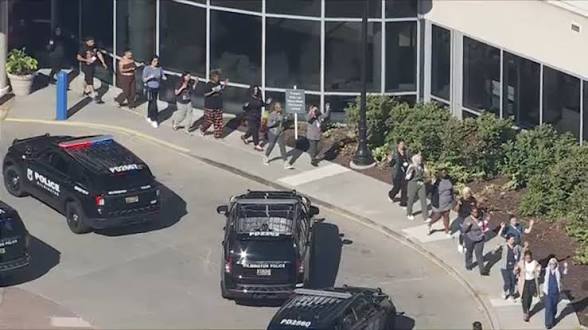
Around 3:30 p.m., emergency calls prompted Wilmington police to rush to the 500 block of West 14th Street. Within minutes, officers entered a space normally defined by controlled urgency, sterile precision, and medical routine, only to find two people struck by gunfire inside the hospital itself.
One victim would not survive. Another was rushed into care under conditions no hospital is designed to handle: treating trauma while simultaneously becoming the scene of the violence that caused it.
The shooter had already disappeared into the wider urban grid of the region.
The Critical Seconds When Care Turned Into Survival Mode
Hospitals operate on predictable rhythms. Monitors beep in steady intervals. Staff moves with practiced urgency. Families wait in chairs that rarely feel comfortable but always feel safe.
That rhythm collapsed instantly.
Inside Wilmington Hospital, staff were forced to follow rapid emergency protocols typically reserved for external disasters rather than internal threats. Patient rooms became shelter points. Corridors shifted from care pathways to evacuation routes. Doors that usually open freely became barriers between safety and uncertainty.
In those first moments, the hospital was no longer just a medical facility. It became a containment environment responding to a threat that originated inside its own walls.
The psychological disruption was immediate: caregivers trained to save lives were suddenly required to preserve them under threat conditions.
Targeted Violence and the Question of Motive
Authorities have described the shooting as targeted and isolated, a classification that narrows the scope of public danger while expanding the complexity of unanswered questions.
A targeted incident suggests intent focused on specific individuals rather than random public harm, but investigators have not disclosed what relationship, if any, existed between the suspect and the victims.
Key details remain sealed or unconfirmed:
- The identity of the suspect
- The identities of both victims
- Whether any workplace connection exists
- What triggered the confrontation inside the hospital
What remains is a controlled but incomplete picture: a precise act of violence inside an uncontrolled environment.
The Cross-State Escape and Philadelphia Arrest
After the shooting, the suspect left the hospital and crossed state lines into Pennsylvania, triggering a coordinated regional response.
Law enforcement agencies expanded the search beyond Wilmington, moving into Philadelphia, where the investigation reached a critical breakthrough. The 23-year-old suspect was eventually taken into custody in the city, ending the immediate manhunt phase but opening a new legal one.
The arrest underscored how modern urban policing operates not within city boundaries but across interconnected metropolitan corridors where suspects can move quickly between jurisdictions.
A vehicle of interest, reported by local outlets as a Toyota RAV4, was towed during the Philadelphia operation, suggesting surveillance and tracking played a role in locating the suspect.
Inside the Hospital Lockdown Architecture
When the first reports of gunfire surfaced, Wilmington Hospital entered full lockdown status.
This is not a single switch but a layered system:
- Immediate internal alerts across departments
- Securing of entry and exit points
- Suspension of non-essential movement
- Emergency diversion of incoming patients
Patients already in the emergency department faced a dual reality: continuing medical care while under protective lockdown.
First responders outside transitioned from emergency treatment to tactical containment, ensuring no additional threats were present while searching for the suspect.
The hospital was later declared secure and fully operational, but the timeline of fear inside the building extended far beyond the final police clearance.
The Hidden Infrastructure of Hospital Crisis Response
Behind the visible police response lies a rarely seen system: hospital incident command protocols.
These frameworks are designed for events such as mass-casualty incidents, fires, or external disasters. However, they must adapt quickly when the threat originates internally.
In situations like Wilmington’s, hospital leadership must simultaneously:
- Coordinate patient safety
- Maintain critical medical services.
- Communicate with law enforcement.
- Manage internal staff movement.
- Protect sensitive medical environments.
This dual responsibility creates one of the most complex emergency environments in public infrastructure: a place that must remain operational while under active threat.
Emotional Fallout Inside a Medical Environment
While official updates focus on arrests, victims, and investigation timelines, the internal experience of hospital staff is often less visible.
Healthcare workers are trained for trauma, but not for trauma inside their own workspace.
The psychological rupture is distinct:
- Staff returning to the same corridors where the evacuation occurred.
- Patients recalling confusion during lockdown
- The sudden shift from caregiver roles to survival instincts
Even after the hospital reopens, the emotional environment does not reset as quickly as the physical one.
The Wider System Stress Test: Trust in Healthcare Spaces
Hospitals rely on public trust more than almost any other institution. People enter them during vulnerable moments, expecting protection and care.
Incidents like the Wilmington Hospital shooting disrupt that expectation, even temporarily.
The impact extends beyond those present during the event:
- Families reconsider timing of non-urgent visits.
- Staff face renewed concerns about workplace safety.
- Administrators reassess internal security protocols.
A hospital shooting not only injures individuals. It temporarily destabilizes confidence in a system designed to feel predictable and safe.
What Investigators Are Now Reconstructing
As the immediate emergency phase ends, investigators shift into reconstruction mode.
Key areas of focus typically include:
- Surveillance footage from hospital corridors
- Access logs and entry point data
- Movement tracking before and after the shooting
- Digital communication records tied to the suspect
- Witness timelines from staff and visitors
This reconstruction phase determines not only how the incident unfolded, but how future prevention strategies may be shaped.
A Medical Facility Confronting a Security Reality Shift

The Wilmington Hospital shooting has become more than an isolated violent incident. It has become a stress test of how modern healthcare environments respond when their foundational assumption of safety is interrupted.
Hospitals are designed to operate under pressure. But they are rarely forced to operate under internal threat.
In Wilmington, that distinction collapsed in seconds, leaving behind an investigation, a grieving process, and a renewed focus on how secure “safe spaces” truly are in today’s urban landscape.