New Study Shows the Religions Set to Define the World by 2050 as Global Faith Patterns Shift
Across the world, faith is not disappearing, but it is changing shape. A growing body of demographic research suggests that by 2050, the global religious landscape will look significantly different from what it is today, not because of sudden waves of conversion, but because of steady, measurable population trends.
A new analysis of global demographic projections, widely supported by long-term datasets from institutions such as the Pew Research Center and the United Nations population models, points to a clear conclusion: the distribution of the world’s major religions is being reshaped by birth rates, age structures, and migration patterns that are already in motion.
The key finding is not that one religion will “take over” the world, but that some faiths are projected to grow faster in terms of population share, while others remain stable or decline in proportion, depending on where their followers live and how populations age over time.
By 2050, these shifts are expected to produce a world that is more religiously diverse in some regions and more secular in others, with major implications for culture, politics, and daily life.
What the data actually shows about global religious change
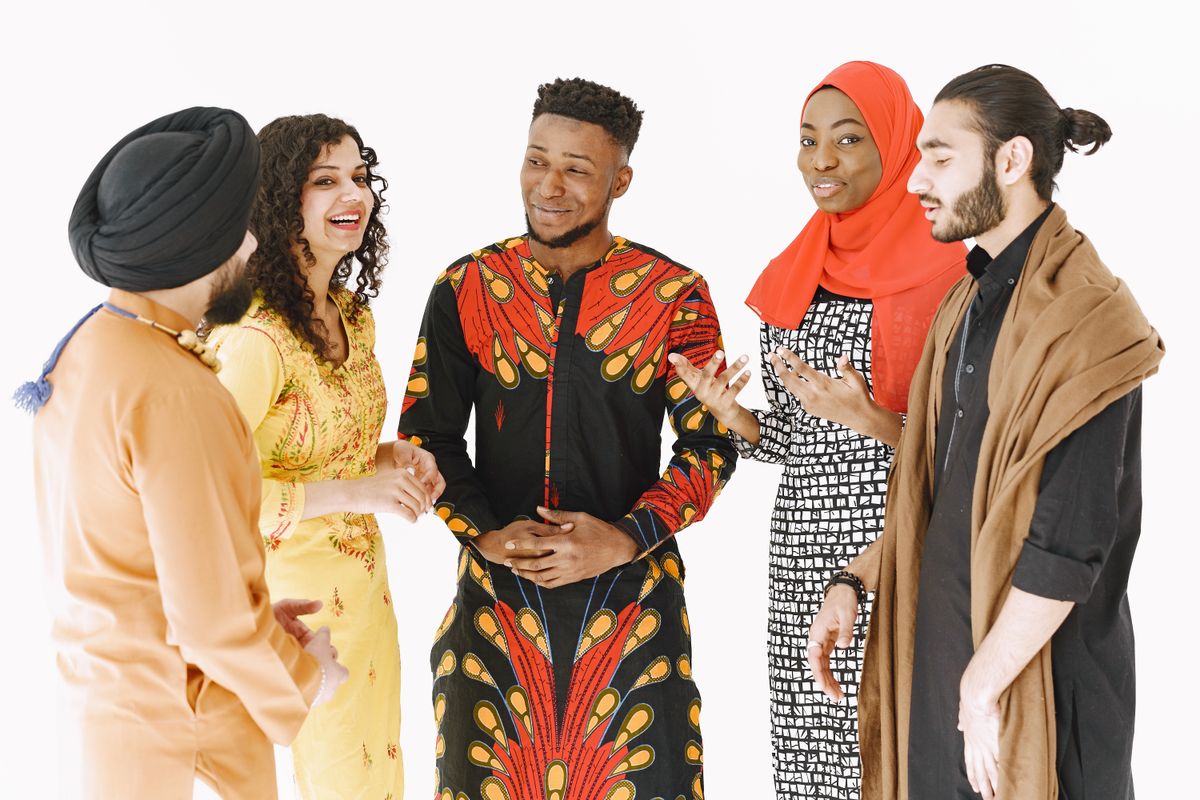
Long-term demographic modeling consistently shows that global population growth is not evenly distributed. The fastest-growing regions of the world tend to be those with younger populations and higher fertility rates, particularly in parts of Sub-Saharan Africa and South Asia. These regions are also where religion often plays a more central role in daily life and social identity.
At the same time, many high-income countries in Europe, East Asia, and parts of North America are experiencing slower population growth, aging populations, and rising rates of religious disaffiliation. This does not mean religion disappears, but it does change how it is expressed and how many people formally identify with it.
According to widely cited projections, Christianity is expected to remain the largest global religion by 2050, but its share of the global population is projected to shift more toward the Global South, particularly Sub-Saharan Africa, where population growth is strongest.
Islam is projected to grow significantly in absolute numbers, driven largely by younger age structures and higher fertility rates in several regions, meaning its share of the global population is expected to rise in comparison to other major religions.
Religiously unaffiliated populations, often referred to as the “nones,” are expected to grow in certain regions, particularly in parts of Europe, North America, and East Asia, though their global share is influenced by slower population growth in those areas compared to regions with younger populations.
Hinduism and Buddhism are projected to remain stable or grow modestly in global share, with Hinduism largely tied to India’s population growth trajectory and Buddhism influenced by demographic patterns in East and Southeast Asia.
Why population structure matters more than conversion
One of the most important findings in modern religious demography is that change is driven more by population structure than by large-scale religious conversion.
In simple terms, religions grow or shrink globally not only because people change beliefs, but also because different groups have different age profiles and family sizes.
Younger populations naturally expand faster over time, especially when combined with higher fertility rates. Older populations, even if stable in belief, do not grow at the same rate. This creates long-term shifts in global proportions even without dramatic cultural conversion events.
Migration also plays a critical role. When people move across borders, they bring their religious identity with them. This is especially evident in countries such as the United States, Canada, the United Kingdom, and parts of Western Europe, where immigration continues to reshape religious diversity in urban areas.
The rise of religious diversity in a connected world
One of the clearest outcomes of these trends is not the domination of one belief system, but rather increasing religious diversity in global urban centers.
Cities are becoming microcosms of global belief systems. It is now common in major metropolitan areas to see places of worship representing multiple faith traditions within a few blocks of each other. This is particularly true in cities that attract immigration and international labor mobility.
In the United States, for example, demographic shifts have already contributed to visible increases in non-Christian religious communities, alongside a growing number of people who identify as spiritually unaffiliated.
This does not replace existing traditions. Instead, it adds layers of complexity to the way religion is practiced, both publicly and privately. Schools, workplaces, and local governments increasingly navigate a wider range of religious observances, holidays, and cultural expectations.
What the trends mean for the United States by 2050
While global projections focus on world regions, their effects are already visible in American life. The United States is projected to remain religiously diverse, with continued growth in the number of people who do not identify with a specific religion.
At the same time, immigration is expected to continue shaping the religious landscape of American cities. New communities bring new traditions, institutions, and cultural practices, which gradually become part of the broader national fabric.
This creates a dual trend: increasing secularization in some demographic groups and increasing religious diversity through migration in others. The result is not uniform decline or growth, but transformation.
Religious identity in the United States is also becoming more individualized. Many people now describe themselves as spiritual but not affiliated with organized religion, reflecting broader cultural changes in how identity is expressed.
Why these projections are widely accepted, but still evolving
Demographic projections are based on long-term patterns in fertility, mortality, migration, and self-reported religious identity. Organizations such as the Pew Research Center and the United Nations Department of Economic and Social Affairs regularly update these models using census data and national surveys.
However, researchers also emphasize that projections are not predictions of exact outcomes. They are structured scenarios based on current trends. Unexpected political shifts, global crises, technological changes, or major cultural movements can influence how religious identity evolves.
For example, increased secularization in some regions could accelerate more quickly than expected, while religious revival movements in others could slow the decline or even reverse local trends.
This is why most studies avoid declaring any single religion as dominant in a literal sense. Instead, they focus on proportional changes and geographic redistribution.
The deeper significance behind the numbers
Behind every data point is a human reality: families forming identities, communities building institutions, and societies adapting to change.
Religion, in most regions of the world, continues to serve as a foundation for belonging, meaning, and social structure. Even as global patterns shift, the role of belief remains deeply embedded in education, politics, and community life.
By 2050, the most important change may not be which religion is largest, but how religions coexist in increasingly interconnected societies. The world is moving toward a model in which multiple belief systems coexist within the same global spaces, rather than one replacing another.
This shift will influence how cities function, how governments design policy, and how communities interact across cultural and religious lines.
What comes next as the world approaches 2050
Researchers will continue refining global religious projections as new census data becomes available and migration patterns evolve. Countries with large young populations today will play a key role in shaping the religious landscape of mid-century.
Urbanization, access to education, and economic development will also continue to influence how people define belief and identity. In some regions, this may lead to stronger formal religious affiliation. In others, it may lead to more secular or individualized expressions of spirituality.
What remains consistent across all models is that the global religious map is not static. It is moving, gradually but unmistakably, toward a more demographically driven and regionally diverse structure.
As 2050 approaches, the question is no longer whether religion will remain important, but how it will be practiced, expressed, and shared in a world where nearly every major belief system is being reshaped by the same global forces: population, migration, and generational change.