All 11 Aboard Survive Fiery Seaplane Crash Near Washington Island as Investigators Probe the Cause.
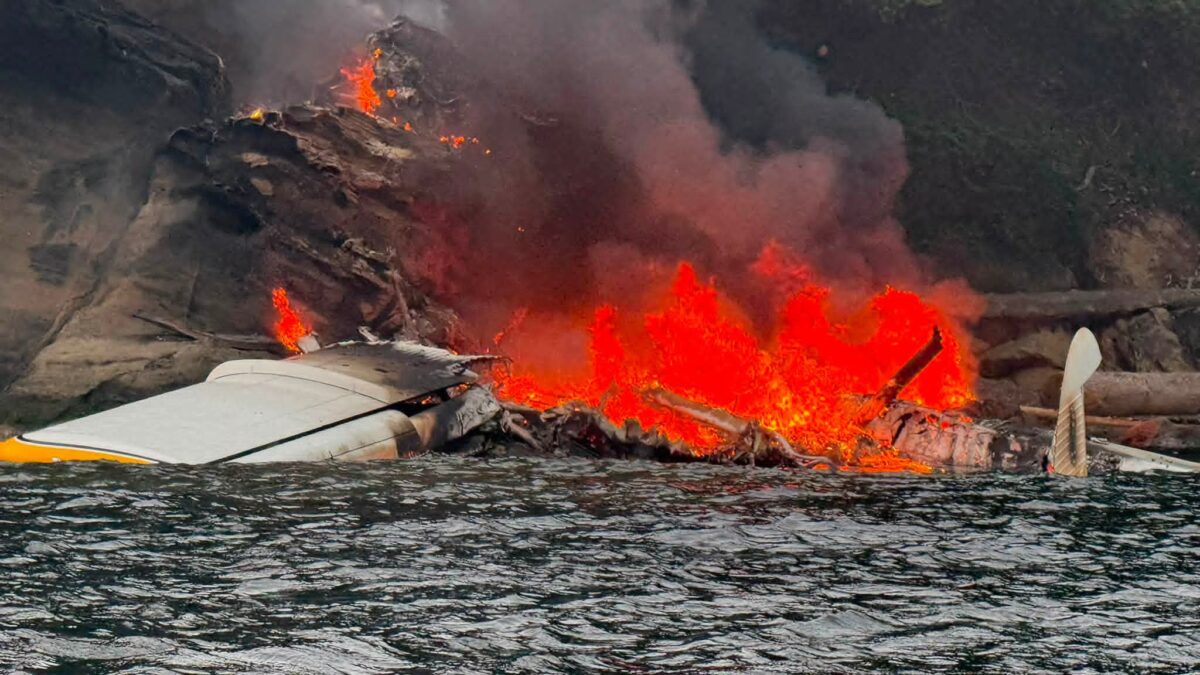
A passenger flight through Washington’s picturesque San Juan Islands ended against a rocky shoreline Thursday evening, leaving a seaplane broken, burning and surrounded by a fast-moving rescue operation. Yet every person aboard escaped alive.
The Kenmore Air aircraft carried 10 passengers and one pilot when it crashed near Sucia Island, north of Seattle. Flames consumed much of the plane after impact, while rescuers raced across the water to reach injured survivors. One person remained in critical condition Friday, while others suffered broken bones, head injuries and cuts. At least five patients had already left hospitals.
The survival of all 11 people offers a remarkable ending to a crash that could easily have produced a far darker outcome. It also leaves federal investigators with urgent questions about what happened during the aircraft’s final approach and why the plane caught fire after hitting the island.
A routine island flight changes in seconds
Kenmore Air Flight 140 departed Seattle’s Lake Union at about 4:30 p.m. Thursday. The de Havilland DHC-3 Otter was heading toward Roche Harbor, a waterfront resort and seaplane destination on San Juan Island.
The trip normally takes passengers over some of the Pacific Northwest’s most recognizable scenery. Islands, narrow channels and forested shorelines stretch beneath aircraft traveling between Seattle and the San Juans.
About 45 minutes after departure, the flight ended in Shallow Bay on the western side of Sucia Island. Kenmore Air placed the accident at approximately 5:15 p.m. The Federal Aviation Administration said the aircraft crashed at about 5:20 p.m. while flying from Kenmore Air Seaplane Base to Roche Harbor Seaplane Base.
Video recorded near the bay showed the aircraft flying low above the water before banking to one side. One float appeared to touch down first. The plane then bounced, continued forward, and struck the rocky edge of the island.
Flames erupted after the impact and quickly spread across the damaged aircraft. Survivors escaped before the fire overwhelmed the fuselage. Investigators have not said whether the aircraft experienced a mechanical problem, encountered difficult conditions, or attempted the landing for another reason.
Nearby boaters become the first lifeline.
The crash occurred in a remote area with no major medical facility, airport terminal or permanent emergency station nearby.
Sucia Island is an uninhabited marine state park popular with boaters, campers and hikers. Its isolation gives visitors quiet coves and rugged scenery, but it also creates serious challenges when an emergency unfolds.
The Coast Guard’s Sector Puget Sound command center received the initial report at 5:25 p.m. Officials immediately launched rescue assets and issued an urgent broadcast asking mariners in the area to help. Numerous civilian boats answered the call.
Those boaters became a critical first link between the burning wreckage and the larger rescue force approaching by sea and air. Their presence reduced the amount of time survivors had to wait for assistance after escaping the aircraft.
Federal, Canadian and local agencies soon converged on Shallow Bay. The response included Coast Guard crews from Bellingham and Port Angeles, the Coast Guard cutter Osprey, U.S. Naval Air Station Whidbey Island and the Canadian Coast Guard ship Siyay.
The San Juan County Sheriff’s Office, Washington Department of Fish and Wildlife, Orcas Island Fire and Rescue, Airlift Northwest and British Columbia Air Ambulance also joined the operation.
The international response reflected Sucia Island’s location near the Canadian border. It also showed how quickly agencies must coordinate when an aircraft goes down in waters filled with islands, narrow passages and scattered communities.
Survivors face serious injuries.
All 11 people aboard survived, but the crash did not leave them unharmed. The San Juan County Sheriff’s Office said one person remained in critical condition. Other patients suffered head injuries, fractures and lacerations. Authorities had not publicly identified the passengers or pilot by Friday.
Kenmore Air initially said six passengers went to PeaceHealth St. Joseph Medical Center in Bellingham, four went to PeaceHealth Peace Island Medical Center in Friday Harbor, and the pilot went to Skagit Valley Hospital for evaluation and treatment.
By Friday, a hospital representative said at least five passengers had been discharged from two medical facilities. The injuries underline how violent the impact was, even though everyone escaped the flames. The aircraft hit near a rocky shoreline rather than coming to rest smoothly in open water.
The outcome may also give investigators valuable information about survival factors. They will likely examine how the occupants exited, how quickly the fire spread, whether restraints and cabin structures performed as designed, and how nearby boaters reached the scene.
The pilot’s actions will receive close attention as well. Bringing a disabled or distressed aircraft close to shore may improve access to help, but rocks, boats, trees and uneven terrain can create new hazards during an emergency landing.
Fire adds another mystery to the investigation.

The National Transportation Safety Board and FAA are investigating the crash, while Kenmore Air has pledged full cooperation.
Their work will begin with the wreckage, flight path, maintenance records and witness accounts. Investigators may examine the engine, flight-control systems, floats, fuel system and structural damage. They will also review available video frame by frame.
Footage can show an aircraft’s attitude, altitude and movements before impact. It cannot, by itself, reveal what was happening inside the cockpit or explain why the plane approached the water as it did.
That distinction matters because early images can encourage quick conclusions that the evidence may not support.
Kenmore Air said it would not speculate about the cause. Federal investigators have also released no preliminary finding that identifies mechanical failure, weather or pilot action as the reason for the crash.
The fire will form a separate but related part of the inquiry. Investigators must determine where it began, what ignited it, and whether the initial impact ruptured the fuel system.
The Coast Guard also alerted environmental-response personnel because fuel and debris could affect the water around Shallow Bay. Agencies began coordinating an assessment while the damaged aircraft remained against rocks on the island.
The aircraft carries a painful regional association.
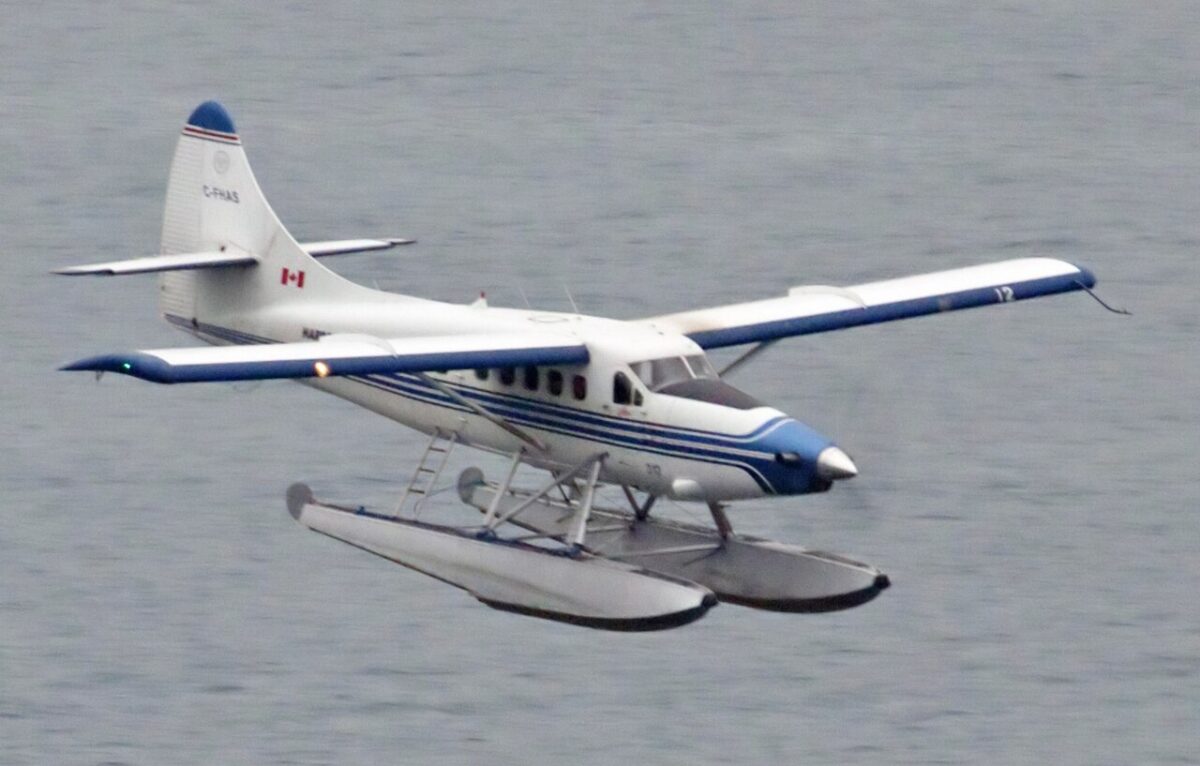
The plane involved was a de Havilland DHC-3 Otter, a large single-engine aircraft widely used for floatplane operations. Kenmore Air describes the turbine-powered Otter as the biggest and most powerful aircraft in its fleet. The model carries up to 10 passengers and has a normal cruising speed of about 134 mph.
The DHC-3 has a long history of serving remote areas where conventional runways remain unavailable. Operators have used it for passenger travel, cargo transport and wilderness access across Alaska, Canada and the Pacific Northwest.
However, Thursday’s crash will inevitably revive memories of the September 2022 DHC-3 disaster in Mutiny Bay, also in Washington’s Puget Sound region.
That aircraft plunged into the water during a scheduled passenger flight, killing the pilot and nine passengers. The NTSB later determined that a missing lock ring allowed a nut to unthread from the horizontal stabilizer trim system, making the plane’s pitch uncontrollable. Federal regulators ordered inspections after the 2022 tragedy.
The two accidents involved different operators, and investigators have presented no evidence that they share a cause. The earlier crash therefore provides important safety context, but it should not become a shortcut for explaining what happened near Sucia Island.
Kenmore Air grounds its schedule.

Kenmore Air canceled all scheduled flights for Friday as the company supported passengers, families, employees and investigators. The airline offered affected customers rebooking or refund assistance. Chief Executive David Gudgel said the company’s immediate focus remained on the care of the passengers and pilot.
Kenmore Air began operating in 1946 and describes itself as the largest seaplane airline in the United States. It carries more than 90,000 passengers annually and serves more than 45 water-based destinations across the Pacific Northwest and British Columbia.
The temporary shutdown reflects both the emotional weight of the crash and the practical demands of an investigation. The airline must assist authorities, inspect operations and respond to concerns from passengers who rely on its aircraft to reach island communities.
Aviation investigators rarely offer immediate answers. The NTSB generally publishes preliminary information before completing a longer investigation that can take months or more.
Until then, the most dramatic images will not provide the most important conclusion.
Eleven lives remain at the center of the story.
The wreckage tells one version of what happened at Sucia Island. A seaplane hit the shore. Fire tore through the aircraft. Smoke rose above a bay filled with boaters and summer visitors. The human outcome tells another.
Ten passengers and their pilot escaped. Civilian mariners moved toward danger rather than away from it. Rescue teams crossed borders and jurisdictions to transport the injured. Doctors treated patients across several Washington hospitals.
Investigators must now establish what caused Flight 140 to go down and determine whether the accident exposes a wider safety problem.
For the families waiting for news Thursday night, however, one fact mattered more than any future technical finding: All 11 people who boarded the seaplane in Seattle survived its fiery final landing.