NYC’s “Make Food Not Waste” Restaurant Week Returns, Turning Kitchen Scraps Into the Main Event
A shrimp head doesn’t usually get its own spot on the plate. This week at Bangkok Supper Club in the West Village, it does.
That small flip in thinking, treating the parts of an ingredient most kitchens toss as the point of the dish rather than an afterthought, is the whole idea behind Make Food Not Waste Restaurant Week. Now in its third year, the event runs September 28 through October 4 across New York City.
Not to Be Confused With NYC Restaurant Week
First, it’s worth clearing up one thing. This isn’t the citywide NYC Restaurant Week that NYC Tourism runs twice a year with prix-fixe lunches and dinners. Make Food Not Waste is a separate, smaller initiative organized by Mill, the food-recycling technology company, with a narrower mission: get some of the city’s most talked-about kitchens to build dishes, drinks, or whole tasting menus around ingredients that would normally end up in the trash.
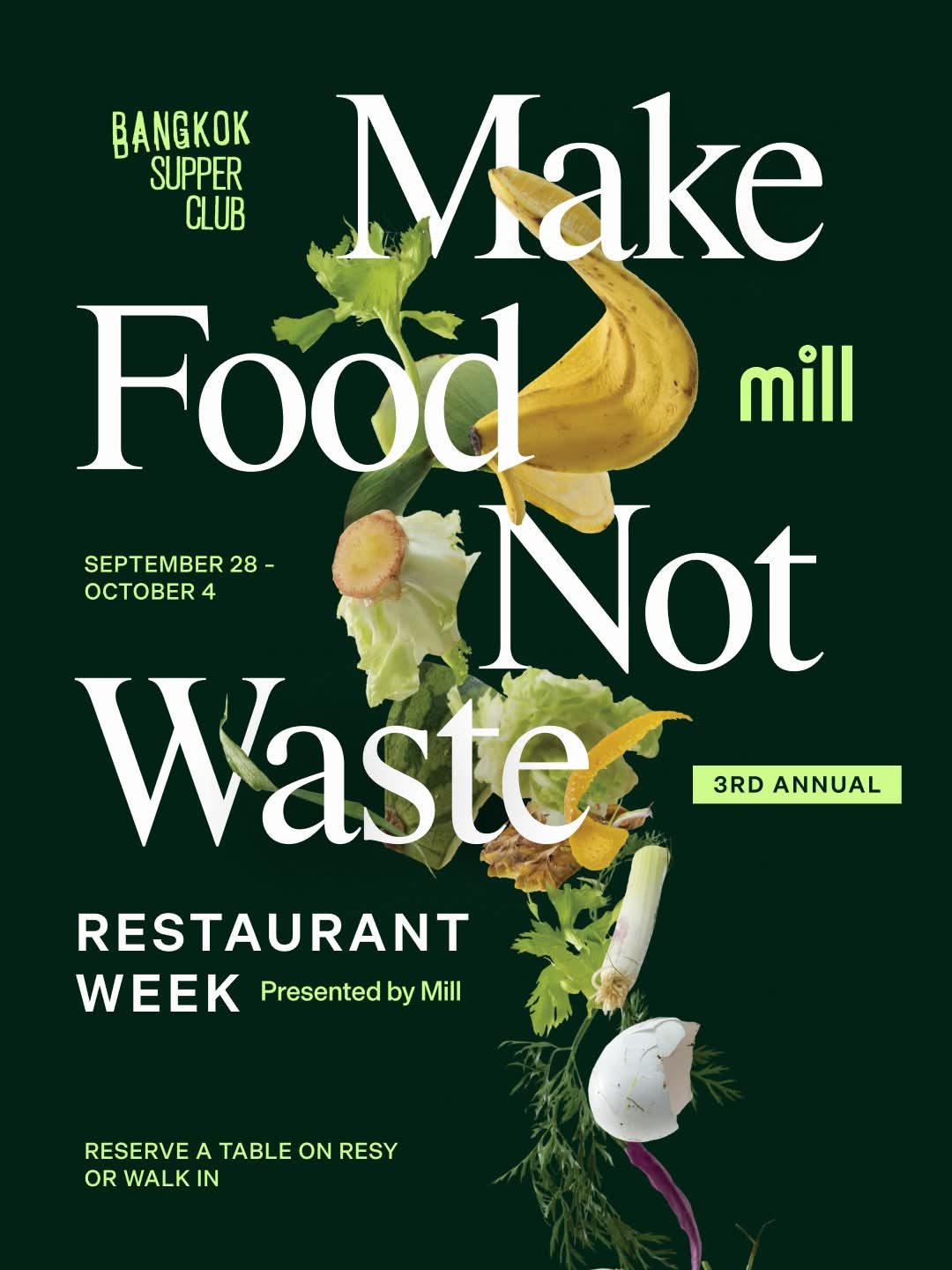
Mill launched the event in fall 2024. According to the company, what started as a local push in New York has since expanded, including a pop-up dinner series in Los Angeles earlier this year. This is the third time it’s returned to New York.
“When the best chefs and kitchens in the city treat scraps as an opportunity instead of waste, that’s a signal the rest of us should be paying attention to,” said Harry Tannenbaum, Mill’s cofounder and president, in the company’s announcement. He noted that after three years, the event keeps growing, with chefs showing there’s no trade-off between cutting food waste and making food that’s genuinely good to eat.
Related: McDonald’s Plans $8.5 Billion Push to Modernize Restaurants Through 2036
A Mix of New Faces and Familiar Names
This year’s roster mixes newcomers with restaurants that have done this before. Chambers, Cynthia, Somssi, and Oberon are joining for the first time. Bangkok Supper Club, Corima, and Raf’s are back for at least their second run.
For the first time, Mill is also letting restaurants choose how they want to show up: a single featured dish, a three-course tasting menu, one specialty cocktail, or a paired dish and drink.
Corima, the Michelin-starred restaurant helmed by chef Fidel Caballero, is going the full tasting-menu route for its third year in the event. The menu leans into Northern Mexican cooking, and this year’s version turns quelites, wild greens often dismissed as weeds around Mexican farm fields, into a stew served over a sope. A hamachi collar gets grilled over fire, and a bluefin tostada reworks a traditional Mayan sikil pak, swapping in mango seeds, a part of the fruit almost always thrown away, for the usual pumpkin seeds.
“I don’t see scraps as waste; I see them as an opportunity to be creative,” Caballero said in Mill’s announcement, adding that growing up in Brazil, people didn’t waste food. “A peel can become a seasoning, vegetable trim can become a sauce.”
Shrimp Heads, Beef Garum, and a Waffle With Sea Urchin
At Bangkok Supper Club, chef Max Wittawat’s approach is a single dish: a $24 botan ebi toast, according to Time Out New York. The shrimp shells become a coconut chili cream, the sweet raw shrimp goes on toast brushed with smoked brown butter, and the head is deep-fried and served on the side.
Over at Cynthia, a Michelin-recommended spot in the West Village, executive chef-partner Sherry Cardoso built a bite called the Rosette around using every part of the produce in one dish. It starts with a beer-battered waffle, gets topped with a “zero-waste” bearnaise made by roasting vegetable trim, and finishes with sea urchin.
“Growing up in Brazil, wasting food simply wasn’t an option,” Cardoso said, according to Mill. “You learned to value what you had and to find a purpose for every part of an ingredient.”
Other dishes on this year’s list, per Mill’s announcement, include a Korean-style noodle soup at Somssi built from the remains of one of its popular dishes, a burger at Bar Chucho finished with a beef garum fermented from scraps and bones over six months, and a nonalcoholic cocktail at Oberon that uses an oleo saccharum made from salvaged citrus peels.
Where the Scraps Actually Go
Behind the scenes, Mill is partnering with Reclaimed Organics, a Manhattan-based compost hauling service, to collect scraps from participating restaurants during the week. Mill says that material gets processed and sent to a community garden in downtown Manhattan, where it’s used for composting and on street trees around the city.
None of this requires a special reservation code or discount. Diners can look up participating restaurants and book directly, or check Mill’s event page for the full list.
If there’s a bigger point buried in all this, it’s less about any one clever use for a fish head and more about how differently a kitchen can think about what it already has on hand. Given how many of these restaurants are returning for a second or third year, it doesn’t look like a one-off stunt, a pattern Edible Manhattan also noted in its own coverage of the week. It looks like something these chefs plan to keep doing.