5 Disadvantages of Cooking Eggs in a Cast-Iron Skillet
Your favorite cast-iron skillet might handle dinner beautifully, but breakfast can ask a little more. Eggs leave less room for casual heat adjustments, patchy seasoning, or a cooking surface that still carries yesterday’s leftovers.
That does not make cast iron a poor choice for eggs. A well-seasoned, properly prepared skillet can turn out fried eggs, scrambled eggs, and omelets successfully. The tradeoff is the attention required before, during, and after cooking. For traditional, unenameled cast iron, these five drawbacks are worth considering before you crack the first egg.
Eggs Can Stick If the Pan Isn’t Ready
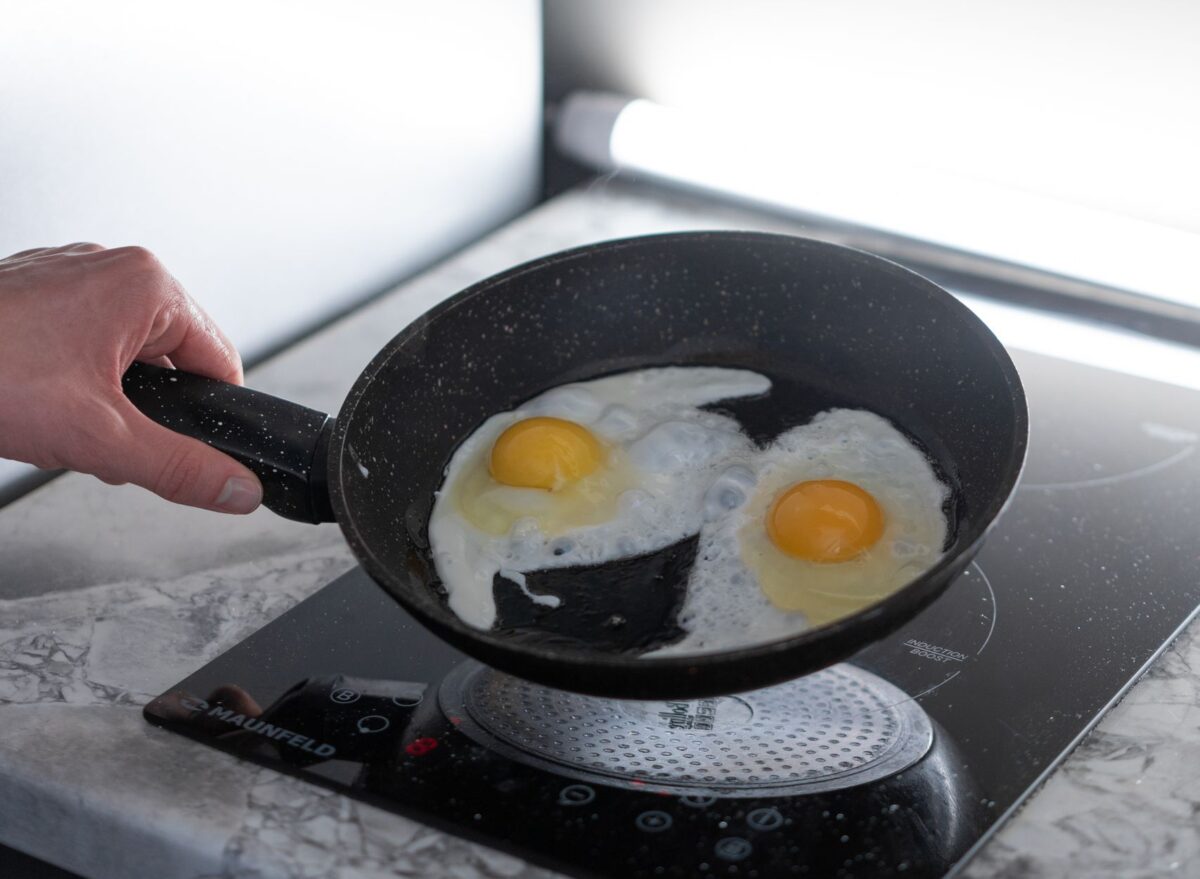
An egg that refuses to leave the skillet can turn a breakfast into a scraping session. Cast iron can release eggs well, but even a well-seasoned surface isn’t as nonstick as a coated pan, according to Serious Eats writer J. Kenji López-Alt.
Several details affect that release. Weak seasoning, leftover food, insufficient cooking fat, and unsuitable temperatures can all make the job harder. If you want an intact fried egg or a neatly folded omelet, pay attention to those details.
Seasoning and cooking fat also serve different purposes. Seasoning is the bonded layer formed from polymerized oil, while the butter or oil added before cooking helps prepare the surface for your eggs. One doesn’t eliminate the need to consider the other.
Start with a clean, well-seasoned skillet, then coat the cooking surface with butter or oil. If easy release is your priority, a coated nonstick skillet may be more convenient.
Related: 20 Kitchen Mistakes That Are Making Us Cringe (Yes, You’re Guilty Too.)
Preheating becomes Part of the Breakfast Routine
Eggs may cook quickly, but getting a cast-iron skillet ready takes planning. Adding them immediately after switching on the burner skips a preparation step that matters for this cooking surface.
Lodge’s scrambled-egg method recommends preheating over medium-low heat for about five minutes. Treat that as guidance for its method, not a promise that every stove and skillet will be ready on the same schedule.
Another wrinkle: holding heat well is different from spreading it evenly. As López-Alt explains,cast iron transfers heat across its surface less readily than aluminum. During heating, the area above the burner can become hotter while other areas remain cooler.
For a rushed breakfast, that preparation can feel inconvenient. Budget time for the pan instead of assuming that one hot spot means the entire cooking surface is ready.
Too Much Heat Is Harder to Take Back
Cast iron’s ability to stay hot is useful, but it can complicate gentle egg cooking. Once the skillet stores excess heat, turning down the burner doesn’t instantly bring the cooking surface back to where you want it.
That makes an aggressive preheat a frustrating shortcut. You can lower the flame, yet the pan can still stay hotter than intended. Lodge warns that overheating can cause scrambled eggs to stick and recommends a low-and-slow approach.
The practical challenge is anticipating temperature rather than relying on a last-second correction. Preheating and cooking are connected, but they demand different things: first, you need a prepared surface; then, you need to keep its heat right for the eggs.
Cast iron can still produce tender eggs. It simply asks you to pay attention before overheating becomes a problem, especially when following a method designed around gentle heat.
Cleanup Continues After the Eggs leave the Pan
Breakfast is finished, but the skillet still needs care. Lodge’s care instructions describe the routine as washing, drying, and rubbing the pan with oil, which adds a few responsibilities before you put it away.
If eggs have stuck, removing their residue becomes another task. Soaking the skillet in the sink is not recommended, and putting it away wet can cause rust.
Fortunately, ordinary dish soap can be used on properly seasoned cast iron. You don’t have to choose between a clean pan and keeping its seasoning intact just because soap is involved.
The disadvantage is the follow-through, particularly on mornings when you want to leave the kitchen immediately. Clean it, dry it thoroughly, and apply a light coating of oil. That is routine maintenance, not a requirement to season the oven after every breakfast fully.
Related: 20 clever kitchen tricks for home cooks
Tomato-Based Egg Dishes Need More Consideration
Plain scrambled eggs and eggs cooked in tomato sauce place different demands on a seasoned skillet. With acidic ingredients, the amount used, cooking time, and seasoning condition all matter.
Lodge’s acidic-food guidance recommends using well-seasoned cast iron for acidic cooking and enameled cast iron for long preparations. Under unfavorable conditions, acid exposure can affect seasoning and contribute metallic flavors.
Consider the entire cooking process. If tomato sauce simmers before the eggs go in, that earlier cooking time counts toward the sauce’s contact with the skillet. The final few minutes do not tell the whole story.
A few tomatoes or a splash of hot sauce should not be treated as automatic damage. Brief contact and prolonged simmering are different situations. For a tomato-heavy breakfast with extended cooking, choosing enameled cast iron can simplify the cookware decision.
The best breakfast pan fits your dish and routine. If you already maintain cast iron and enjoy managing its heat, eggs can belong in your skillet. If breakfast needs easier release or less preparation, choose accordingly. Let convenience guide the decision, without writing off a pan that can still do the job well.