The Unexpected Ways Designers Are Using Striped Patterns to Bring Character Into Modern Homes
Stripes have a reputation for behaving themselves. They belong on a cushion, perhaps a curtain, or a navy-and-white rug that politely suggests a beach house. But designers are giving this familiar pattern more adventurous assignments: wrapping it across ceilings, running it through bathroom tile, and using it to emphasize cabinetry. The surprise is not the pattern itself. It is how much character a simple line can bring when it appears somewhere unexpected.
That flexibility helps explain why stripes work beyond coastal rooms or traditional decorating schemes. “The beauty of stripes is that they’re versatile and timeless, working across all design styles, from traditional to contemporary,” designer Liad Schwartz of Interiors with Liad told Sunset. “It all comes down to scale, direction, and color palette.” Those decisions determine whether the result feels quietly tailored, boldly graphic or delightfully playful, not whether the pattern belongs in a modern home.
The Ceiling Is Getting in on the Pattern
One of the most striking moves is to take stripes off the walls and put them overhead. In a project featured by wallpaper and paint company Farrow & Ball, New York designer Ariel Okin used yellow striped wallpaper across a vaulted playroom ceiling, inspired by a circus tent. “I love the scale of Tented Stripe,” Okin told the company. “It’s such a great, thick stripe that doesn’t feel overwhelming and comes in really great colorways.” The application makes the ceiling a deliberate part of the room rather than a blank lid.
Washington, D.C., designer Zoe Feldman took a different approach, using striped wallpaper on a living room’s ceiling and selected walls to follow its existing architecture. “The room’s pitched ceilings, arched window and steel doors have a traditional vibe that we wanted to lean into,” she explained to Farrow & Ball. Here, the pattern does more than add decoration: its placement emphasizes the room’s shapes. That distinction matters for anyone tempted to copy the idea without considering the ceiling underneath it.
Feldman also demonstrated how changing direction can make a familiar pattern feel less predictable. In another project documented by the company, she carried a narrow stripe across both walls and ceiling, switching its orientation overhead. “Running the paper in a different direction on the ceiling still captured that ensconced feeling we wanted but was also unexpected,” she said. Rather than treating every surface identically, the directional change gives the surrounding pattern a deliberate twist. Think enveloping room, not accidentally wallpapered shoebox.
Related: 15 Things Never to Put in the Washing Machine, From Memory Foam Pillows to Flammable Stains
Tile and Cabinetry Are Becoming the Unexpected Stars
Stripes do not have to arrive on fabric or wallpaper. Bathroom tile offers another route, with the pattern created by arranging individual pieces. “You can get creative with tile layouts in a bathroom, using stripes to introduce both structure and playfulness,” Schwartz told Sunset. Designer Christine Markatos Lowe illustrated that approach with rectangular tiles in several shades of blue, arranged as half-wall paneling. The finished surface read like wallpaper, she told the publication, although the pattern was built from tile.
Ashley Clark of sKout Interiors took the idea across multiple surfaces in a children’s bathroom, with stripes running from the floor onto the shower wall, as featured in Sunset. The continuity is the interesting part: rather than using a striped accessory inside an otherwise plain room, the material layout becomes the decorative feature. It is also a more involved decision than swapping cushions. For readers considering a renovation, this is a design concept to plan with the tile layout, not an afterthought once installation has started.
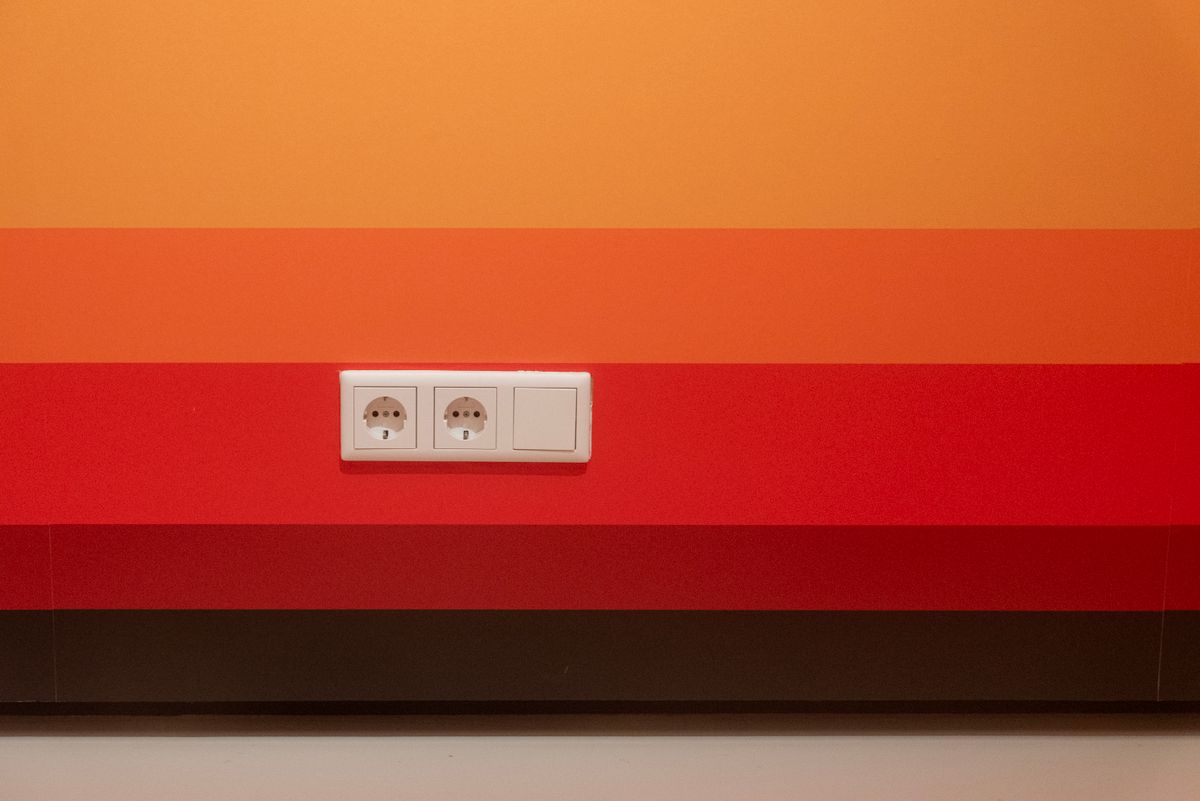
Cabinetry and fitted furniture offer another way to add dimension to straight lines. Interior designer Roselind Wilson told Livingetc that stripes become particularly interesting when applied to “joinery or case goods that are fitted or which will sit against a wall.” Her featured study uses bold charcoal-striped joinery, bringing the pattern into the room’s built-in elements. “This adds perspective depth and gives a 3D quality to the stripe,” she explained. The effect comes from treating furniture as part of the composition, rather than leaving the walls to do all the visual work.
The Best Striped Rooms Know How to Mix Things Up
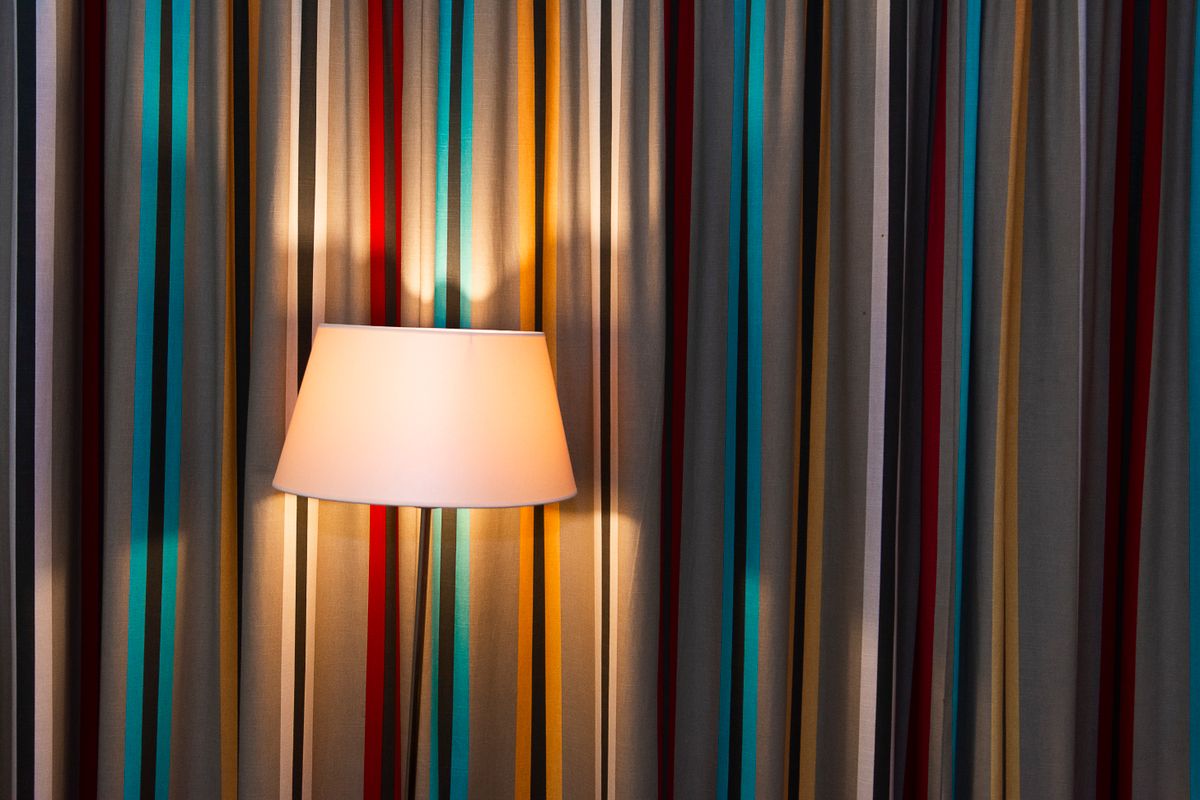
For anyone not planning ceiling wallpaper or new cabinetry, designers also make a convincing case for going bigger with textiles. Schwartz recommends striped drapery, while Markatos Lowe favors multicolored stripes on a sofa. Clark is enthusiastic about combining the pattern with itself and with other prints. “I love stripes with more stripes, and I love stripes with other patterns,” she told Sunset. “I think of them almost as a neutral that can really work with anything.” That is her design perspective, not a demand to stripe every available surface.
The practical trick is to give the patterns different jobs instead of asking them all to shout at once. Vyanca Soto of Market Studio Interiors recommends pairing stripes with organic designs such as florals, block prints or abstract motifs. “Vary the scale and weight of the patterns so they don’t compete,” she told Sunset, suggesting a thin ticking stripe beside a bold ikat or large botanical. Her other instruction is equally important: keep the color palette tight and intentional. Shared colors provide a connection, while contrasting pattern sizes keep the combination from feeling repetitive.
Precision matters when the stripes become part of a painted or installed scheme. Wilson cautioned Livingetc that irregularities in either the design or the wall can show, making accurate measurement important. Before making a major commitment, consider designer Suzy Hoodless’s suggestion in the same publication: print the proposed design at scale and live with it for a while. The most useful lesson from these rooms is not to add more stripes. It is to choose their location, proportions, and direction carefully enough that a familiar pattern has something fresh to say.