Only People Who Grew Up in the Midwest Will Remember These 8 Church Supper Dishes
In small towns across the Midwest, the church basement was the center of community life. Funerals, weddings, fall festivals and Sunday potlucks all ended in the same place: long folding tables covered in casseroles, salads and pans of bars, with church ladies in aprons making sure everyone got a plate.
If you grew up in Minnesota, Iowa, Wisconsin, Ohio, Indiana or the Dakotas, you know these meals by heart. The dishes were simple, filling and made in large pans to feed a crowd. People from other parts of the country often find them puzzling, but Midwesterners consider them pure comfort. Here are eight church supper dishes only people who grew up in the Midwest will truly remember.
1. Tater Tot Hotdish
No Midwestern church supper was complete without hotdish. The most famous version is tater tot hotdish: ground beef, a can of cream soup, green beans or corn, and a neat layer of frozen tater tots baked on top until crispy. It came out of the oven in a 9-by-13 pan and was scooped onto plates by the spoonful.
Outsiders call it a casserole, but in Minnesota and the Dakotas it’s always hotdish. Church cookbooks and community fundraisers made it famous, and Minnesota’s congressional delegation has even held an annual hotdish competition in Washington. It’s still the dish that defines Midwestern comfort food.
2. Cheesy Potatoes
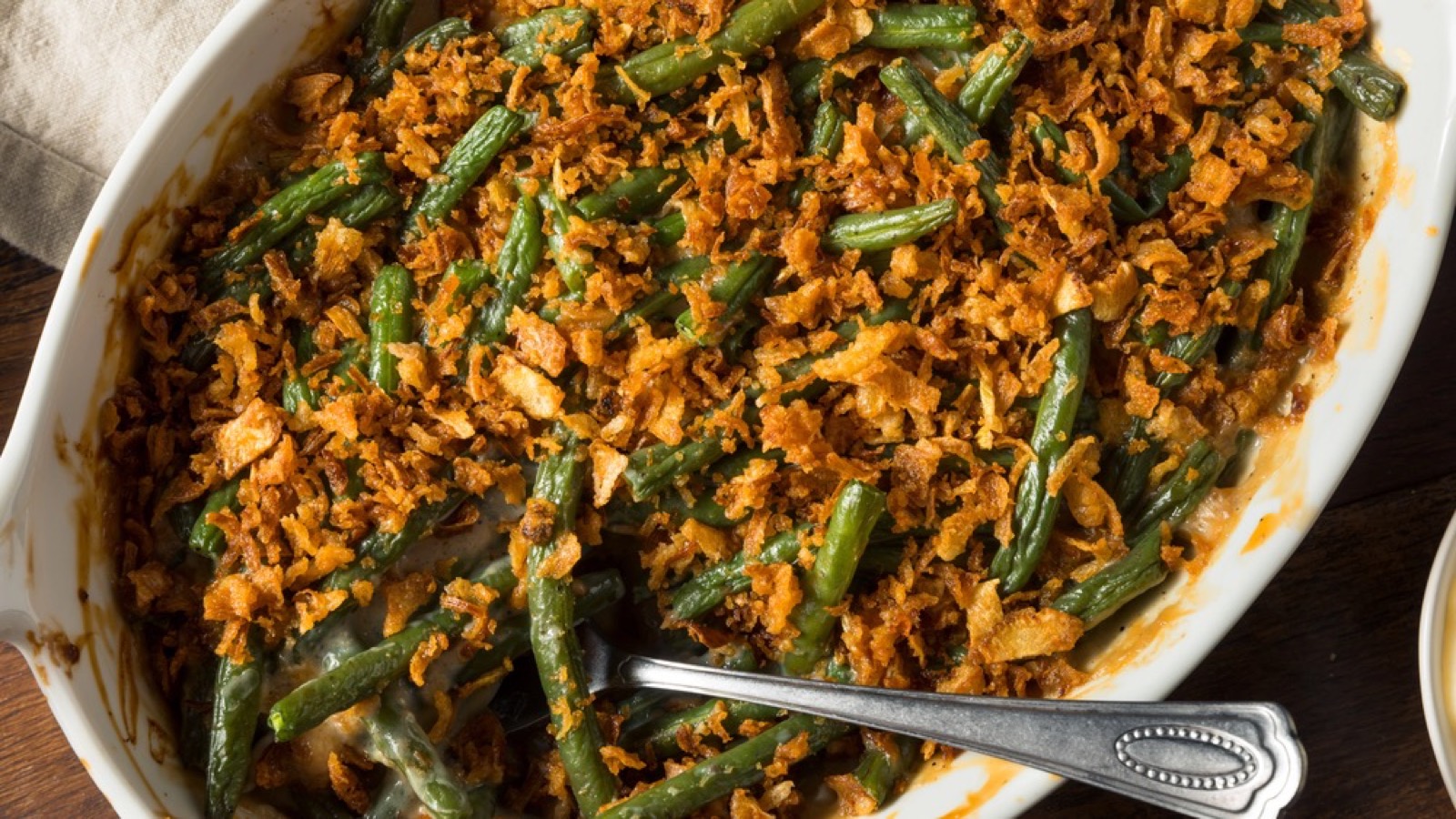
Cheesy potatoes, sometimes called funeral potatoes or party potatoes, were a must at every church dinner. Frozen hash browns were mixed with sour cream, cream of chicken soup, shredded cheese and butter, then topped with crushed cornflakes or potato chips and baked until bubbly.
The nickname “funeral potatoes” came from how often the dish showed up at funeral luncheons, especially in the Midwest and Utah. Many Midwesterners say no family gathering feels complete without a big pan of them. Every church cook had her own version, and people noticed if yours was missing the crunchy topping.
3. Scotcheroos and Pans of Bars
In the Midwest, desserts at church suppers came in bars, not slices. Scotcheroos, made with rice cereal, peanut butter and a topping of melted chocolate and butterscotch chips, were a favorite. So were lemon bars, seven-layer bars, brownies and Special K bars.
Bars were easy to make in a big pan, easy to cut and easy to serve to a crowd. Church ladies would bring several pans each, and the dessert table often had more variety than the main course. Many Midwesterners still judge a potluck by the quality of its bars.
4. Sloppy Joes Called “Barbecues”
In parts of the Midwest, especially Iowa and parts of Pennsylvania and Ohio, sloppy joes were called “barbecues” or “taverns.” Big roasters full of saucy ground beef were kept warm in the church kitchen and served on soft hamburger buns.
They were a staple at fundraisers, wedding receptions and after-funeral meals because they were cheap, easy and fed a crowd. Iowans may also remember the loose-meat sandwich made famous by Maid-Rite, which is a close cousin without the tomato sauce.
5. Chicken and Noodles Over Mashed Potatoes
In Indiana and Ohio, one of the most beloved church supper dishes is chicken and noodles served over mashed potatoes. Thick homemade egg noodles are simmered in rich chicken broth with shredded chicken, then ladled over a scoop of mashed potatoes.
People from outside the region are often surprised by serving noodles on top of potatoes. But for many Hoosiers, it’s the ultimate comfort food, especially at Thanksgiving dinners and church fundraisers. Church cooks often spent hours rolling and cutting the noodles by hand.
6. Snickers Salad
The Midwest has a broad definition of “salad.” One of the most famous is Snickers salad, made with chopped apples, cut-up Snickers bars, whipped topping and vanilla pudding. It was served right alongside the main dishes, not with dessert.
Other sweet “salads” filled the table too, like Watergate salad, made with pistachio pudding, pineapple and marshmallows, and Jell-O salads in every color. Visitors from other regions often laugh at calling candy bars a salad, but Midwesterners defend the tradition. Many of these dishes appear on lists of casseroles that defined family dinners across the region.
7. Ham Balls
In Iowa especially, ham balls are a church supper legend. They’re made from a mix of ground ham and ground pork, shaped into balls and baked in a sweet and tangy sauce of brown sugar, vinegar and mustard. Church kitchens would make them by the hundreds for fundraisers and holiday dinners.
Ham balls are rarely seen outside the region, and many people from other states have never heard of them. But in rural Iowa, they’re a familiar sight at funeral lunches and Easter dinners, and many families still use their church cookbook’s recipe.
8. Lutefisk Dinners
In Minnesota, Wisconsin and the Dakotas, many Lutheran churches with Scandinavian roots hold lutefisk dinners in the fall and winter. Lutefisk is dried cod that’s soaked in lye, then rinsed and cooked into a soft, gelatinous fish. It’s usually served with melted butter or cream sauce, boiled potatoes, meatballs and lefse.
Lutefisk is famous for dividing opinion, even among Scandinavian Americans. Some love it, while others attend only for the meatballs and lefse. But the dinners themselves are a cherished tradition, drawing crowds and raising money for churches every year.
Why Church Suppers Mattered So Much
Church suppers were more than meals in the Midwest. They were how small towns came together for celebrations and support. When someone died, church women organized the funeral lunch. When a family faced hardship, they brought food. When the church needed money, they held a supper.
The women who cooked for these events often worked for days, sharing recipes and dividing tasks. Many church cookbooks, spiral-bound and filled with handwritten names, are still treasured in Midwestern kitchens today. They’re a record of a community’s food and friendships, much like the handwritten recipe cards many families still keep.
Are Church Suppers Fading?
In many rural areas, church attendance has dropped and congregations have aged. Some churches no longer have enough volunteers to put on large dinners, and others have merged or closed. That has made traditional church suppers less common than they were in the 1960s and 1970s.
Still, many communities keep the tradition alive, especially for funerals and fall festivals. For Midwesterners who grew up eating in church basements, these dishes remain a powerful taste of home. A pan of hotdish or a plate of bars can bring back memories of family, neighbors and the people who fed them.