Legal Tender Isn’t a Guarantee: Your State’s Laws Decide Whether Your $100 Bill Gets Accepted
A $100 bill can be perfectly valid money and still be refused at a checkout counter.
That may sound contradictory, but federal law and state cash-acceptance laws address two different questions. A bill can have legal-tender status without creating a general federal requirement that every private business accept it for a purchase.
State and local laws can change that picture. They may require certain businesses to accept cash, while still allowing exceptions that affect particular denominations.
New York provides one of the clearest examples: covered retailers generally must accept cash, but the state’s law specifically allows them to refuse bills larger than $20. That means a business can be required to accept cash without being required to take your $100 note.
Legal tender does not automatically mean a store has to take it
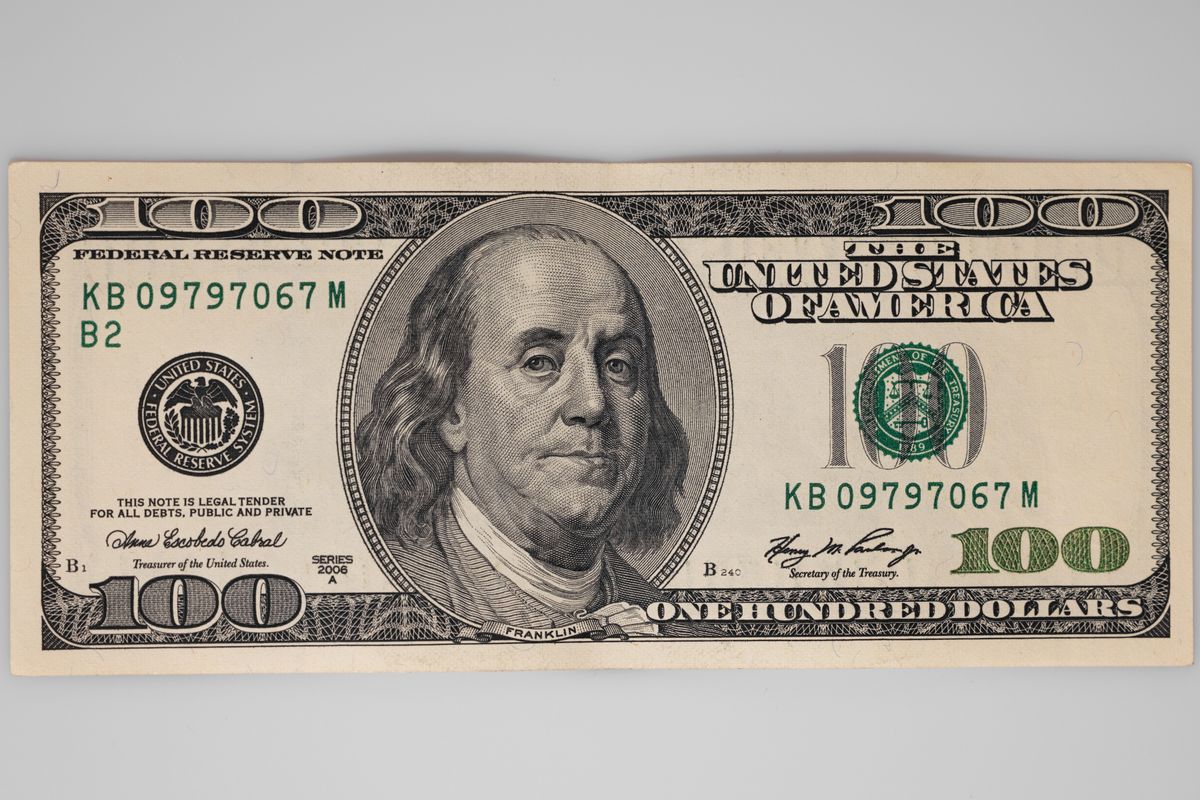
Federal law recognizes U.S. coins and currency as legal tender for debts, public charges, taxes, and dues.
But the Federal Reserve says there is no general federal law requiring private businesses to accept cash or coins when customers are buying goods or services.
Businesses can establish their own payment policies unless an applicable state or local law says otherwise.
That distinction is important. If a merchant refuses a $100 bill, the refusal does not make the bill invalid. Instead, the question becomes whether the business has a legal obligation to accept cash under the rules that apply where the transaction takes place.
The legal status of the money and the merchant’s payment obligations are separate issues.
New York makes the large-bill exception especially clear
New York’s statewide cash-acceptance law took effect March 21, 2026.
The law generally prohibits covered food stores and retail establishments from refusing cash or charging customers a higher price because they choose to pay with cash.
But there is a significant qualification.
The New York attorney general’s guidance states that stores do not have to accept bills in denominations above $20.
So a covered New York store can be required to accept cash while still being permitted to turn down a $50 or $100 bill under the state’s cash-acceptance law.
That distinction is particularly useful for understanding why “cash only” and “no large bills” are not necessarily the same legal question.
New York also has exceptions involving certain telephone, mail, and internet transactions. Some stores can qualify for an exception if they provide a cash-to-prepaid-card device meeting specified conditions, including no conversion fee and no minimum load above $1.
New Jersey uses broader wording
New Jersey takes a different approach in the statutory language reviewed for this comparison.
Its cash-acceptance law says covered retail sellers must accept legal tender when a buyer offers it. The reviewed text does not contain New York’s specific exception allowing stores to refuse denominations above $20.
The law concerns in-person retail transactions and includes specified exceptions for certain airport businesses, parking facilities, and motor-vehicle rental companies.
That means New York’s large-bill rule should not simply be carried across the state line and applied to New Jersey.
At the same time, the reviewed material does not establish a specific legal ruling saying that every New Jersey retailer must accept every $100 bill in every situation. The broader statutory language matters, but individual circumstances and exceptions can matter too.
Massachusetts also requires covered retailers to accept legal tender
Massachusetts law similarly says that covered retail establishments must accept legal tender when it is offered as payment by the buyer.
The provision also addresses discrimination against customers who pay with cash.
Unlike New York’s guidance, however, the reviewed Massachusetts provision does not state a denomination ceiling.
That creates an important difference in the wording of the laws. New York explicitly addresses bills above $20, while the Massachusetts provision reviewed here uses broader language about accepting legal tender.
It should not be turned into a blanket promise that every Massachusetts transaction involving a $100 bill will automatically result in acceptance or that every possible change-making dispute is resolved by this provision.
Local rules can add another layer
State law is not always the end of the story.
New York City has its own prohibition on cashless establishments. The city’s Department of Consumer and Worker Protection says businesses must accept cash unless they provide a qualifying cash-conversion machine, and businesses cannot charge more for cash payments.
That means customers may need to consider both state and local requirements when trying to understand whether a particular cash refusal is allowed.
A store’s sign or payment policy also should not be treated as the final word by itself. The applicable law and any exemptions still matter.
So what should you do if your $100 bill is refused?
Start by figuring out what the business is actually refusing.
Is it refusing all cash, or does it simply have a policy against large denominations?
That distinction can make a major difference.
Then consider the state and, where relevant, local rules governing the transaction. New York’s law demonstrates why a cash-acceptance requirement does not necessarily mean every denomination must be accepted.
It is also important not to assume that every business operates under the same rules. State laws can contain exemptions, and local requirements can add another layer.
For New York consumers who believe a covered business is violating the state’s cash-acceptance law, the attorney general provides a consumer complaint process online and by phone at 1-800-771-7755.
A permitted refusal of a bill above $20, however, should not automatically be treated as a violation simply because the customer offered cash.
The bill can be real, and the refusal can still be allowed
The simplest way to understand the issue is to separate three questions.
First, is the $100 bill valid legal tender? Federal law answers that question.
Second, is the business required by an applicable state or local law to accept cash?
Third, does that particular cash-acceptance rule require the business to accept the denomination being offered?
Those questions do not always produce the same answer.
New York makes the distinction especially easy to see: covered stores generally must accept cash, but the law allows them to refuse bills above $20.
So the next time a cashier declines a $100 bill, the important question is not simply whether the bill is legal tender. It is whether the law where you are shopping requires that particular business to accept that particular denomination.