Andy Burnham Pledges to ‘Reset Britain’ as He Launches a New Chapter for the Labor Party.
Andy Burnham has promised to reset Britain after becoming Labor leader, outlining plans for regional power, economic renewal, social housing and a less toxic political culture.
Andy Burnham has taken control of Britain’s governing Labor Party with a promise that reaches far beyond a routine change of leadership. He says his mission is to reset how the country is governed, rebuild faith in politics and return power to communities that have spent decades watching decisions arrive from London with little local input.
The former Greater Manchester mayor was formally declared Labor leader on Friday, July 17, after receiving support from 379 Labor members of Parliament and 23 affiliated organizations. His overwhelming backing left him as the only candidate in the race to replace Keir Starmer, turning Labor’s special conference in London into both a leadership announcement and the opening scene of a new political era.
Burnham is expected to become prime minister on Monday, July 20, after Starmer formally resigns and King Charles III completes the constitutional process of inviting a new leader to form a government. That would make Burnham Britain’s seventh prime minister in approximately a decade, an extraordinary measure of the political instability that has unsettled the country since 2016.
His message is deliberately ambitious. Burnham is not presenting himself merely as Labor’s next manager. He is attempting to convince voters that a government already damaged by declining confidence can rediscover its purpose, reconnect with working communities and offer an alternative to the growing appeal of Reform UK and other populist movements.
Burnham Calls for a New Political Culture
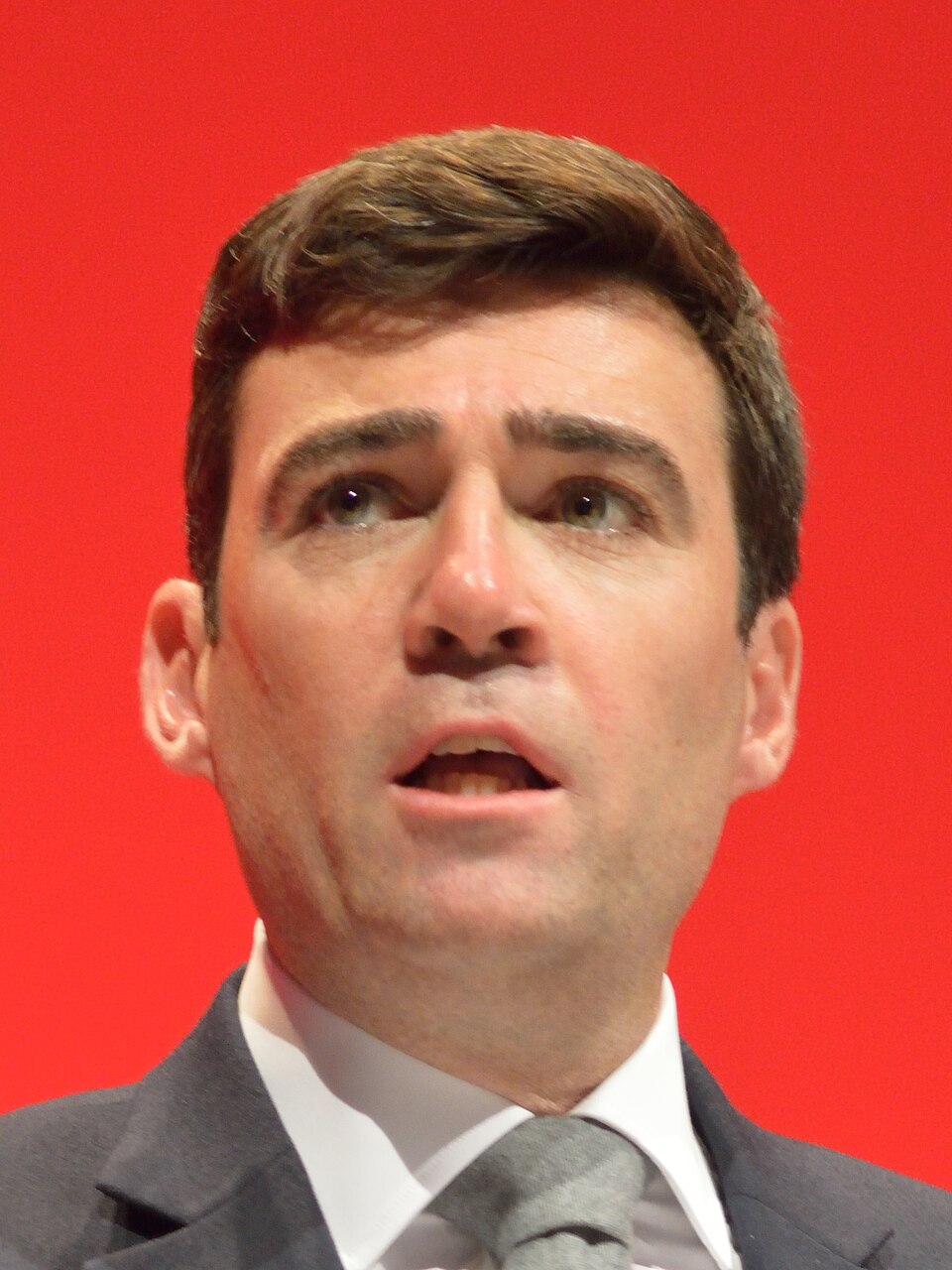
Burnham’s first speech as Labor leader focused heavily on the behavior of politicians and the public’s fading trust in the system.
He called for a “new politics” that places practical results above personal rivalries, factional maneuvering and constant point-scoring. He also promised to confront Labor’s internal briefing culture, arguing that a governing party cannot ask the country to unite while its own senior figures endure anonymous attacks and compete for power.
“We won’t beat Britain’s new right if we are consumed by infighting,” Burnham told the conference, making party discipline central to his plan for political recovery. He pledged to respect the different traditions within Labor and suggested that cooperation with other parties should be possible when it serves the national interest.
That approach represents a clear attempt to separate Burnham’s leadership style from the guarded atmosphere that surrounded Starmer’s final months. Burnham wants to appear more emotionally direct, more accessible and more willing to acknowledge that Britain’s political establishment has failed to deliver enough improvement in ordinary lives.
His slogan, “For Us,” reflects that positioning. It helped carry him back into Parliament during the Makerfield by-election on June 18, when he secured 24,927 votes, compared with 15,696 for Reform UK’s Rob Kenyon. The result gave Burnham a majority of 9,231 and provided the parliamentary route he needed to seek Labor’s leadership.
The speed of his return has been remarkable. After leaving Westminster to become mayor of Greater Manchester in 2017, Burnham rebuilt his national profile by presenting himself as a champion of northern towns, regional transport and communities overlooked by central government. Less than one month after returning as an MP, he now stands on the edge of Downing Street.
The Reset Begins With Power Leaving Westminster

At the center of Burnham’s vision is a major transfer of political and economic authority away from London.
He has proposed creating a “Number 10 North” in Manchester, giving the government a permanent northern center focused on regional growth and decentralization. The plan is intended to be more than a second prime ministerial office. Burnham wants local leaders to gain greater influence over transport, housing, education, skills, infrastructure and economic development.
His argument is that Britain cannot repair deep regional inequality while nearly every significant decision is filtered through Westminster and Whitehall. Towns that lost industries, banks, transport links and public services cannot be revived through temporary funding competitions or policies designed without sufficient local knowledge.
Burnham intends to take the model developed in Greater Manchester and apply it nationally. His mayoral record includes the creation of the Bee Network and the return of the region’s buses to local control through franchising. The network became a powerful symbol of his belief that public authorities can shape essential services while continuing to work closely with private operators and businesses.
He has described his economic approach as pro-business but unwilling to accept that markets alone will rebuild neglected communities. Supporters have called the model “Manchesterism,” combining public leadership, private investment and local decision-making.
Greater Manchester’s economy expanded by 17.4 percent between 2017 and 2023, according to figures cited by Reuters. Burnham’s allies also point to regeneration projects such as Stockport’s multibillion-pound redevelopment as evidence that targeted public investment can attract larger private commitments.
The national challenge, however, will be considerably larger. Not every town has Manchester’s population, transport system, investment base or political visibility. Burnham must prove that his regional formula can work in struggling coastal communities, former industrial centers, rural areas, and the nations of Scotland, Wales, and Northern Ireland.
Housing, Industry, and Social Care Move to the Front
Burnham has linked Britain’s regional divide to four decades of deindustrialization, privatization and excessive centralization.
His reset would include greater domestic production in strategically important sectors such as steel, defense, food, and energy. He wants government purchasing and investment to support British jobs, strengthen supply chains and reduce dependence on foreign production where national resilience is at stake.
Housing is expected to become another major part of the agenda. Burnham has promised the largest council and social-housing construction program since the postwar period, using available public land to reduce costs and speed up development. He has also expressed support for Housing First principles, which provide homeless people with stable accommodation before requiring them to resolve other challenges.
The scale of the housing problem gives that promise political weight. Average UK private rent reached £1,377 per month in March 2026, an increase of 3.4 percent over the previous year. In England, average monthly rent rose to approximately £1,438 in April, placing further pressure on households already struggling with food, fuel and energy bills.
Burnham has also promised to reform social care, improve technical education, and expand apprenticeships. His education pitch seeks to reduce the long-standing imbalance between university degrees and vocational training by giving young people clearer routes into skilled work.
These proposals are designed to speak directly to voters who believe the economy may be growing on paper, even as their personal circumstances remain fragile.
Official figures show why that perception persists. Around 66 percent of adults in Great Britain said their cost of living had increased in May, while 63 percent reported being worried about rising costs. Britain’s economy expanded by 0.7 percent in the three months to May, but monthly growth was only 0.1 percent, with production declining by 0.5 percent and construction falling by 0.8 percent.
Burnham is therefore inheriting an economy that is growing but has not produced a widespread feeling of security. His reset will be judged not simply by national output but by whether wages, housing, transport and essential services begin to feel more manageable.
A Powerful Mandate Inside Labor, but Major Tests Outside It
Burnham’s 379 parliamentary nominations give him extraordinary authority within Labor. Yet overwhelming party support does not remove the difficult questions surrounding his program.
He has promised major investment, regional devolution, social care reform, public service renewal, and large-scale housing construction while maintaining fiscal discipline and avoiding higher taxes on working people. Balancing those commitments will require difficult spending decisions and a chancellor capable of reassuring financial markets without reducing the reset to a collection of modest adjustments.
Burnham has said that he has not completed his cabinet choices, despite intense speculation over who will control the Treasury and other powerful departments. Those appointments will reveal whether he intends to build a genuinely broad Labor team or place his program in the hands of a smaller circle of trusted allies.
He also faces the question of democratic legitimacy that confronts every prime minister who enters Downing Street between general elections. Labor won the 2024 election, but voters elected a government led by Starmer rather than Burnham. The new leader must therefore demonstrate quickly that he can govern effectively under Labor’s existing parliamentary mandate.
His political advantage is that he arrives with energy, a distinctive regional record and an ability to communicate in language that appears less manufactured than traditional Westminster messaging. His vulnerability is that expectations have risen faster than the detailed policy has.
Britain’s Reset Will Be Measured in Results

Burnham’s rise is one of the most dramatic British political comebacks in recent memory.
He lost Labor leadership contests in 2010 and 2015, left national politics, rebuilt his reputation in Greater Manchester and returned to Parliament through a by-election only weeks before taking control of the governing party. At 56, the politician once pushed to the edge of Labor’s national stage is preparing to lead the country.
His promise to reset Britain is compelling because it addresses a feeling shared across many communities: that politics has become distant, defensive and unable to improve everyday life.
The strength of Burnham’s opening message lies in its combination of hope and dissatisfaction. He acknowledges that the existing model has failed too many people, but insists that decline is not inevitable.
The next chapter for Labor will not be judged by the warmth of Friday’s conference or the scale of Burnham’s nominations. It will be judged by whether regional power genuinely moves, homes are built, public services improve, and economic growth reaches people who have heard similar promises before.
Burnham has secured Labor’s leadership with almost no internal resistance. Resetting Britain will be the far harder contest.