Salman Rushdie Attack Verdict Shows How a Decades-Old Threat Became a Modern Terrorism Case
The Salman Rushdie attack began as a violent moment on a New York stage, but the courtroom battle that followed revealed something far larger: how old ideological conflicts can survive across generations and reappear in unexpected ways. The conviction of Hadi Matar on federal terrorism charges has placed renewed attention on the 2022 stabbing of the internationally acclaimed author and the decades-long threats that preceded it.
The Salman Rushdie attack shocked the literary world when the author was assaulted while preparing to speak about protecting writers and preserving open discussion. The incident raised urgent questions about security, extremist influence, and the continuing risks faced by public figures whose work challenges powerful ideas.
The federal trial examined more than the physical attack itself. Prosecutors focused on evidence they said showed ideological motivation, while the defense challenged whether the government could prove what was driving Matar’s actions. The verdict now stands as a major legal development in a case that connects literature, politics, and global debates over free expression.
A literary gathering turned into a defining moment for free expression
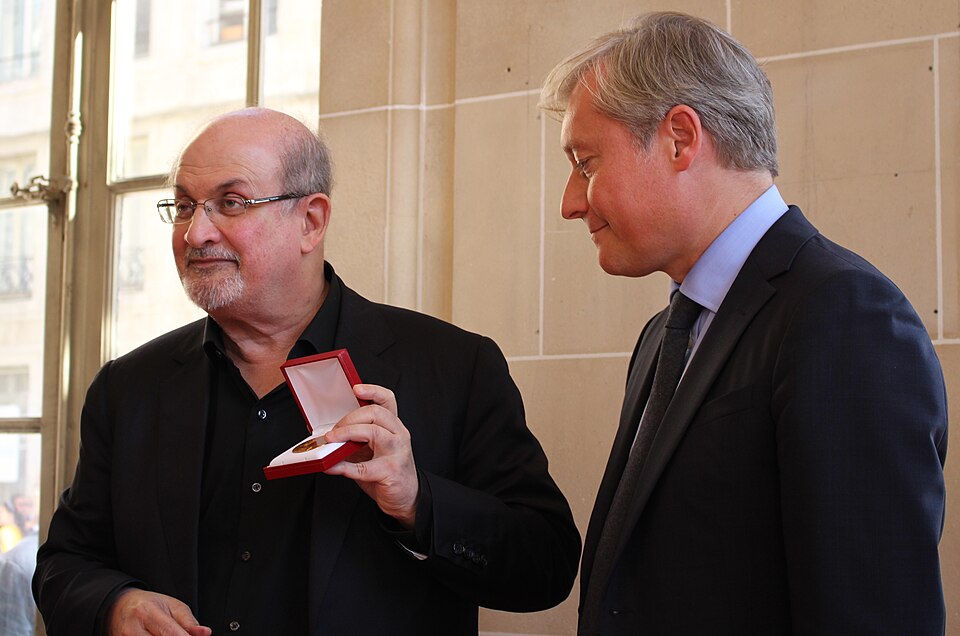
The setting of the Salman Rushdie attack carried a painful contradiction: a stage built for conversation became the location of an assault against one of the world’s most recognized defenders of writing freedom.
In August 2022, Salman Rushdie arrived at the Chautauqua Institution in western New York for an event focused on protecting writers and discussing the importance of safe spaces for intellectual exchange. The audience expected a conversation about creativity and the challenges faced by authors around the world.
Instead, the event became the scene of a violent attack that changed Rushdie’s life permanently. Prosecutors said Hadi Matar rushed onto the stage and stabbed the author repeatedly before audience members and law enforcement officers intervened.
The Salman Rushdie attack left the author with serious injuries, including the loss of vision in his right eye. The assault immediately drew international attention because it targeted a writer whose career had already been shaped by years of threats connected to his work.
The incident also created a powerful symbolic moment. Rushdie had spent decades defending writers’ ability to challenge ideas through fiction, yet he became a victim of the very type of violence that critics of censorship had warned about for years.
The shadow of The Satanic Verses returned after decades of silence
The roots of the Salman Rushdie attack stretch back more than three decades to a literary controversy that reshaped the author’s life and sparked international conflict.
Rushdie published The Satanic Verses in 1988, a novel that received literary attention but also triggered intense opposition among some Muslim communities. Critics argued that parts of the book were offensive toward Islam, particularly passages involving a fictionalized dream sequence connected to religious history.
In 1989, Iran’s Supreme Leader Ayatollah Ruhollah Khomeini issued a fatwa calling for Rushdie’s death. The declaration forced the author into hiding and created a global security challenge that followed him for years.
The controversy produced violence beyond Rushdie himself. Several people involved with translations and publication of the book faced attacks, including the killing of Japanese translator Hitoshi Igarashi and attacks against others connected to the work.
Although Rushdie eventually returned to public life, the Salman Rushdie attack demonstrated that the consequences of the controversy had not completely disappeared. A threat issued in the late 20th century remained relevant enough to become central evidence in a 21st-century terrorism prosecution.
Prosecutors traced a path from online messages to a courtroom battle
The federal case against Hadi Matar centered on a difficult question: was the attack an isolated act of violence or the result of a broader ideological commitment?
Prosecutors argued that Matar was motivated by support for the decades-old call against Rushdie and presented digital communications they said showed his interest in the fatwa before the attack.
According to prosecutors, messages and online activity showed Matar discussing Rushdie, expressing anger over the author’s work, and eventually focusing on the opportunity to attend the Chautauqua Institution event.
The government argued that these communications demonstrated planning rather than spontaneous anger. Prosecutors described the attack as an effort connected to extremist ideology rather than a personal dispute.
The use of digital evidence reflected a broader trend in modern terrorism investigations. Law enforcement agencies increasingly examine online conversations, search histories, and electronic records when attempting to establish motivation behind politically or ideologically driven crimes.
However, digital evidence also creates complex legal questions. Investigators must determine whether statements represent genuine plans, personal beliefs, or expressions that do not necessarily translate into criminal intent.
The courtroom fight over proving ideology and intent

The Salman Rushdie attack trial highlighted one of the hardest challenges in terrorism cases: proving not only what happened, but why it happened.
Matar’s defense team did not dispute that Rushdie was attacked. Instead, lawyers challenged the government’s interpretation of the evidence and argued that prosecutors could not prove exactly what was happening in Matar’s mind.
The defense questioned whether messages expressing anger toward Rushdie were enough to establish the specific intent required for a federal terrorism conviction. The argument reflected a wider legal debate about how courts evaluate beliefs, speech, and actions.
Prosecutors maintained that the evidence created a clear connection between ideology and violence. They argued that Matar’s communications, interest in the fatwa, and actions before the attack demonstrated a deliberate effort to harm Rushdie.
The jury ultimately accepted the prosecution’s argument and found Matar guilty of federal terrorism charges. The verdict added a significant legal consequence to a case that had already resulted in a state conviction for attempted murder and a 25-year prison sentence.
Security concerns grew after an attack on a public intellectual

The Salman Rushdie attack forced cultural organizations, universities, and public institutions to reconsider how they protect controversial speakers while preserving open access.
Before the attack, literary events often balanced security and accessibility. Authors, academics, and public thinkers regularly appeared before audiences without the same level of protection typically associated with political leaders or government officials.
The assault demonstrated the vulnerabilities of public cultural spaces. It showed how quickly an ordinary discussion can become a security emergency when a targeted individual faces a determined attacker.
Following the incident, many organizations reviewed their safety procedures for high-profile events. The challenge remains complicated because institutions must protect speakers without creating environments where fear prevents public discussion.
The broader issue extends beyond Rushdie. Journalists, activists, researchers, and artists around the world increasingly face threats connected to their work, raising questions about how societies defend free expression while responding to genuine security risks.
Rushdie’s return to writing became part of the story
The aftermath of the Salman Rushdie attack was defined not only by injury and prosecution, but also by the author’s decision to continue creating.
After surviving the attack, Rushdie documented his experience in his memoir about the stabbing and its aftermath. He later returned to fiction, continuing a literary career that had already lasted more than four decades.
Rushdie’s career has been marked by both recognition and controversy. His novel Midnight’s Children won the Booker Prize and established him as one of the most influential contemporary writers.
His ability to continue publishing after the attack became a significant part of the public conversation surrounding the case. Supporters viewed his return to literature as a rejection of efforts to silence him through violence.
The Salman Rushdie attack changed the course of his life, but it did not end his role as a writer engaged with difficult subjects. Instead, it added another chapter to a career defined by debates over imagination, identity, and freedom of expression.
A verdict that reaches beyond one courtroom
The conviction of Hadi Matar provides legal accountability, but the questions raised by the Salman Rushdie attack extend far beyond the events of one day in New York.
The case demonstrates how historical conflicts can continue influencing modern events. A controversy that began with a novel published in 1988 became the foundation of a terrorism trial decades later.
It also highlights the challenge of confronting extremist ideas before they become acts of violence. Governments, cultural institutions, and communities continue to debate how best to respond to threats without restricting legitimate debate.
The Salman Rushdie attack remains a reminder that freedom of expression often carries risks, particularly for individuals who challenge cultural, political, or religious boundaries. Protecting that freedom requires more than defending books or speeches. It requires creating societies where disagreement is answered through discussion rather than violence.
The final question left by the case is not only about one attacker or one author. It is about whether future generations can preserve spaces where difficult ideas are explored openly, even when those ideas create controversy.