Hakeem Jeffries Puts “Crooks” on Notice With New Corruption Warning
In Washington, accusations of corruption arrive almost as often as fundraising emails. The harder part is proving wrongdoing and doing something about it.
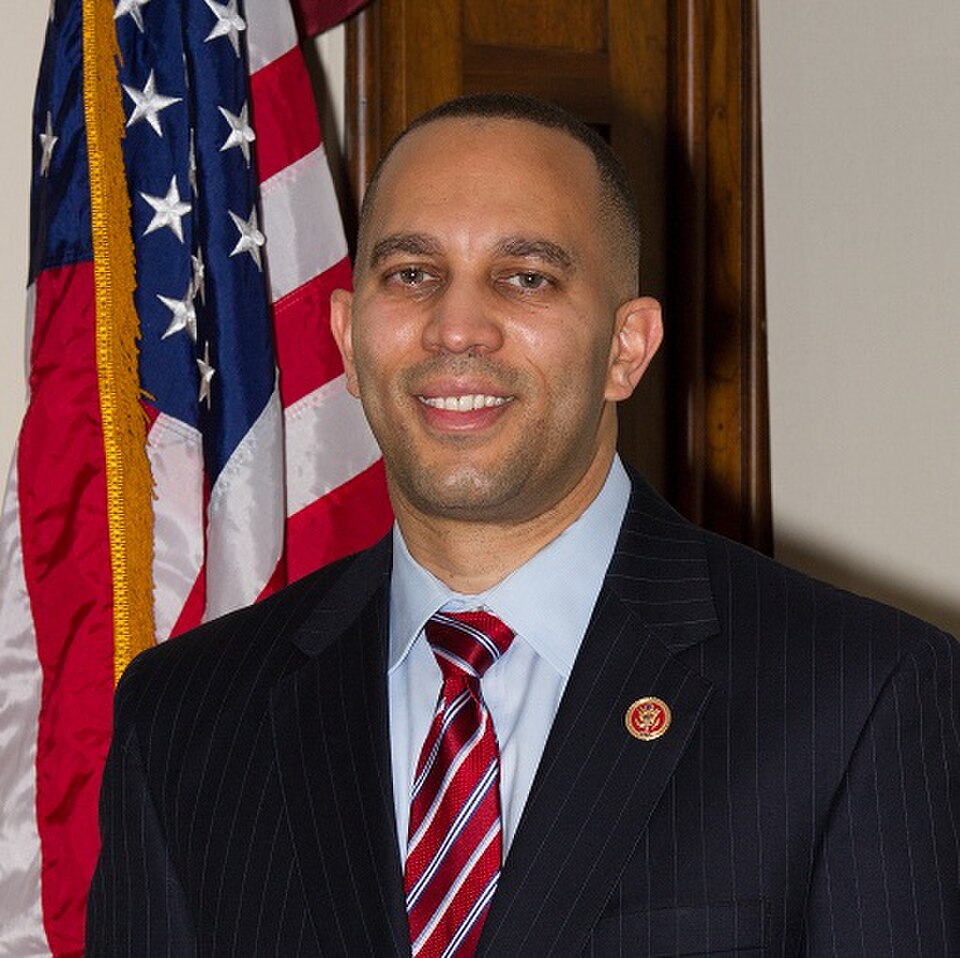
House Democratic Leader Hakeem Jeffries has now made that challenge part of his party’s appeal to voters.
“Corruption is out of control and hurting the American people,” Jeffries wrote in a July 29 social media post. “We will hold the crooks accountable.”
It was a short warning with a long list of unanswered questions. Jeffries did not identify any alleged offender, describe a specific transaction or announce an investigation in the post. His language was political, not a legal finding.
However, the remark was not an isolated burst of online outrage. It reflected a broader message Jeffries has repeated as Democrats campaign to regain control of the House: lower living costs, protect healthcare and use congressional power to investigate misconduct.
Jeffries turns accountability into a campaign promise
Jeffries delivered a longer version of his warning during a July 23 press conference.
“Our promise to the American people is that we will hold the crooks accountable,” he said, according to the official transcript published by his congressional office.
“If you’re a crook in the United States of America and you’ve been stealing from the American people, we’re coming after you,” Jeffries continued.
The language was deliberately blunt. Yet Jeffries framed the issue as more than a fight over Washington ethics. He placed it beside the everyday cost of groceries, gas, housing and healthcare.
That connection became clearer during his July 25 appearance on MS NOW’s “PoliticsNation.” Jeffries said corruption was “undermining the Congress’ ability and our government’s ability to actually deliver for hardworking American taxpayers.”
He argues that corruption does not remain trapped behind government doors. When officials misuse power, conceal conflicts or allow public resources to serve private interests, taxpayers may lose confidence in the institutions responsible for spending their money.
Still, Jeffries’ broad allegations require careful attribution. He has repeatedly accused President Donald Trump’s administration and congressional Republicans of corruption. Those are Jeffries’ claims and political judgments. The July 29 post did not present evidence establishing that any unnamed person had committed a crime.
Jeffries has also said his concern extends beyond one branch of government. During a February interview, he called for corruption to be addressed “wherever it’s found in the Congress, at the Supreme Court and certainly with the administration.”
That gives his message a wide target. It does not yet provide a detailed plan.
“Crooks” is a powerful word, but due process still matters
The tension surrounding Jeffries’ promise emerged during the same “PoliticsNation” interview.
Host Al Sharpton raised allegations involving two Republican House members and explicitly noted that both denied the accusations. A recording of House Speaker Mike Johnson was then played.
“The key word there is allegation,” Johnson said. “We have a process here. The House Ethics Committee works on those things.”
Johnson added that he would not comment on investigations while they remained underway.
Jeffries did not reject the need for that process. He said Democrats should uphold “an American standard of decency and fairness” while ensuring people receive “due process in an administrative or legal or congressional process.”
That qualification matters because “crook” ordinarily suggests guilt. In the United States, an allegation is not a conviction, and the opening of an investigation does not prove a violation occurred.
The bipartisan House Committee on Ethics oversees the chamber’s Code of Official Conduct. It can examine allegations involving current House members, officers and employees, gather documents and recommend action.
The committee itself warns against treating an inquiry as proof. When it announced an investigative subcommittee in an unrelated 2025 matter, it stated that creating the panel “does not itself indicate that any violation has occurred.”
Congressional investigations and criminal prosecutions are also different processes. Congress can conduct hearings, demand records, consider legislation and make referrals. Prosecutors determine whether criminal charges are justified, while courts decide guilt.
The official Constitution Annotated describes investigation and oversight as central parts of Congress’ legislative authority. Control of the House can therefore determine which subjects receive hearings, which witnesses are called and which records committees pursue.
If Democrats win the chamber, Jeffries would have more influence over that oversight agenda. His promise could then move from campaign language to a measurable governing responsibility.
The next step is specificity
Jeffries has explained the theme, but several important details remain unknown.
He has not used the July 29 statement to name a particular investigation, release a new anti-corruption bill or identify the first actions Democrats would take after gaining a House majority.
Accountability can mean many things. It may involve hearings, subpoenas, financial-disclosure reforms, tougher conflict-of-interest rules, ethics proceedings or referrals to law enforcement. Jeffries did not specify which of those tools he had in mind in the quoted post.
There is also the question of consistency.
A serious anti-corruption standard cannot depend on the accused person’s political affiliation. If Democrats want voters to regard this as a governing commitment instead of a campaign attack, the same evidentiary standard must apply to Democrats, Republicans and administration officials alike.
The language must remain equally precise. Political leaders can call for investigations and describe conduct as troubling, but journalists and public officials should distinguish allegations from established violations. Formal findings, verified records and court decisions carry a different weight from campaign rhetoric.
Jeffries appears to understand that distinction. His reference to due process gives his promise an important boundary. What remains to be seen is whether Democrats will produce a specific program capable of turning the warning into action.
“Hold the crooks accountable” is memorable because it sounds simple. Real accountability rarely is.
It requires evidence strong enough to survive partisan scrutiny, procedures fair enough to protect the innocent, and consequences serious enough to deter misconduct. It also requires leaders willing to follow the facts when those facts become politically inconvenient.
Jeffries has placed corruption near the center of the Democrats’ 2026 message. If his party gains power, voters will have something more concrete than a slogan to judge: whom Congress investigates, what evidence it produces, and whether its standard of accountability applies to everyone.