Nearly Half of Americans Want Netanyahu Arrested, but the Poll’s Real Message Is Bigger
For decades, American support for Israel appeared almost untouchable. Presidents changed, wars erupted, and peace talks collapsed, yet Washington’s commitment rarely faced serious public resistance. A new poll suggests that political shield may now be cracking in a way few national leaders can ignore.
The latest Economist/YouGov survey found that 49% of Americans believe the United States should arrest Israeli Prime Minister Benjamin Netanyahu if he enters the country under an International Criminal Court warrant. Only 27% opposed an arrest, while 23% were unsure. The most remarkable part is not simply that nearly half support detention. It is that support now outweighs opposition by 22 percentage points.
The Poll Has Turned a Legal Question Into a Political Warning

The survey, conducted from July 25 to July 27 among 1,559 U.S. adult citizens, also found that 47% believe Netanyahu is guilty of war crimes in Gaza. Twenty-four percent disagreed, while 29% remained uncertain. Democrats were the most convinced, with 71% saying Netanyahu is guilty, compared with 52% of independents and 20% of Republicans.
Those findings do not amount to a legal verdict. The ICC issued arrest warrants for Netanyahu and former Israeli Defense Minister Yoav Gallant in November 2024 after judges found reasonable grounds to believe they could bear responsibility for alleged war crimes and crimes against humanity. Israel has rejected the accusations and disputes the court’s authority, while an arrest warrant remains different from a conviction reached after trial.
Still, public opinion does not wait for legal proceedings to conclude. Americans are reacting to years of images from Gaza, arguments over civilian casualties, restrictions on humanitarian aid and repeated confrontations between Netanyahu’s government and international institutions. The poll shows that the word “arrest,” once considered politically unthinkable in discussions about an Israeli prime minister, has entered mainstream American debate.
That shift becomes clearer across party lines. Sixty-eight percent of Democrats and 55% of independents support arresting Netanyahu, compared with 24% of Republicans. Republicans remain the only major political group in which a majority, 53%, opposes enforcing the warrant.
Americans Are Separating Israel From Netanyahu
The strongest insight from the survey may be that many Americans no longer see criticism of Netanyahu as hostility toward Israel itself. They increasingly appear willing to distinguish between Israeli civilians, the Israeli state and the decisions of its current government.
Recent Pew Research Center findings reinforce that divide. In March 2026, 60% of Americans held an unfavorable view of Israel, up from 53% one year earlier. Fifty-nine percent also said they had little or no confidence in Netanyahu to make sound decisions about international affairs.
A separate Pew survey conducted in May found that 52% of Americans still viewed the Israeli people favorably, while only 32% viewed the Israeli government positively. Sixty-two percent expressed an unfavorable opinion of the government. Americans also viewed Palestinians almost as favorably as Israelis, while Hamas remained deeply unpopular.
That distinction matters. It suggests many voters are rejecting the idea that they must choose between supporting Israeli civilians and questioning Netanyahu’s conduct. They can condemn Hamas, recognize Israel’s security concerns, express sympathy for Palestinians and still demand accountability from the Israeli government.
The generational changes are especially important. Pew found that majorities of both Democrats and Republicans under 50 now view Israel and Netanyahu negatively. Among Republicans ages 18 to 49, 57% held an unfavorable opinion of Israel, revealing a fracture inside a party long considered reliably supportive of the Israeli government.
Washington and the Public Are Moving in Opposite Directions
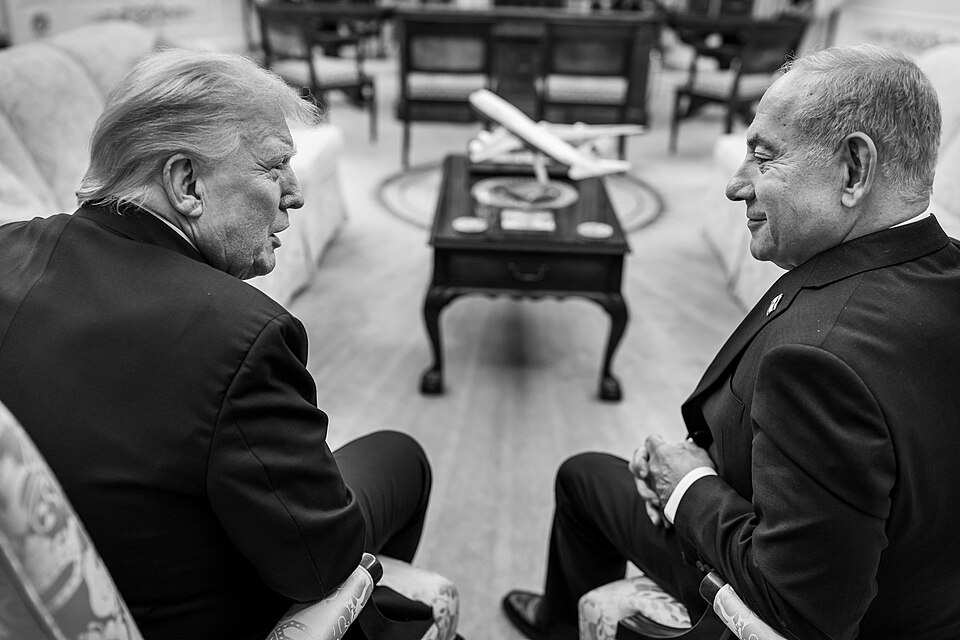
President Donald Trump has made clear that Netanyahu will not be arrested in the United States. His administration previously imposed sanctions on the ICC, accusing it of taking illegitimate and baseless actions against the United States and Israel.
New York City Mayor Zohran Mamdani has called Netanyahu a war criminal and urged federal authorities to enforce the warrant. However, after reviewing the matter, Mamdani acknowledged that New York City lacks the independent legal power to carry out an ICC arrest. Netanyahu is expected to visit New York for the United Nations General Assembly in September.
The United States is not a member of the ICC, which makes enforcement far more complicated than a mayor ordering police officers to act. Washington has no treaty obligation comparable to that of countries that joined the Rome Statute. Under current policy, an American arrest of Netanyahu remains extremely unlikely.
Yet the legal outcome may be less politically significant than the argument itself. The spectacle of an allied leader arriving in New York under an international warrant will force Americans to confront an uncomfortable contradiction. Washington frequently demands accountability from adversaries, but it rejects the authority of the same institutions when they target American officials or close allies.
That is why this poll carries more weight than a single dramatic headline. It reveals that a growing share of Americans no longer accepts unconditional support as the only legitimate position on Israel. They are asking whether alliances should protect leaders from scrutiny, whether international law should apply consistently and whether U.S. foreign policy still reflects public opinion.
Netanyahu will almost certainly leave the United States without being arrested. But the political immunity surrounding him may already be weakening. The real story is not that nearly half of Americans want one foreign leader detained. It is that Washington’s traditional approach to Israel is losing the certainty that sustained it for generations.