Senate Iran war powers vote exposes a widening constitutional clash with Trump.
Senate delivers narrow but historic rebuke over Iran’s military authority.
The Senate has voted to limit President Donald Trump’s authority over military operations involving Iran, marking one of the most significant congressional challenges to presidential war power in recent years.
The chamber adopted a war powers resolution on Tuesday with a 50 to 48 vote, directing the president to remove United States forces from hostilities connected to Iran unless Congress explicitly authorizes further action.
Although the measure is not legally binding in the traditional sense, the political message from Capitol Hill was unmistakable. A narrow majority of senators signaled that continued military engagement involving Iran cannot proceed without renewed congressional oversight.
The vote immediately sharpened tensions between the White House and Congress and placed war powers back at the center of Washington’s constitutional debate.
A rare bipartisan fracture inside the Republican Party
The outcome revealed a limited but meaningful break within Republican ranks.
Four Republican senators supported the resolution, including Rand Paul of Kentucky, Susan Collins of Maine, Lisa Murkowski of Alaska, and Bill Cassidy of Louisiana. Their votes joined Democrats in pushing the measure across the finish line.
At the same time, Democratic Senator John Fetterman voted against the resolution, underscoring that opposition to the measure was not strictly partisan.
The result was not a party-line collapse. Instead, it exposed a more complex reality within the Senate, where concerns about executive war power cut across ideological boundaries.
Two Republican absences also shaped the final result. Their absence reduced resistance to the measure and contributed to its passage in a chamber that remains deeply divided on foreign policy authority.
The 10th vote on Iran’s war powers signals growing congressional fatigue.
This was the tenth time the Senate has voted on an Iran-related war powers measure this year.
That repeated pattern reflects more than legislative persistence. It reveals a Congress locked in a cycle of revisiting the same constitutional question without reaching a permanent resolution.
Each vote reinforces the same underlying tension. Senators are increasingly forced to decide whether military action involving Iran requires explicit authorization or whether the executive branch retains sufficient flexibility to act independently.
The repetition has created legislative fatigue, but it has also built a record of formal opposition that could become significant if hostilities escalate again.

White House rejects resolution and questions its legal effect.
The White House moved quickly to dismiss the Senate vote, arguing that the resolution carries no legal force.
Administration officials emphasized that the measure is a concurrent resolution, meaning it does not require presidential approval and does not function as enforceable law. They also argued that no active hostilities currently exist, citing a ceasefire reached earlier in April.
From the administration’s perspective, the vote represents a symbolic gesture rather than a binding constraint on presidential authority.
However, supporters of the resolution reject that interpretation. They argue that congressional intent matters even when procedural tools do not create direct legal obligations. They also insist that congressional authorization is required before any renewed military escalation involving Iran.
This disagreement highlights a growing ambiguity in how war powers are defined and enforced in modern U.S. policy.
House and Senate alignment strengthens political pressure on Trump.
The Senate vote followed an earlier decision in the House of Representatives, where lawmakers passed the same resolution by a 215-208 margin.
That alignment between both chambers of Congress created a rare moment of coordinated legislative pressure on the executive branch. While the measure does not become law, its passage in both chambers strengthens its political weight.
Four House Republicans also joined Democrats in supporting the measure, echoing the cross-party split later seen in the Senate.
Together, the two votes establish a clear congressional record questioning the scope of presidential authority over Iran-related military operations.
Trump’s response escalates the political confrontation.
President Trump responded sharply to the Senate decision, calling the vote meaningless and poorly timed. He also criticized the senators who supported the resolution, arguing that they had weakened the administration’s position during a sensitive period in foreign relations.
His response followed a familiar pattern. The White House framed the vote as politically motivated and suggested that it could complicate diplomatic efforts.
Supporters of the president argue that congressional interference at moments of international tension risks sending mixed signals to adversaries and allies.
Critics counter that congressional oversight is not interference but a constitutional requirement designed to prevent unilateral military escalation.

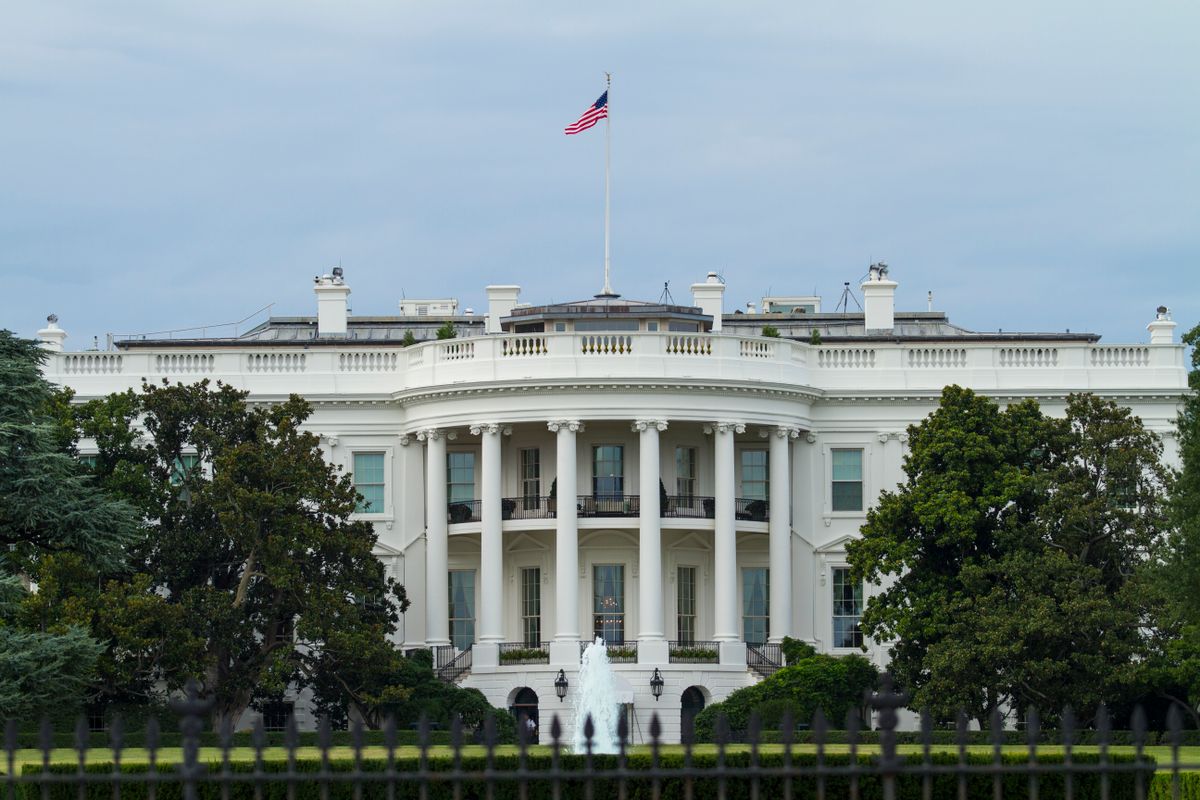
The White House from Washington, DC, Public domain, via pexels
The constitutional conflict at the center of the dispute
The War Powers Resolution remains the legal foundation for the current debate. It was designed to ensure that Congress retains authority over prolonged military engagements.
However, its enforcement has always been contested. Presidents from both parties have historically interpreted their requirements broadly, often engaging in military operations without formal declarations of war.
The current Iran resolution has revived that long-standing conflict between legislative authority and executive flexibility.
At the core of the dispute is a fundamental question. Whether the United States can enter or sustain hostilities with Iran without explicit congressional approval.
That question remains unresolved and politically charged.
A shift from party loyalty to institutional concern
One of the most notable features of the vote is not just who supported it, but why.
The Republican senators who joined Democrats did so from different ideological positions. Some have long supported strict limits on executive war powers. Others have expressed concern about the risks of escalation and congressional exclusion from major foreign policy decisions.
This creates a broader pattern. The debate over Iran is no longer purely partisan. It is increasingly institutional, focusing on how power is distributed between Congress and the presidency.
That shift is significant because it suggests that future votes on war powers may continue to draw unpredictable coalitions.

Competing interpretations of what counts as “hostilities”
A major point of disagreement between Congress and the White House centers on language.
The resolution assumes that U.S. forces remain connected to hostilities involving Iran, even under ceasefire conditions. The administration disputes that framing, arguing that active conflict has ended.
This difference is not simply semantic. It determines whether the War Powers Resolution applies at all.
If hostilities are considered ongoing in a legal sense, Congress asserts greater authority. If they are considered paused or resolved, the president retains broader discretion.
This definitional gap creates a structural uncertainty that neither branch has fully resolved.
Growing political risks for the administration
The Senate vote does not immediately alter military operations. However, it increases political constraints on future decisions involving Iran.
The administration now faces a congressional record of opposition that could become more consequential if tensions escalate again.
It also faces the challenge of managing internal divisions within the Republican Party on foreign policy, particularly when a small but visible group of senators is willing to break ranks.
At the same time, the president’s strong public response signals that the White House intends to treat such votes as political challenges rather than procedural constraints.
A recurring test of congressional authority over war
The Iran war powers vote is part of a broader pattern in American governance. Congress asserts authority, the executive branch resists, and the courts rarely intervene directly.
What makes this moment notable is not only the vote itself but the accumulation of repeated confrontations.
Ten votes in a single year reflect an ongoing struggle over who ultimately decides when the United States is engaged in war.
That struggle is no longer theoretical. It is unfolding in real time through repeated roll calls, shifting alliances, and competing interpretations of constitutional authority.
Conclusion: a divided government with no settled answer on war powers
The Senate’s 50-48 vote does not end the debate over Iran or presidential war authority. Instead, it deepens it.
Congress has now placed itself firmly on record, signaling that continued or renewed military engagement with Iran requires legislative involvement. The White House has responded by rejecting the resolution’s legal significance.
Between those positions lies a widening constitutional gap.
Until that gap is resolved, either through legislation, judicial interpretation, or political consensus, the tension between Congress and the presidency over war powers is likely to remain a defining feature of U.S. foreign policy.