Texas Marijuana Gun Case Exposes a Legal Contradiction That America Still Hasn’t Resolved.
A Texas man, a locked gun, and private marijuana use have exposed one of America’s strangest legal contradictions. In many parts of the country, marijuana has moved from the shadows into ordinary life.
It is sold in licensed stores, taxed by state governments, marketed to adults, prescribed for medical use, and discussed with the same casual confidence once reserved for wine or pain medication. Millions of Americans now live in places where cannabis is treated as regulated commerce, not criminal rebellion.
Yet under federal law, marijuana has remained tangled in a very different system. That conflict became impossible to ignore in U.S. v. Hemani, the Texas case that reached the Supreme Court and asked a deceptively simple question: Can the federal government make someone a felon because they use marijuana and keep a firearm at home?
The answer, at least in this case, was no, but that answer depended on why. The Supreme Court ruled unanimously that the government could not prosecute Ali Danial Hemani as a felon simply because he used marijuana and owned a gun that was safely secured at home. The ruling did not legalize marijuana. It did not erase all drug-related gun restrictions. It did not say intoxicated people have a right to carry firearms. But it did draw a bright line around one legal point: marijuana use alone does not automatically make a person too dangerous to lose a constitutional right.
That is why this Texas case matters far beyond Texas. It exposes a national legal gap America has spent years widening but never fully resolving. States have moved one way on cannabis. Federal criminal law has moved much more slowly. Gun laws have moved in an entirely different direction. Hemani landed at the point where all three collided, creating uncertainty about when marijuana use can support a federal firearm ban.
A Texas Case With National Consequences
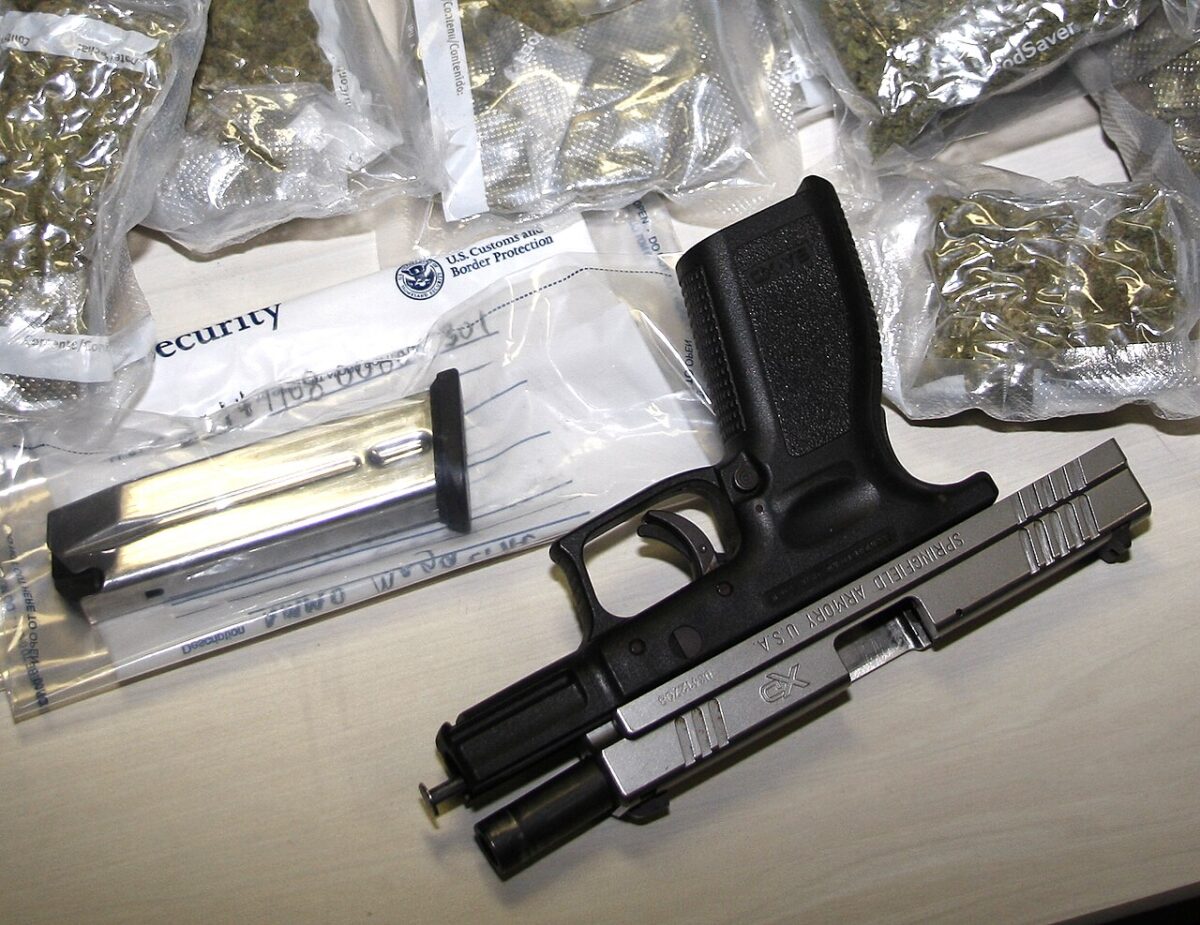
Ali Danial Hemani’s case began in Texas, a state with a deep gun culture and a limited medical marijuana program, but no legal recreational cannabis market. That setting made the case especially striking.
Texas is not Colorado, California, Oregon, or New York. It is not a state where recreational dispensaries have become part of daily commercial life. It remains politically and legally cautious on cannabis. Yet even there, the same national contradiction appeared.
Hemani was charged under a federal statute, 18 U.S.C. 922(g)(3). The law makes it a felony for someone who is an “unlawful user” of or “addicted to” a controlled substance to possess a firearm. Because marijuana was federally controlled, prosecutors argued that Hemani’s marijuana use placed him inside that prohibited category and exposed him to federal felony liability. But the problem was what the government was not alleging.
Hemani was not accused of using the gun while intoxicated. He was not charged with threatening anyone with it. He was not accused of carrying it during a drug transaction or using it in a violent crime. The case focused on marijuana use and firearm possession.
That distinction became central because it separated ordinary possession from active misuse.
A person actively handling a gun while impaired presents an obvious safety issue. Few Americans would argue otherwise. But Hemani’s case was different. The government’s theory was broader. It suggested that regular marijuana use alone could make firearm possession a federal felony, even without proof of intoxicated gun use or violent conduct.
The Supreme Court rejected that leap, narrowing the government’s theory.
The Word “User” Became the Problem

One of the deepest issues in the case was the phrase “unlawful user.” At first, it sounds straightforward. But criminal law depends on clarity, especially when a conviction can mean prison time, a permanent record, and the loss of constitutional rights.
What exactly counts as an unlawful user? Someone who smoked yesterday? Someone who used marijuana last month? Someone who uses cannabis twice a week? A veteran using marijuana for pain? A cancer patient in a state medical program? A person who legally buys cannabis under state law but remains technically exposed under federal law? Those questions matter because they determine when firearm possession becomes a felony.
The statute does not answer those questions with the precision people should expect from a criminal law. That vagueness was one reason the case drew attention from civil liberties advocates as well as gun-rights groups. The concern was not only marijuana.
It was possible that federal prosecutors could use a broad, ambiguous label to turn otherwise lawful firearm ownership into a felony, depending on how they defined “risk.” That is the danger of vague criminal statutes. They do not merely punish wrongdoing. They give the government discretion to decide who gets targeted.
And discretion, in criminal justice, is never distributed evenly.
Marijuana Law Has Changed Faster Than Federal Law
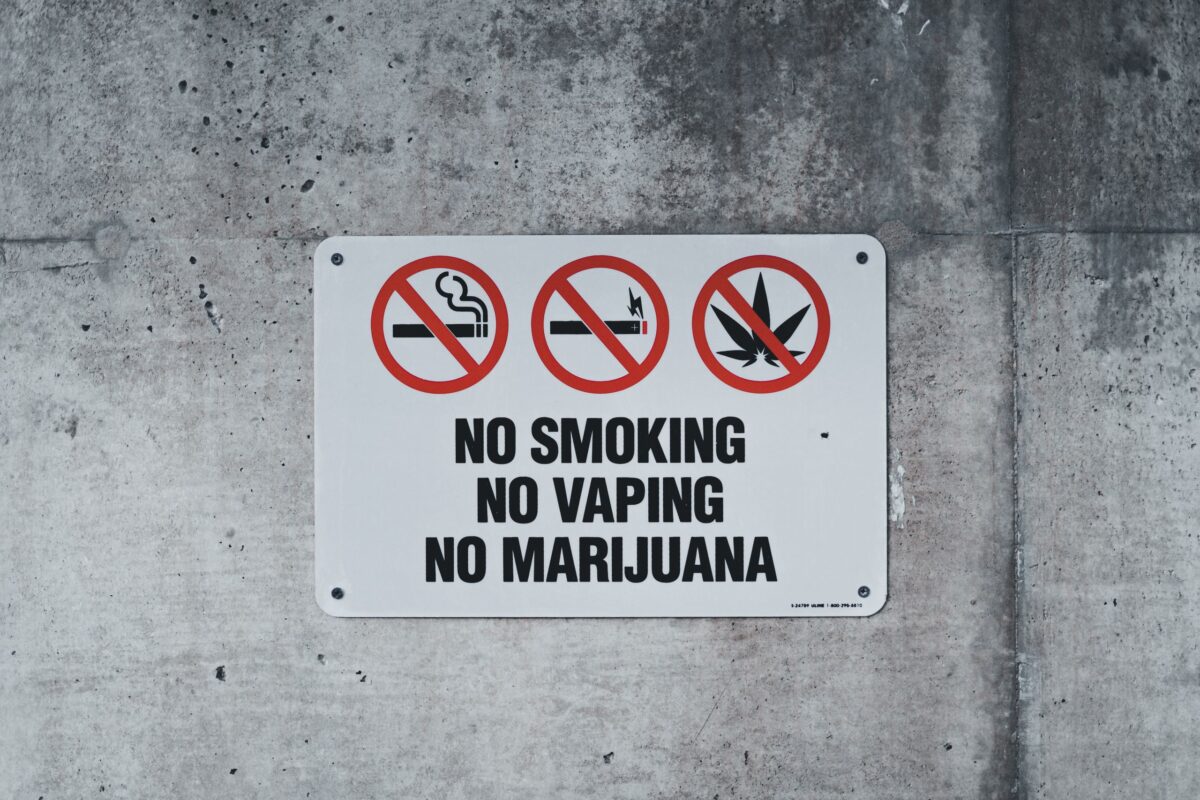
The legal contradiction at the heart of Hemani did not appear overnight; it grew as state and federal law moved apart.
Over the past two decades, states have rapidly softened their marijuana laws. Some allow recreational use. Others allow medical use. Some permit only limited low-THC products. Only a tiny number still prohibit both medical and recreational cannabis entirely.
As of May 2026, nearly half of U.S. states, plus Washington, D.C., allowed recreational marijuana. Another large group of states allowed some kind of medical marijuana access. More than half of Americans now live in a place where recreational marijuana is legal.
That is a profound shift in American life. Marijuana has become less culturally shocking, less politically isolated, and less legally uniform. In one state, a cannabis purchase may look like a normal retail transaction. In another, it may still create legal risk. At the federal level, the situation remains even more complicated.
That unevenness creates strange results, which is why the conflict reaches beyond marijuana itself.
A person can follow state law, use marijuana without fear of local prosecution, and still face federal consequences tied to gun ownership, immigration, employment, housing, or other parts of life. The law does not speak with one voice. It speaks in conflict.
Hemani’s case simply made that conflict unavoidable.
The Gun Rights Angle Made the Case Explosive
This was not only a marijuana case. It was also a Second Amendment case, and that made it explosive. That matters because the Supreme Court has been reshaping gun law in recent years. Since its major 2022 ruling in New York State Rifle & Pistol Association v. Bruen, the Court has required gun restrictions to fit within the nation’s historical tradition of firearm regulation. That standard has made many modern gun laws harder to defend.
Hemani’s case asked how the history-and-tradition test applies to marijuana users. The government argued that history supports disarming people whose drug use makes them dangerous. But the problem was proof. Hemani’s prosecution did not rest on evidence that he was dangerous with a gun. It rested on the category itself: marijuana user.
The Court was unwilling to accept that category as enough. That is the key difference. The ruling does not say the government is powerless to regulate guns around drug abuse, intoxication, or dangerous conduct. It says the government cannot simply declare all marijuana users dangerous and then impose felony punishment without more evidence of danger.
That distinction is narrow, but powerful.
Public Safety Still Matters
The ruling should not be read as a reckless dismissal of public safety, because the Court still recognized the risk.
Guns and impairment are a serious concern. A person under the influence of drugs or alcohol should not be handling a firearm. The government can still act when someone’s conduct creates a real danger. Laws aimed at intoxicated possession, violent conduct, threatening behavior, or proven risk may stand on stronger constitutional ground, because they target specific dangerous conduct.
The issue is not whether danger matters; it clearly does. The issue is whether the government can skip the burden of proving danger and instead rely on a broad assumption. The issue is whether the government can skip the burden of proving danger and instead rely on a broad assumption. Hemani’s case says no.
That matters because criminal law is most dangerous when it trades evidence for labels. “Drug user” can become a shortcut. “Dangerous” can become a conclusion instead of a finding. “Public safety” can become a phrase that carries more weight than the facts underneath it.
The Supreme Court’s decision forces more precision.
If the government wants to take away a constitutional right and threaten a person with years in prison, it must bring more than a category. It must bring proof that the person’s conduct justifies that result.
Why the Case Created Strange Alliances
One of the most interesting aspects of U.S. v. Hemani was the unusual coalition that formed around it.
Civil liberties advocates saw a case about vague laws, overcriminalization, and arbitrary enforcement. Gun-rights supporters saw a case about the Second Amendment. Cannabis reform advocates saw a case about the lingering damage caused by federal marijuana prohibition. Criminal defense lawyers saw a case about prosecutors using a broad statute too aggressively.
Those groups do not always stand on the same side of major legal battles, but here their concerns overlapped. That overlap says something important about the case.
Hemani was not just about whether someone who uses marijuana can own a gun. It was about how much power the government should have to turn common behavior into exposure to felony charges when the law is vague and the facts do not show actual danger. The legal stakes extend beyond one defendant.
That overlap says something important about the case: it is a civil liberties question before it is a culture war question.
Texas Makes the Contradiction Harder to Ignore
The Texas backdrop lends the case a special force by sharpening the contradiction. Texas is one of the strongest gun-rights states in the country. Firearm ownership is deeply embedded in its politics and culture. At the same time, Texas has not embraced recreational marijuana the way many other states have. Its cannabis laws remain limited compared with states that allow adult-use markets.
That mix made Hemani a perfect test case. If a Texan can legally value self-defense at home, but federal law can still threaten him with felony prosecution because of marijuana use, then the contradiction is not confined to liberal cannabis states. It reaches into conservative gun states, too.
That is why this case cannot be neatly sorted into left and right. A conservative might see government overreach against a gun owner. A progressive might see overcriminalization rooted in drug law. A libertarian might see both. A public safety advocate might worry about impairment but still recognize that vague laws can sweep too broadly.
The case scrambles the usual political script.
The Ruling Does Not End the Confusion
The Supreme Court’s decision helps Hemani and limits how the government can use the federal gun ban against marijuana users like him. But it does not fully resolve America’s cannabis contradiction.
Marijuana remains governed by a fractured system. State laws vary dramatically. Federal rules remain complicated. Medical cannabis has gained broader recognition, but recreational marijuana remains more legally exposed. Gun ownership adds another layer of risk.
So the question remains: what is marijuana in America? Is it medicine? A recreational product? A controlled substance? A criminal marker? A tax revenue source? A public health concern? A reason to lose gun rights? The answer depends on where a person lives, which law applies, and which part of the government is asking.
That is not a stable system. It is a legal patchwork pretending to be a national policy.
What Hemani Really Reveals
Texas Marijuana Gun Case exposes a legal contradiction that America still hasn’t resolved because the country has changed faster than the law built to govern it.
Cannabis has moved into the mainstream, but federal consequences still linger. Gun rights have expanded, but lawmakers still want tools to keep firearms away from dangerous people. Public safety matters, but broad assumptions can become unconstitutional shortcuts.
Hemani sits at the center of that messy triangle. The case began with one man in Texas. It ended with a national warning. When laws are unclear, when state and federal policy collide, and when prosecutors use broad labels to threaten prison time, constitutional rights become vulnerable.
The Supreme Court did not say marijuana use is risk-free. It did not say every drug user can own any gun in any circumstance. It said something more restrained and more important: the government cannot make someone a felon simply by assuming marijuana use equals danger. That is the real lesson.
America can keep debating marijuana. It can keep debating guns. It can keep debating public safety. But after Hemani, one thing is harder to defend: a legal system that treats the same person as normal under one law, criminal under another, and dangerous without proof.
That contradiction was always there. A Texas case just forced the country to look at it.