Texas Stash House Raids Expose the Hidden Smuggling Pipeline Behind the Border Crisis
We are watching a different side of the border crisis unfold across Texas, and it is not happening only at the river, the fence line, or the official ports of entry.
It is happening inside ordinary neighborhoods.
It is happening in rented homes, motel rooms, trailers, hidden properties, and quiet residential streets where suspected human smuggling networks temporarily hide groups of migrants after they cross into the United States. These locations are commonly called stash houses, and recent enforcement actions across Texas show why they have become a major focus for federal, state, and local officers.
The public usually sees the border crisis through images of crossings, patrol vehicles, and political arguments. But the stash house problem reveals the hidden middle of the smuggling chain. This is where migrants are often held before being moved to bigger cities. This is where smugglers wait for payment. This is where people can be packed into unsafe rooms with little space, limited food, poor ventilation, and almost no control over what happens next.
That is why the latest Texas stash house raids matter. They are not isolated police actions. They point to a larger system that depends on secrecy, fear, transportation routes, neighborhood cover, and criminal profit.
What Is a Cartel Stash House in Texas?
A stash house is a temporary holding location used by human smuggling groups after migrants enter the country unlawfully. These properties can look normal from the outside. They may be single-family homes, apartments, motel rooms, trailers, ranch buildings, or short-term rentals.
Inside, the situation can be very different.
People may be told to stay quiet. Windows may be covered. Doors may be locked. Phones may be taken. Families may be pressured for more money. Drivers may wait for instructions. Smuggling coordinators may arrange the next stage of transport to San Antonio, Houston, Dallas, Austin, or other inland destinations.
We should understand the stash house as the pressure point between border crossing and inland movement. Once migrants are inside one of these locations, they may be beyond the immediate border zone but not yet free from smugglers’ control.
That is why law enforcement agencies describe stash houses as more than immigration violations. They are often treated as public safety threats, nodes of organized crime, and potential humanitarian emergencies.
Recent Texas Stash House Busts Show a Wider Pattern
Recent public reports describe a string of stash house operations across several Texas border regions, including Laredo, the Rio Grande Valley, Eagle Pass, and El Paso. The numbers vary by case, but the pattern is consistent.
Authorities identify a suspicious property. Agents or officers conduct surveillance, act on a tip, or follow leads from a separate smuggling investigation. They enter the property and discover groups of migrants waiting to be moved elsewhere. In some cases, suspected operators, drivers, or caretakers are arrested. In others, investigators continue searching for the people who arranged the smuggling route.
In Laredo, Border Patrol agents reported finding 14 people inside a stash house in what officials described as deplorable conditions. The group included 13 Mexican nationals and one Guatemalan national. A principal suspect was also taken into custody and faced federal prosecution for alien smuggling.
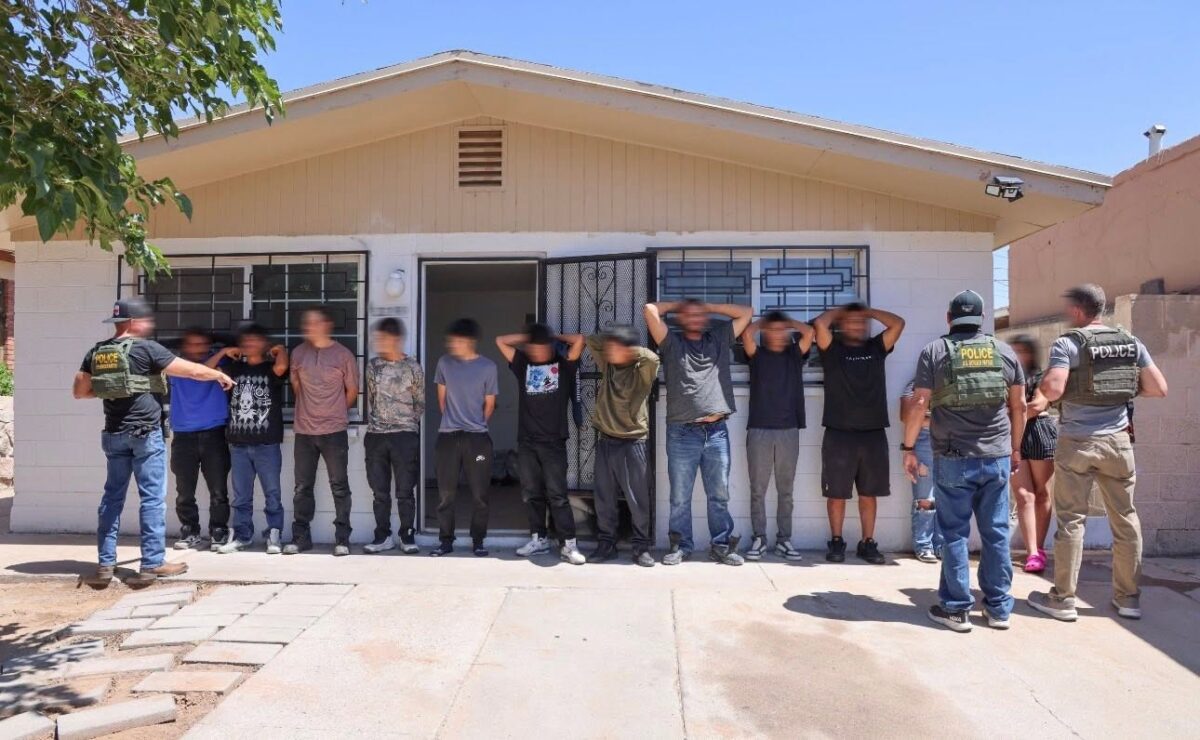
In El Paso, Border Patrol and Homeland Security Investigations agents disrupted another suspected stash house after acting on information from a prior smuggling investigation. Authorities reported that 12 people were arrested, including 11 adults and one unaccompanied child. Officials said 10 were from Mexico and two were from Guatemala.
These raids show why Texas remains a key stage in smuggling operations. The state’s long border, highway network, and proximity to major cities make it a practical corridor for criminal groups moving people north.
Why Laredo Keeps Appearing in Stash House Reports
Laredo is one of the most important border cities in the United States. Its location, road access, and commercial traffic make it a major crossing and transportation hub.
That same geography also makes the area attractive to smugglers.
We see Laredo appear repeatedly in stash house reports because it sits at a strategic point between the border and the rest of Texas. Once migrants are moved into Laredo, smugglers may try to place them in homes or trailers while arranging transportation farther north.
The city’s connection to Interstate 35 is especially important. I-35 runs from Laredo through San Antonio, Austin, and Dallas before continuing into the central United States. For smugglers, that corridor can serve as a route to move people away from the border. For law enforcement, it becomes a corridor to monitor.
This is why stash house enforcement in Laredo is not just about a single property or a single raid. It is about interrupting a route.
How Texas Stash Houses Fit Into the Human Smuggling Pipeline
Human smuggling is rarely a single event. It is usually a chain.
A person may cross the border with help from a guide. After crossing, that person may be moved to a pickup point. From there, they may be taken to a stash house. Then they may be transported again by car, van, truck, or tractor-trailer. Each stage may involve different people, different payments, and different risks.
The stash house is where the operation slows down, but the danger often increases. Migrants may be held in crowded spaces while smugglers coordinate the next move. If law-enforcement pressure increases, smugglers may delay movement. If payment is not complete, people may be held longer. If transportation is not ready, conditions can worsen quickly.
The Human Cost Inside Smuggling Stash Houses
We cannot talk about stash houses only as crime scenes. They are also places where human beings can be placed in dangerous and degrading conditions.
Some migrants may enter the smuggling process voluntarily because they believe it is the only path available to them. But once they are inside the network, control can shift quickly. Smugglers decide where they sleep, when they move, whether they can contact family, and how much money is still owed.
In the worst cases, people may be locked inside rooms, trailers, or vehicles. They may be exposed to extreme heat. They may not have access to enough water, food, medical care, or bathrooms. They may be threatened if relatives do not pay. They may be placed in vehicles where escape is impossible.
That is why stash house raids can become rescue operations as much as enforcement actions.
A recent federal case out of Laredo showed how deadly these conditions can become. The Justice Department reported that a man pleaded guilty to his role in a failed human smuggling attempt that involved dangerous stash house conditions and one death. Investigators said people had been held in a trailer with extreme heat, little or no air conditioning, limited food and water, poor ventilation, and no access to a toilet.
That kind of case explains why law enforcement agencies often frame stash house operations as urgent public safety actions. The goal is not only to arrest people. It is also to stop conditions that can turn fatal.