The Michelle Obama Attacks Are Getting Darker Long After She Left the White House
Nearly a decade after Michelle Obama left the White House as first lady, the attacks against her have not faded into political history.
They have followed her into private life, book tours, podcasts, public appearances, social media feeds, and now even a White House sporting event where a UFC fighter repeated a false and degrading conspiracy theory about her body.
For many Americans, the moment was not just another ugly viral clip. It was a reminder that some public figures can leave office, step away from campaigns, and stop seeking power, yet still remain targets for the same old machinery of insult, racism, sexism, and online cruelty.
We should be clear about what happened. Michelle Obama is a woman, a lawyer, an author, a mother, and the first African American woman to serve as the First Lady of the United States. The claim made about her at the White House event was false.
It came from a long-running conspiracy theory that has been repeatedly debunked, but that continues to survive because outrage moves fast online and because attacks on powerful Black women often become entertainment for people who want politics to feel like a cage fight.
Michelle Obama Is Still Being Dragged Into America’s Cruelest Political Theater

The latest controversy erupted after UFC fighter Josh Hokit used a post bout interview at a White House event to target Michelle Obama with a false gender claim.
The event was tied to America’s two hundred fiftieth birthday celebration and drew major attention because of its unusual setting, its political symbolism, and the presence of President Donald Trump.
Instead of the night being remembered only as a spectacle of sports and patriotism, it became another flashpoint in the country’s ongoing culture war.
The remark was aimed at someone who was not in the room, was not running for office, and had spent years building a public life outside elected politics.
That is what made the moment feel especially revealing. Michelle Obama did not need to do anything new to become a target again. Her existence as a beloved Black woman with cultural influence was enough to pull her back into the center of a hostile national conversation.
The False Claim Was Not Random
The attack on Michelle Obama did not come out of nowhere. It belongs to a larger pattern of conspiracy-driven insults that have circulated for years in far-right online spaces, where political opponents are often dehumanized instead of debated.
These claims are not harmless jokes. They are designed to strip a person of dignity, reduce a woman to her body, and turn a public figure into an object of ridicule.
When the target is Michelle Obama, the insult carries an added weight because it taps into a history of racist and sexist attacks aimed at Black women who hold visibility, authority, and admiration.
We have seen this pattern before. Michelle Obama has been mocked for her appearance, body, hair, tone, intelligence, marriage, confidence, and popularity.
The details change, but the goal stays the same. The attack is meant to make her seem less graceful, less feminine, less American, and less deserving of respect.
Why The White House Setting Made The Moment Worse

The location matters. This did not happen in a forgotten corner of the internet or in a private group chat. It happened at a White House event, on one of the most symbolically important grounds in the United States.
The White House is not just a building. It is the national stage where presidents receive foreign leaders, honor military families, comfort grieving communities, and project the character of American leadership.
When a false and degrading attack on a former first lady is allowed to land in that space without immediate correction, it sends a message that cruelty can be absorbed into public ceremony.
That is why the backlash was so strong. Many Americans were not only reacting to the insult itself. They were reacting to the setting, the laughter, the silence, and the sense that public decency keeps losing ground to spectacle.
Dana White Condemned The Comment, But The Damage Was Already Done
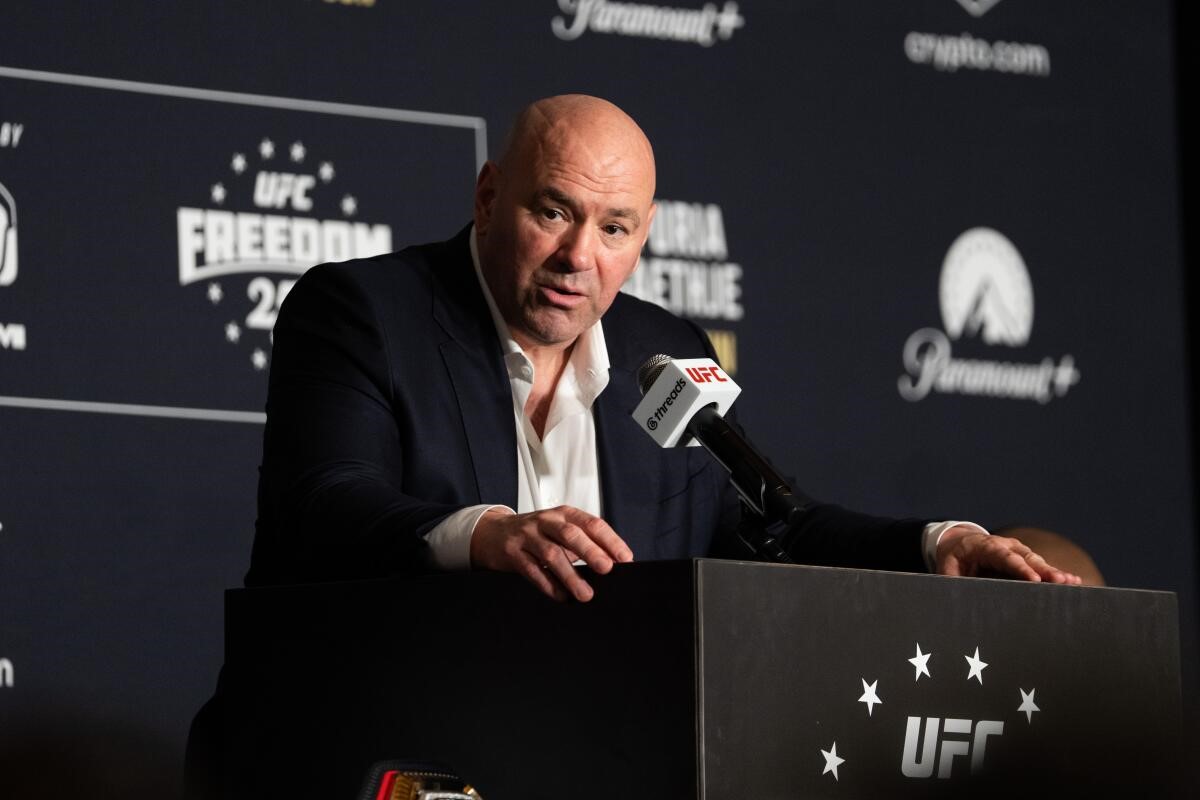
UFC president Dana White later criticized the remark, calling it false and nasty. That response mattered because it showed that even in a sport built around aggression, there is still a line between competition and personal degradation.
But the larger question remains. What happens when a public figure makes a false claim, receives viral attention, and then benefits from the controversy even as others condemn it?
In today’s attention economy, punishment is not always the point. Sometimes the backlash becomes the reward.
That is how conspiracy culture keeps feeding itself. A person says something ugly. The clip spreads. Supporters call it courage. Critics call it bigotry. Media outlets cover the fight. Social media platforms amplify every reaction. By the time the dust settles, the lie has traveled farther than the correction.
The Abuse Has Always Been About More Than Politics
All first ladies face criticism. Their clothes are judged, their causes are debated, their marriages are studied, and their facial expressions become national conversation. But Michelle Obama’s treatment has carried a different kind of hostility.
She was not only criticized as a political spouse. She was often racialized, masculinized, mocked, and dehumanized.
Those attacks followed a familiar script that has long been used against Black women who are seen as too strong, too visible, too educated, too influential, or too unwilling to shrink.
That is why this story is bigger than one fighter, one interview, or one viral moment. It reflects a country still struggling with the visibility of Black women in elite spaces.
Michelle Obama’s success unsettles people who never accepted that a Black woman from Chicago could become one of the most admired women in American public life.
The Attacks Also Reveal How Online Cruelty Has Changed Politics
Political insults are not new. American public life has always had ugly moments, vicious cartoons, cruel speeches, and personal attacks. What is different now is the speed and reward system.
A false claim can be repeated in front of a crowd and instantly become content. Within hours, it becomes a headline, a meme, a reaction video, a fundraising line, a loyalty test, and a new culture war battlefield.
The truth does not travel with the same emotional charge because outrage often feels more exciting than correction.
This is why public figures who traffic in cruelty keep doing it. They understand that attention has become a form of currency. The more offensive the statement, the faster it spreads. The more people condemn it, the more supporters claim censorship. The cycle keeps rewarding the behavior it claims to punish.
Michelle Obama’s Silence Should Not Be Mistaken For Weakness
Michelle Obama has not built her public identity around answering every insult. That restraint may be one reason she remains admired by many Americans.
She often lets her work, her books, her family, and her public presence speak louder than the people trying to drag her into the mud.
But silence should not be confused with surrender. Sometimes refusing to dignify a lie is its own answer. Sometimes the strongest response is not a statement, but the decision not to let an insult control the next chapter of your life.
That approach has defined much of Michelle Obama’s post-White House era. She has leaned into freedom, creativity, style, and personal choice.
She has spoken more openly about aging, marriage, identity, pressure, and confidence. The more she claims herself, the more threatened some critics seem to become.
The Bigger Problem Is America’s Appetite For Humiliation
The most uncomfortable truth is that the attack did not go viral only because one person said it. It went viral because America has developed a powerful appetite for public humiliation.
We see it in politics, entertainment, sports, and social media. People are rewarded for saying the cruel thing out loud. Audiences are trained to laugh before they think. Platforms turn humiliation into engagement. Public figures learn that decency is slower, quieter, and less profitable than insult.
That is the culture Michelle Obama keeps colliding with. Her public brand is built on discipline, aspiration, family, education, and dignity. The culture attacking her is built on mockery, conspiracy, and the thrill of watching someone powerful be insulted.
What Happens Next
The immediate controversy may fade, as most viral scandals do. Another clip will replace it. Another public figure will say something cruel. Another outrage cycle will begin.
But the pattern will remain unless powerful institutions decide that false personal attacks are not harmless entertainment. Sports organizations, media platforms, political leaders, and event hosts all help decide what becomes acceptable in public life. Their silence can be as loud as their statements.
For Michelle Obama, the latest attack is unlikely to define her. She has survived worse, carried more, and emerged with a public standing many politicians would envy.
The real question is not whether Michelle Obama can withstand another insult. The question is, why do so many people still feel the need to insult her to feel powerful?