Trump Tells Reporters They’ll Go Broke Without Him at Tense WHCA Dinner
President Donald Trump stepped before a ballroom packed with journalists on Friday night and delivered a warning wrapped in a punchline: enjoy the Trump era while it lasts, because the news business may not survive without him.
“You people have no idea how lucky you are,” Trump told the crowd. “When I’m gone, you’re all going to be broke. Your business model is going to be finished.”
He then sharpened the jab, declaring that there would be nobody compelling left to cover because “nobody gives a damn about anybody else.”
The remarks came during the rescheduled White House Correspondents’ Association dinner on July 24, 2026, at the Waldorf Astoria in Washington. The roughly hourlong address mixed jokes, political grievances and personal attacks, offering another demonstration of Trump’s unusual relationship with the press: openly hostile, deeply intertwined and almost impossible to separate.
A celebration of journalism becomes the Trump show

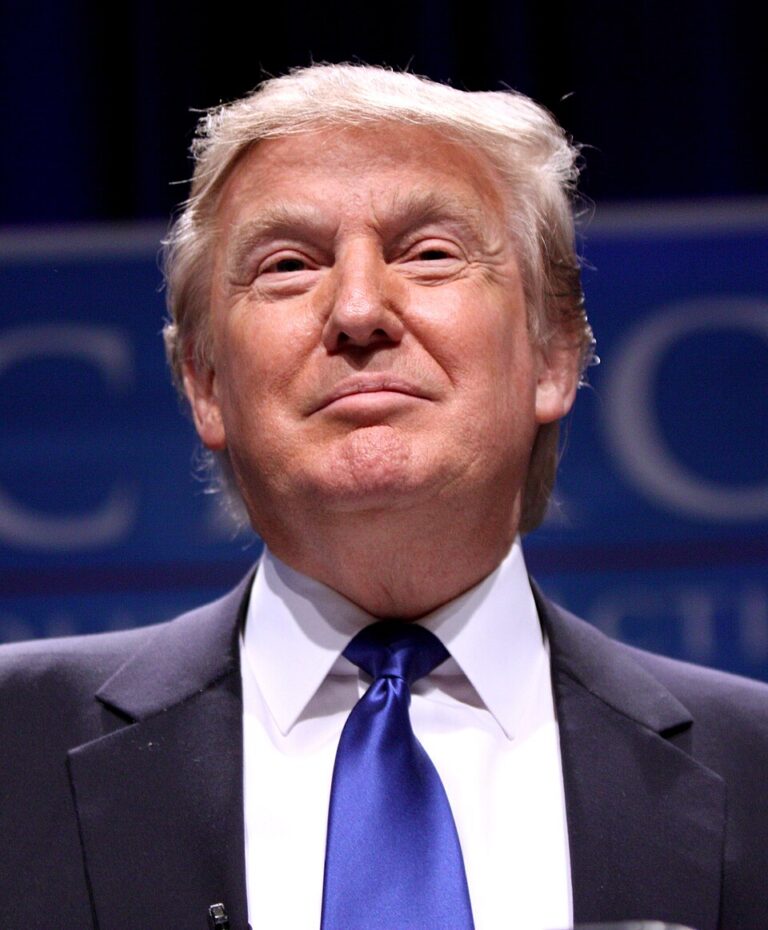
The White House, Public domain, via Wikimedia Commons
The annual dinner traditionally celebrates White House journalism, raises money for scholarships and honors reporters whose work holds the government accountable. Trump, however, repeatedly turned the spotlight back toward himself.
His argument was simple. Media companies criticize him constantly, but they also benefit from the enormous audience he attracts. In Trump’s telling, every controversy, courtroom fight, campaign speech and social-media post gives television networks and news websites another reason for people to tune in.
“I want to save your ratings,” he told the journalists.
Trump did not offer financial figures or industry research to support his prediction that news organizations would collapse after he leaves politics. The claim functioned primarily as a boast about his ability to dominate public attention.
Still, it captured a real contradiction at the center of Trump-era political journalism. Many outlets have built years of nonstop coverage around a politician who routinely calls them dishonest, “fake news” or enemies of his movement. Trump attacks the press while remaining one of its most reliable sources of breaking news, conflict and audience interest.
The evening demonstrated that dynamic in real time. Journalists gathered to celebrate their profession, but Trump’s comments quickly became one of the night’s biggest stories.
The dinner returned after a frightening interruption

The gathering carried more weight than an ordinary Washington dinner because it almost never happened.
The original event, scheduled for April 25 at the Washington Hilton, was disrupted by gunfire outside the ballroom. Guests were evacuated after an armed suspect attempted to breach a security checkpoint. The July gathering was later organized with a smaller guest list, tighter access rules and additional private security working alongside the Secret Service.
WHCA leaders said rescheduling the dinner was a deliberate statement against political violence.
“We will not allow an act of violence to have the last word,” then-WHCA President Weijia Jiang said when announcing the new date. She described the dinner as a celebration of a free press and journalism’s role in American democracy.
The association also recognized Secret Service officer Victor Gonzales, who was struck in his protective vest during the April incident, as well as Washington Hilton employees who helped protect guests.
Trump praised those who responded to the danger. That serious recognition stood in sharp contrast to the insults and political riffs that followed, creating an evening that moved unpredictably between gratitude, comedy and campaign-style confrontation.
Trump’s complicated dependence on the press
Trump had skipped the correspondents’ dinner throughout his first presidency, breaking with a long-running tradition of presidents attending and enduring jokes at their own expense. His 2026 appearance was his first at the event while serving as president.
Once onstage, he joked that the room contained people he liked, others he did not like at all, and many he nevertheless respected.
He also acknowledged the uncomfortable setting. Several journalists honored during the ceremony had produced reporting critical of him or his administration. Trump shook the winners’ hands before later joking that watching the awards had made the evening difficult for him.
Jiang offered a pointed response to the broader conflict between the administration and the media.
“There is an existential difference between criticizing the press and trying to undermine it,” she said. “One is healthy and it makes all of us better.”
Trump, meanwhile, continued testing the boundary between joke and political message. He put on a red “Trump 2028” hat while discussing the press’s need for him, presenting the gesture as another way to keep journalists employed. He also insisted that he was joking about another campaign.
The Constitution’s 22nd Amendment prevents a person from being elected president more than twice, making a conventional third Trump victory constitutionally barred.
By the end of the night, Trump had managed to criticize the media, praise parts of it and place himself once again at the center of its coverage.
His prediction that reporters will go broke without him remains unproven. But the speed with which the remark spread across television clips, news sites and social media gave Trump an immediate piece of evidence for his larger point: even inside a dinner created to honor journalism, he still knew how to become the headline.