Trump’s $7.6 Billion Clean Energy Cuts Face Political Scrutiny
The Department of Energy acknowledged in litigation that grants included in an October 2025 cancellation group were selected “based solely on the political identity” of the recipient’s state.
The affected states had voted for Democratic presidential nominee Kamala Harris in the 2024 election, according to court records and reporting on the case.
The admission has intensified questions about whether federal energy funding was administered through neutral financial standards or filtered through partisan geography.
The administration disputes that interpretation. A Department of Energy spokesperson said the court language concerned the timing and grouping of the announcement, not the underlying termination decisions.
That response now sits beside earlier agency statements describing the cancellations as the result of individualized economic, national-security and energy-security reviews.
Court filing challenges the administration’s original explanation
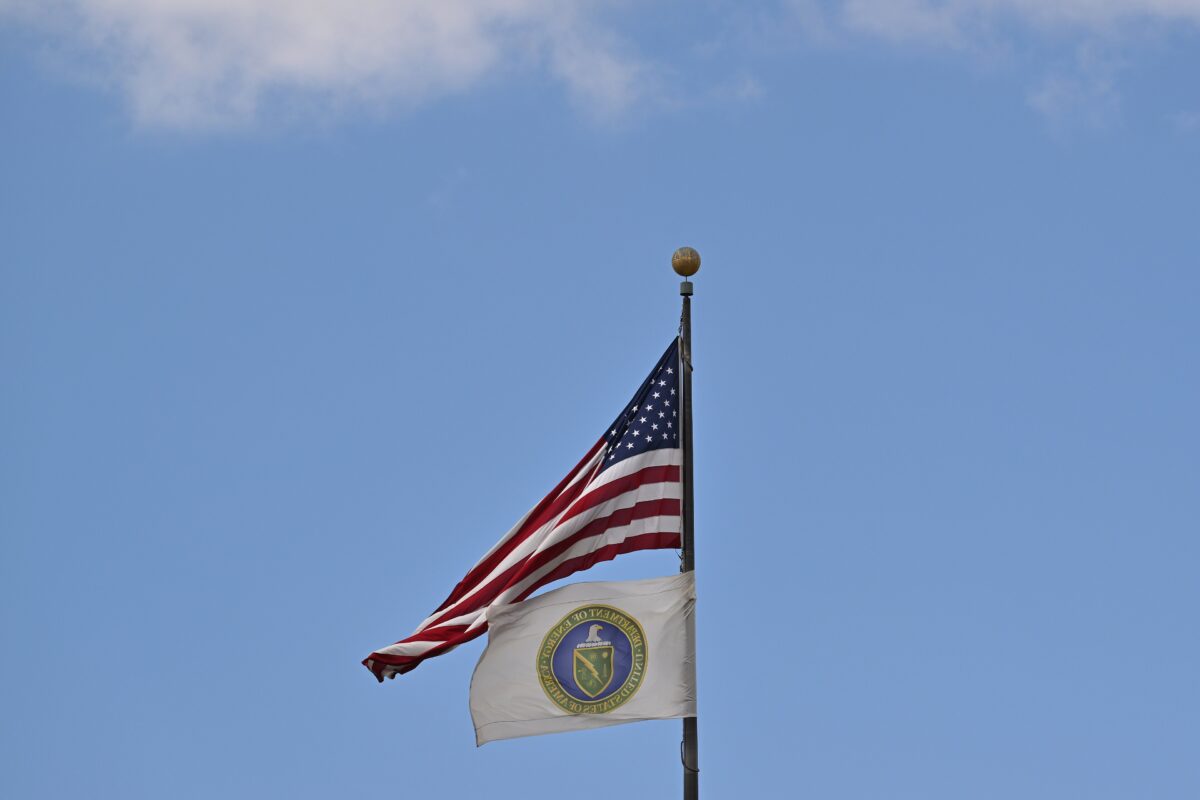
When the Energy Department announced the cuts on October 1, 2025, it said it was terminating 321 financial awards supporting 223 projects, producing approximately $7.56 billion in claimed taxpayer savings.
The department said the projects did not sufficiently advance national energy needs, lacked economic viability, or failed to offer an acceptable return on public investment.
Energy Secretary Chris Wright described the action as part of a broader review of awards made during the final months of the Biden administration.
The later court stipulations created a direct credibility problem for that explanation.
Attorneys for researchers challenging the administration said the Energy Department admitted that it terminated 283 grants in states that voted for Harris while declining to terminate 340 grants in states that voted for Trump.
According to the plaintiffs’ lawyers, political geography was the sole basis used to separate the two groups for the October action.
That does not automatically decide the lawsuit. Courts must still determine whether the government’s conduct violated equal-protection principles, federal administrative law or other constitutional limits.
But the filing gives challengers unusually specific evidence as they argue that political identity influenced the treatment of federal grant recipients.
Clean energy projects across 16 states were affected
The canceled funding reached projects in California, Colorado, Connecticut, Delaware, Hawaii, Illinois, Maryland, Massachusetts, Minnesota, New Hampshire, New Jersey, New Mexico, New York, Oregon, Vermont and Washington.
The portfolio included battery manufacturing, hydrogen development, electric-grid upgrades, industrial decarbonization and carbon-capture initiatives. These were not abstract climate pledges.
Many involved planned construction, equipment purchases, local hiring, research partnerships and private investment tied to federal cost-sharing.
That is why the dispute extends beyond Washington’s climate-policy battle.
When a large federal award disappears, companies may delay facilities, universities may suspend research, contractors may lose work, and state agencies may have to redesign energy plans.
Even projects with private backing can become harder to finance when federal participation is withdrawn.
Supporters of the cancellations argue that no administration is required to continue every award approved by its predecessors.
They say incoming officials have a duty to examine whether grants are financially sound, legally compliant and aligned with current national priorities.
Opponents do not dispute the government’s power to review spending. Their argument is narrower and more serious: a review cannot lawfully become a political test in which similarly situated recipients receive different treatment because their state voted for the opposing party.
Democrats call the cuts political retaliation
Democratic lawmakers have argued that the filing confirms what they suspected when the cancellations were first announced.
Rep. Marcy Kaptur of Ohio and Sen. Patty Murray of Washington said the administration had used federal power against states that did not support the president.
They also warned that workers and families, rather than political officials, would absorb the practical costs through lost jobs, delayed infrastructure and potentially higher energy expenses.
Environmental groups made a similar case. They said the administration’s approach could slow grid modernization and domestic clean-energy manufacturing at a time when electricity demand is rising, and utilities are seeking new generation, storage, and transmission capacity.
The political response is likely to focus heavily on consistency. The administration publicly framed the October cuts as business decisions based on merit.
The litigation record now includes language connecting the selected funding group to the voting behavior and Senate representation of the states where recipients were located.
Energy Department denies politics determined final decisions
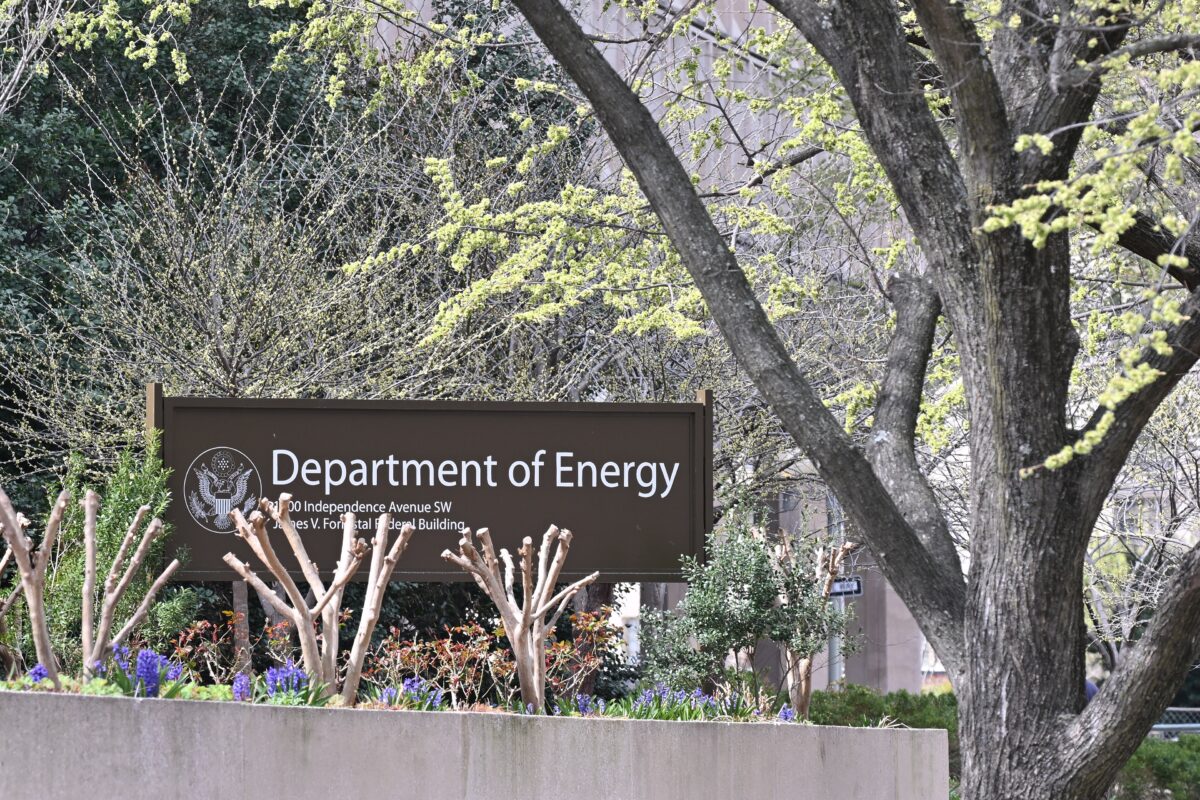
The Energy Department has rejected claims that it canceled grants to punish Democratic states.
Its position is that the challenged filing has been mischaracterized and that project-level decisions were still based on substantive reviews.
The department’s October announcement said officials examined awards individually and applied economic, security and energy-policy standards.
That defense will face close examination. Courts may look beyond public statements and study internal documents, review criteria, email communications, award files and comparisons between canceled and preserved projects.
A central question will be whether the government can show a legitimate, consistently applied reason for treating grants in Democratic-voting states differently from comparable grants elsewhere.
The case could reshape future federal grant decisions
The legal battle reaches beyond clean energy.
Presidents have broad authority to establish policy priorities, and executive agencies often reconsider pending rules, contracts and grants after an election.
Yet Congress controls appropriations, agencies must follow governing statutes, and federal decisions remain subject to constitutional protections.
A ruling against the administration could limit the use of political affiliation or state voting history in discretionary funding decisions.
It could also strengthen requirements for agencies to create clear records showing that cancellations were based on program performance, legal compliance, or documented financial concerns.
A ruling for the administration could give presidents wider room to redirect or terminate grants that conflict with their policy agenda, even when the geographic effect falls overwhelmingly on states controlled by the opposing party.
For now, the $7.6 billion controversy has moved from a dispute over climate spending into a larger test of whether federal dollars can be distributed, delayed, or withdrawn according to the political identity of a state.
The court record, rather than the original press release, will determine which explanation survives.