Trump’s fight with Lisa Cook could reshape the future of the Federal Reserve and presidential power.
A battle that began with one Federal Reserve governor has expanded into a much larger confrontation over presidential authority, economic independence, and the future of America’s financial system. President Donald Trump’s effort to remove Federal Reserve Governor Lisa Cook has moved far beyond a dispute involving one government official.
The conflict has become a major test of how much influence a president can have over the central bank that controls interest rates, inflation policy, and the direction of the U.S. economy. The Supreme Court’s decision requiring the administration to follow proper procedures before attempting to remove Cook did not end the fight.
Instead, it opened a new legal battle that could define the relationship between the White House and one of the world’s most powerful financial institutions. For investors, economists, and policymakers, the stakes are significant. The outcome could determine whether future presidents gain more control over the Federal Reserve or whether the institution’s long-standing independence remains protected.
Trump’s Fed battle becomes a fight over central bank independence.
The Federal Reserve has traditionally operated with distance from the White House because monetary decisions often require unpopular choices that may conflict with short-term political goals. Decisions on interest rates and inflation can directly affect mortgages, business loans, employment, and household finances across the country.
Federal Reserve governors are appointed for long terms to help protect them from political pressure. Unlike cabinet officials who usually serve at the pleasure of the president, Fed officials are expected to make decisions based on economic conditions rather than election cycles.
Trump’s push against Cook has placed that system under intense scrutiny. Supporters argue that elected presidents should have more authority over officials shaping national policy, while critics warn that weakening Fed independence could create uncertainty and damage confidence in America’s financial system.
Why Lisa Cook’s position matters to the U.S. economy
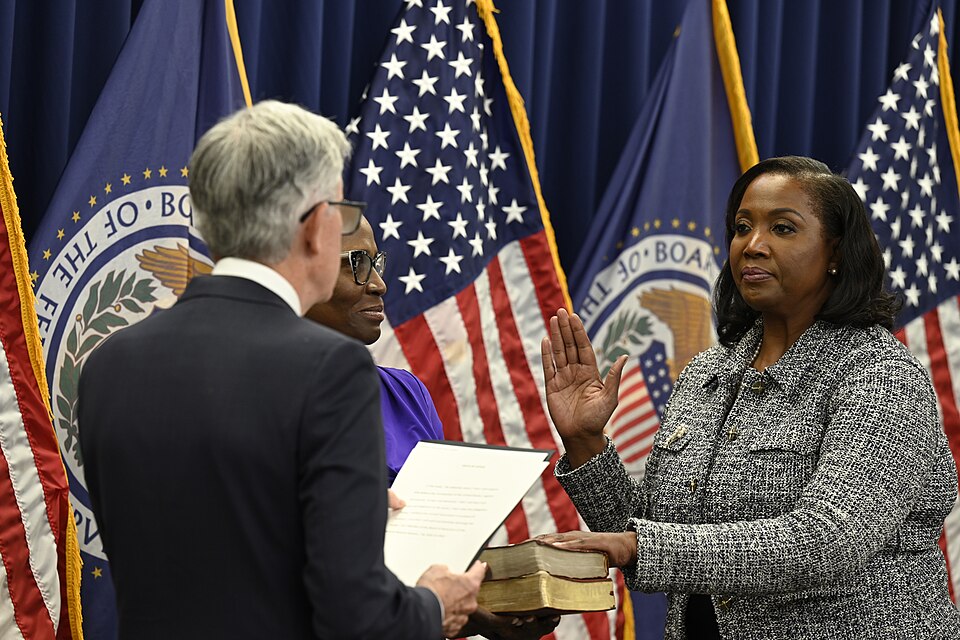
A seat on the Federal Reserve Board carries enormous influence because governors help determine policies that affect borrowing costs, inflation, employment, and economic growth. Even one change in the board’s makeup can influence the direction of debates over interest rates and monetary policy.
The dispute comes as the Federal Reserve continues navigating difficult economic challenges. Policymakers are balancing concerns about inflation with pressure to support growth, a debate that has become increasingly important as Americans continue feeling the effects of borrowing costs.
Trump has repeatedly criticized the Federal Reserve’s approach to interest rates, arguing that monetary policy should better support economic expansion. The fight over Cook has therefore become connected to a broader disagreement over how the nation’s economy should be managed.
A rare attempt to remove a Fed governor sparks legal battle.
Removing a Federal Reserve governor is an extraordinary move because the system was designed to prevent presidents from dismissing officials simply over policy disagreements. The protections surrounding Fed governors exist to ensure that monetary decisions remain focused on long-term economic stability.
The Trump administration has argued that government officials must remain accountable and that serious concerns involving a Fed governor should be investigated. The White House maintains that presidential authority should include the ability to challenge officials when questions arise about their conduct.
Cook has denied allegations involving mortgage documents and has argued that the effort to remove her is politically motivated. Her supporters say the case could create a dangerous precedent if future presidents gain broader power to pressure independent institutions.
Trump’s battle echoes past fights over the Federal Reserve.
The conflict between presidents and the Federal Reserve has a long history in American politics. One of the most notable examples came during the Nixon administration, when political pressure on Fed Chair Arthur Burns became a lasting warning about the risks of allowing elections to influence monetary policy.
Another major moment came during the early 1980s, when Fed Chair Paul Volcker raised interest rates aggressively to fight inflation despite facing heavy criticism. His actions showed the difficult choices central bankers sometimes make when prioritizing long-term economic stability over short-term popularity.
The Lisa Cook dispute has revived those historical debates. Supporters of Fed independence argue that past experiences show why the central bank needs protection, while critics believe elected leaders should have more influence over institutions that shape national economic policy.
Wall Street watches as Fed independence faces pressure.
Financial markets are closely following the dispute because investor confidence depends heavily on the belief that the Federal Reserve operates independently. Markets often react not only to actual policy changes but also to uncertainty about who controls major economic institutions.
A perception that political pressure is influencing interest-rate decisions could affect expectations about inflation, borrowing costs, and economic growth. Businesses and investors rely on predictable monetary policy when making long-term decisions.
The controversy arrives during a period when the Federal Reserve faces major challenges involving inflation, employment, and economic uncertainty. The outcome of the Cook dispute could influence how markets view the future independence of the central bank.
Lisa Cook’s historic role adds another layer to the controversy.
Beyond the legal fight, the dispute also involves one of the most significant appointments in Federal Reserve history. Cook became the first Black woman to serve on the Federal Reserve Board, making her appointment a major milestone for the institution.
Cook has built a career as an economist focused on issues including innovation, labor markets, and economic inequality. Supporters say her experience brings important perspectives to the central bank’s decision-making process.
The effort to remove her has therefore attracted attention for both legal and historical reasons. The case is not only about one governor’s future but also about the role of representation and independence within one of America’s most powerful institutions.
Trump’s Fed fight could redefine presidential power.
The outcome of the Lisa Cook dispute could shape how future presidents interact with independent government agencies. A successful removal could expand presidential influence, while allowing Cook to remain could reinforce protections designed to keep institutions separate from political pressure.
The case may eventually influence legal battles involving agencies beyond the Federal Reserve. The central question is whether presidential accountability should outweigh the need for independent decision-making in institutions that affect the entire country.
For Trump, the fight represents a push for greater control over government policy. For critics, it represents a challenge to one of America’s most important economic safeguards. What began as a dispute over one Federal Reserve governor has become a much larger battle over the balance of power in Washington.