8 Sunday Dinner Traditions That Have Quietly Faded
Sunday dinner has not disappeared, but it certainly looks different in many homes.
For some families, Sunday once meant church clothes, a roast slowly cooking in the kitchen, relatives crowded around one table, and dishes that spent most of the week tucked safely inside a cabinet. Today, Sunday might mean takeout, a simple meal at the kitchen island, or everyone eating at slightly different times.
The bigger story is not that Americans suddenly stopped caring about Sunday dinner. In fact, home cooking remains common. Instead, several customs that once surrounded the meal have gradually lost some of their old reach.
Going to Church, Then Heading Straight to Dinner

For some Christian families, Sunday followed a familiar rhythm: church first, dinner afterward.
Anna Post and Lizzie Post have described a family routine that included attending church in “Sunday best” before joining grandparents for a sit-down meal where a roast was carved at the table. It is one family’s recollection rather than proof that every American family did the same, but it captures a recognizable tradition.
That church-to-dinner pattern has lost some of its automatic pull. Gallup found that weekly or near-weekly religious service attendance dropped from 42% in 2000 to 2003 to 30% in 2021 to 2023. The numbers track worship attendance, not Sunday dinners, but fewer households following the weekly church routine means fewer meals naturally organized around it.
Related: 7 Modern Restaurant Trends Boomers Say Have Ruined the Dining Experience
Spending Half the Day Preparing the Meal
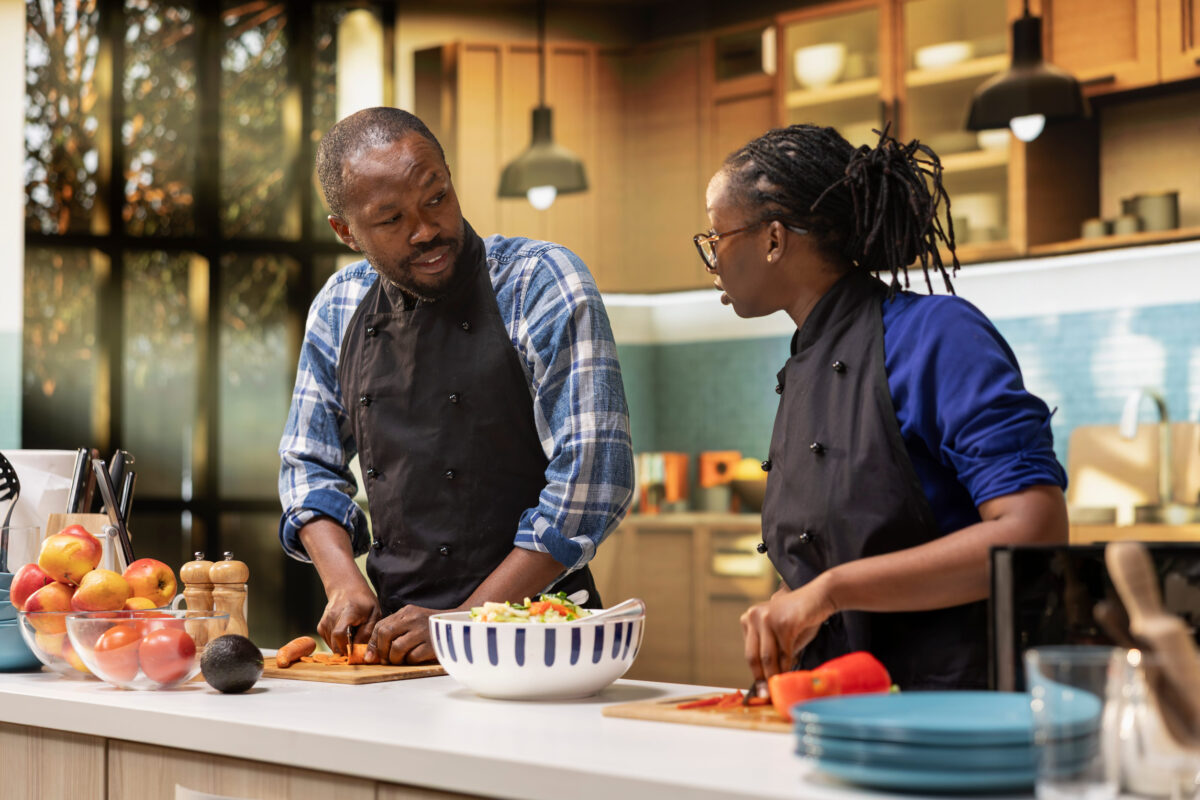
Remember the kind of Sunday meal that seemed to begin cooking before everyone had finished breakfast?
That image has some historical support. Research comparing American food preparation over several decades found that women who prepared food spent an average of 112.8 minutes per day doing so in 1965 to 1966. By 2007 to 2008, that figure had fallen to 65.6 minutes. Those numbers cover all meals and include related cleanup, so they don’t specifically measure Sunday dinner.
More recent data complicates the story. Women who cooked averaged about 71 minutes in both 2003 and 2023, suggesting the dramatic decline happened earlier rather than continuing endlessly. Still, the giant all-morning Sunday kitchen production is less automatic than it once was.
Related: 8 Things Boomers Did at the Dinner Table That Families Rarely Do Now
Expecting Mom to Cook Everything
Sunday dinner used to come with a fairly predictable job description in many households: women did most of the kitchen work.
In 1965 to 1966, 92% of women participated in food preparation or related cleanup on a surveyed day, compared with just 29% of men. By 2007 to 2008, those figures had shifted to 68% for women and 42% for men.
The trend has continued. Men’s cooking participation increased from 36% in 2003 to 52% in 2023. Women still cook more often and spend more time preparing food, so the workload has hardly become perfectly equal. Still, the assumption that Sunday dinner is automatically one woman’s responsibility has weakened.
Everyone Sitting Down for the Same Meal
This may be the biggest change of all.
A large U.S. time-use analysis found that 26% of people reported eating all of their meals alone the previous day in 2023. That represented a 53% relative increase compared with 2003. Even among people living with others, the share eating all meals alone rose from roughly 12% to 18%.
That does not mean families have stopped eating together, and the data are not Sunday-specific. Still, it shows how much shared mealtime patterns have shifted.
Assuming Dinner Will Be Home Cooked
Sunday dinner and home cooking once seemed almost inseparable.
That connection is looser now. USDA data show that food away from home accounted for 56.3% of total food expenditures in 2025. That category includes restaurants, takeout, delivery, institutional foodservice, and other outlets, so it should not be confused with the percentage of meals eaten away from home.
And home cooking is far from dead. A 2025 Pew survey found nearly nine in ten adults ate home-cooked meals at least a few times per week. The real change is that takeout, delivery, and restaurant food now sit comfortably beside homemade Sunday dinner instead of feeling like rare exceptions.
Gathering in the Formal Dining Room
The formal dining room has had a rough few years.
An August 2025 report found nearly 80% of surveyed designers working on new home communities said dining rooms had become less important during the previous year. The reasons included affordability concerns, smaller floor plans, and demand for rooms that can do more than one job.
That does not mean families have stopped eating together. It may simply mean dinner now happens around a kitchen island, breakfast nook, or multipurpose table instead of beneath a chandelier in a dedicated room.
Bringing Out the Special China
Once, certain dishes existed almost entirely for guests, holidays, and special meals.
Associated Press reporting has documented younger adults declining inherited china sets, leaving them off wedding registries, and choosing everyday dishes that work for both casual meals and entertaining. Interviewees pointed to smaller homes, limited storage, frequent moving, and the hassle of maintaining large sets.
Some people still treasure inherited pieces, of course. Others keep a favorite plate or serving bowl instead of accepting the entire collection.
Giving the Table Everyone’s Full Attention
Sunday dinner may still bring people together, but now the phones come too.
Pew found in a 2014 survey that 89% of cellphone owners had used their phone during their most recent social gathering. That does not mean 89% used phones during dinner. In fact, only 12% said cellphone use was generally acceptable at a family dinner.
Screens have simply become another part of modern gatherings. People might snap photos, look something up, answer a message, or contact someone who could not make it.
The classic Sunday dinner is not gone. It has simply become more flexible. The roast might be takeout, the formal dining room might be a kitchen island, and Dad might be the one cooking. What remains is the basic idea behind the tradition: making time to gather, eat, and catch up with the people who matter.