Rubio Leads Global Push Against Political Terrorism as U.S. Calls for New Counterterrorism Strategy
U.S. Secretary of State Marco Rubio is bringing together officials from dozens of countries for a high-level meeting focused on what the Trump administration describes as a growing threat from political terrorism, marking a major shift in how Washington wants the world to approach extremist violence.
The Ministerial on the Resurgence of Political Terrorism is being held in Washington, D.C., with representatives from more than 60 countries expected to participate. The meeting is aimed at strengthening international cooperation against politically motivated violence, with U.S. officials arguing that some emerging threats have not received enough attention from governments around the world.
The gathering comes as the United States pushes for a broader conversation about how modern terrorism has changed. Officials say violent groups are increasingly using political ideology as a motivation for attacks targeting governments, law enforcement, infrastructure and civilians.
Rubio’s meeting reflects the administration’s argument that traditional counterterrorism strategies need to adapt to new forms of political violence.
A New Focus on Political Violence
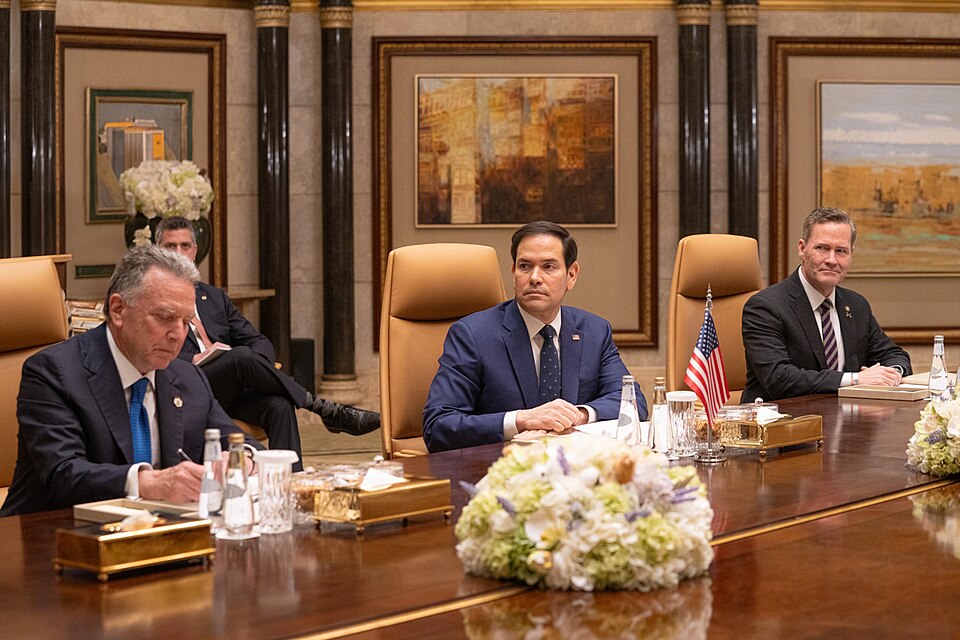
The meeting centers on the administration’s concerns about what it calls the resurgence of transnational political terrorism, particularly movements described by U.S. officials as far-left extremist networks.
A senior State Department official said the conference would allow counterterrorism officials to discuss what the administration views as an increasingly organized global threat. At least 65 countries were expected to be represented, including some through foreign or interior ministers and others through lower-level officials.
The administration argues that violent political groups have developed international connections and are using intimidation, attacks, and disruption as tools to influence societies.
U.S. officials have pointed to acts such as political assassinations, threats against government officials, attacks on law enforcement, and damage to critical infrastructure as examples of the type of violence they want countries to address.
The gathering follows a broader counterterrorism strategy announced by President Donald Trump that focuses on identifying and disrupting violent political organizations. The policy has drawn attention because of its emphasis on groups the administration describes as anti-American, anarchist, or linked to far-left movements.
Debate Over the Threat and Government Response
While the administration says the meeting is necessary to confront an overlooked danger, the move has also sparked criticism from some security experts, civil liberties groups, and former officials.
Critics argue that focusing heavily on far-left political movements could divert attention from other forms of extremism, including violent far-right groups and international militant organizations.
Some observers have also raised concerns about how governments define political extremism and whether broad labels could affect lawful protest movements or political expression.
Supporters of the meeting argue that governments should not ignore violence simply because it comes from a political movement that does not fit older definitions of terrorism.
They say the nature of threats has changed and that law enforcement agencies must be prepared to respond to any group that uses violence to achieve political goals.
The debate highlights a long-running challenge in counterterrorism policy: how governments can protect public safety while avoiding actions that restrict legitimate political activity.
International Cooperation Takes Center Stage
Beyond identifying threats, the meeting is designed to encourage countries to share information, improve coordination, and develop joint strategies.
The State Department has said the goal is to strengthen cooperation among nations facing politically motivated violence. Officials argue that extremist networks increasingly operate across borders, making international partnerships more important.
The involvement of dozens of governments signals that Washington wants the issue treated as an international security concern rather than a problem limited to individual countries.
Financial networks are also expected to be part of the broader discussion. Treasury officials have emphasized the importance of disrupting funding channels that allow terrorist organizations and violent groups to operate.
Counterterrorism efforts have historically focused on tracking money, limiting recruitment, and preventing attacks before they occur. The administration says the current challenge requires updated tools to deal with politically motivated violence in a rapidly changing environment.
A Turning Point for U.S. Counterterrorism Policy?
Rubio’s meeting represents one of the administration’s clearest efforts to reshape the global conversation around terrorism.
For years, U.S. counterterrorism efforts were largely centered on foreign terrorist organizations, particularly groups connected to international jihadist movements. The new focus expands that discussion to include politically motivated violence within and across democratic societies.
The success of the initiative may depend on whether participating countries agree on definitions, priorities, and practical steps.
Governments around the world have different views on what qualifies as extremism, and political violence can take many forms. Finding common ground could prove challenging.
Still, the meeting demonstrates that the United States is seeking a broader international response to what it sees as an evolving security threat.
As officials gather in Washington, the central question remains how nations can confront violent political movements while protecting the democratic freedoms they aim to defend.