10 World’s Spiciest Food Traditions and What Makes Them So Hot
If your idea of a good meal involves sweating slightly, reaching for your drink, and immediately going back for another bite, you are in excellent company.
Around the world, cooks have found hundreds of ways to work chilies into everyday food: fresh, dried, smoked, fermented, pounded into sauces, blended into curries, and sometimes treated less like a seasoning and more like an actual vegetable.
But there is one important catch before we start handing out imaginary trophies for the “world’s spiciest cuisine”: there really isn’t a scientifically defensible global ranking.
The Scoville scale measures pepper pungency, not complete meals. A pepper might register hundreds of thousands, or even more than a million, Scoville Heat Units (SHU), but once it is chopped into a stew, mixed with cheese, diluted with coconut milk, or served as an optional sauce, the experience changes dramatically.
So instead of pretending there is an undisputed champion, here are some culinary traditions where chili heat plays a particularly memorable role.
Bhutanese Cooking
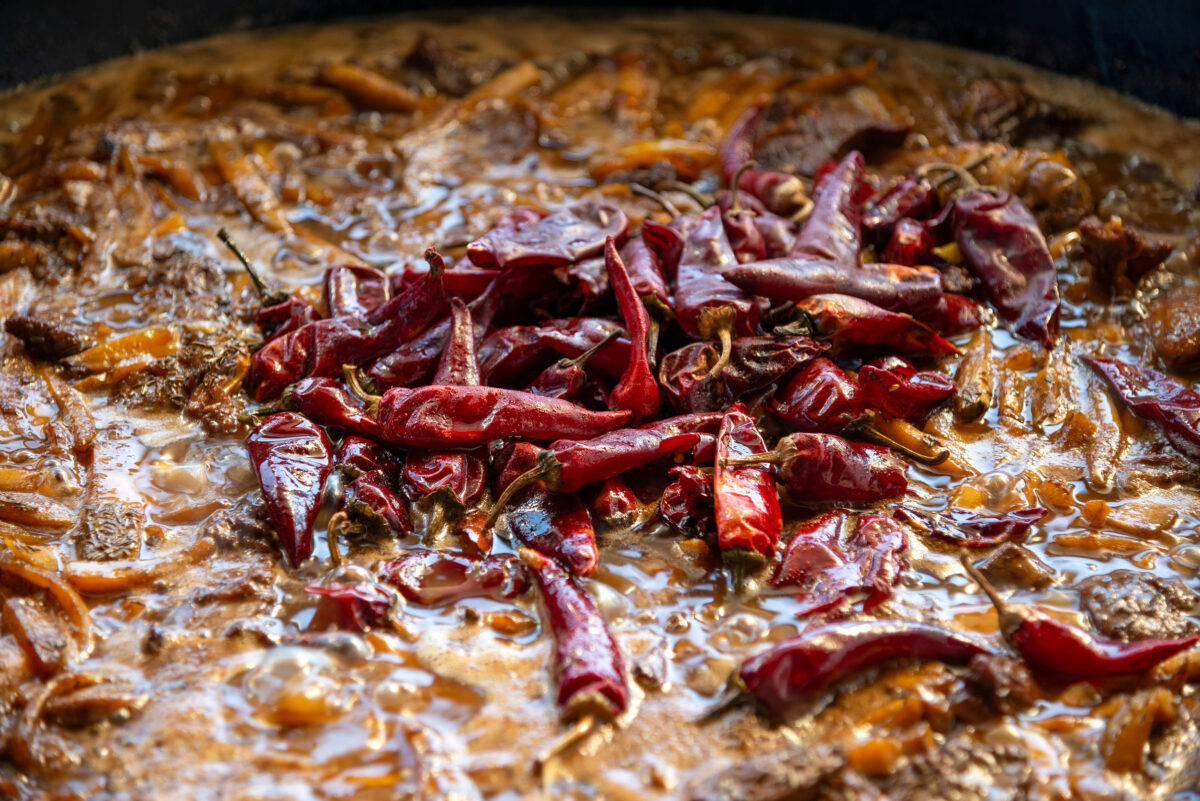
Bhutan deserves special attention for one wonderfully simple reason: sometimes the chili is basically the vegetable.
Ema datshi, one of Bhutan’s best-known dishes, combines whole or sliced chilies with cheese. That is very different from sprinkling a teaspoon of chili flakes into a pot.
Other dishes include phaksha paa, pork cooked with dried chilies and radish, and shakam datshi, which pairs dried beef with chili and cheese. Then there is ezay, a chili-based condiment that can add even more heat at the table.
Rice and dairy help balance the experience, but nobody should mistake that for a chili-free comfort meal.
Southern Thai Cooking
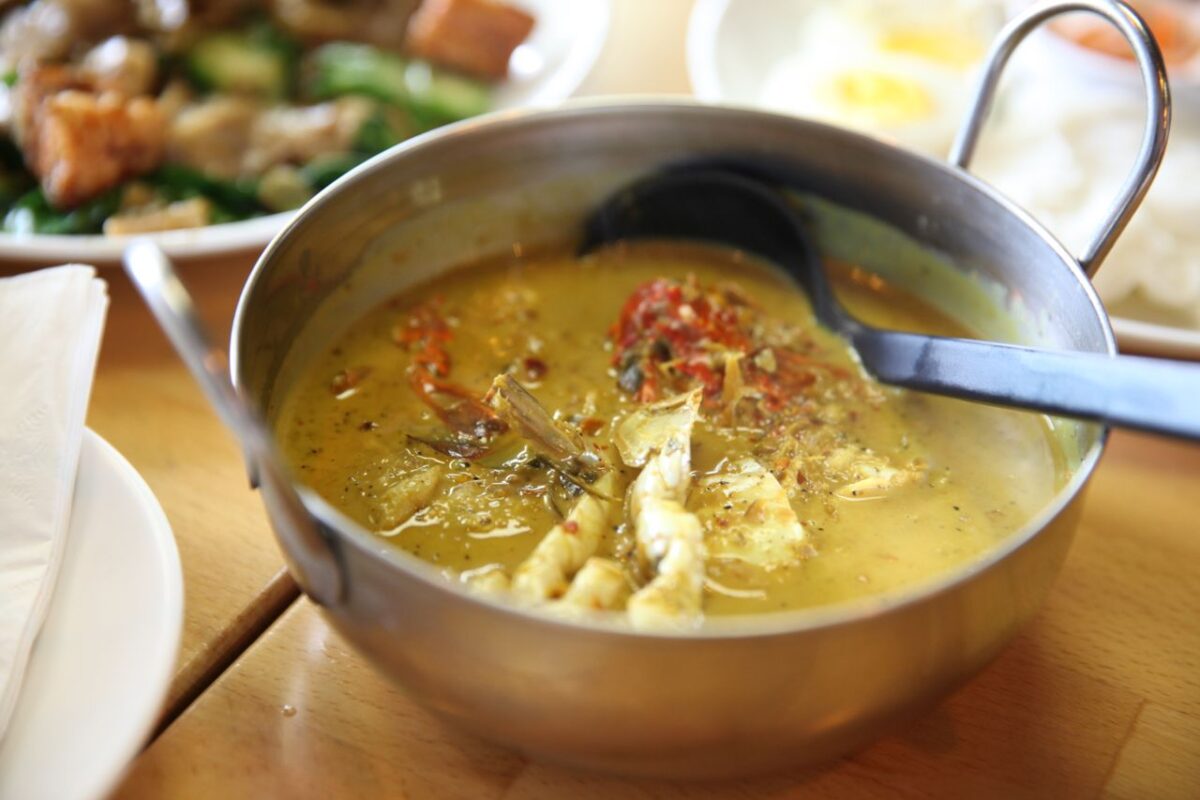
Saying “Thai food is spicy” is too broad. Southern Thailand, however, gives chili lovers plenty to work with.
Southern curries are particularly associated with serious heat. Kaeng tai pla combines an intense curry paste with fermented fish innards, while khua kling coats minced meat in a concentrated southern curry mixture. Southern gaeng som, sometimes called gaeng luang, brings together hot, sour flavors.
Thai or bird’s-eye peppers can fall around 50,000 to 100,000 SHU as raw peppers, although that number should never be confused with the heat level of the final curry.
Isan Thai Cooking
Head northeast to Isan and the heat takes a different form.
Instead of relying mainly on rich curries, Isan cooking brings chilies into pounded salads, dips and seasonings. Som tam can contain fresh chilies pounded directly with green papaya, while larb may get a generous dose of dried chili.
Sticky rice and fresh vegetables often sit beside these dishes, giving diners something mild to alternate with each fiery mouthful.
Most importantly, you can adjust the heat. One cook’s friendly som tam can be another cook’s personal endurance test.
Hunan Cooking
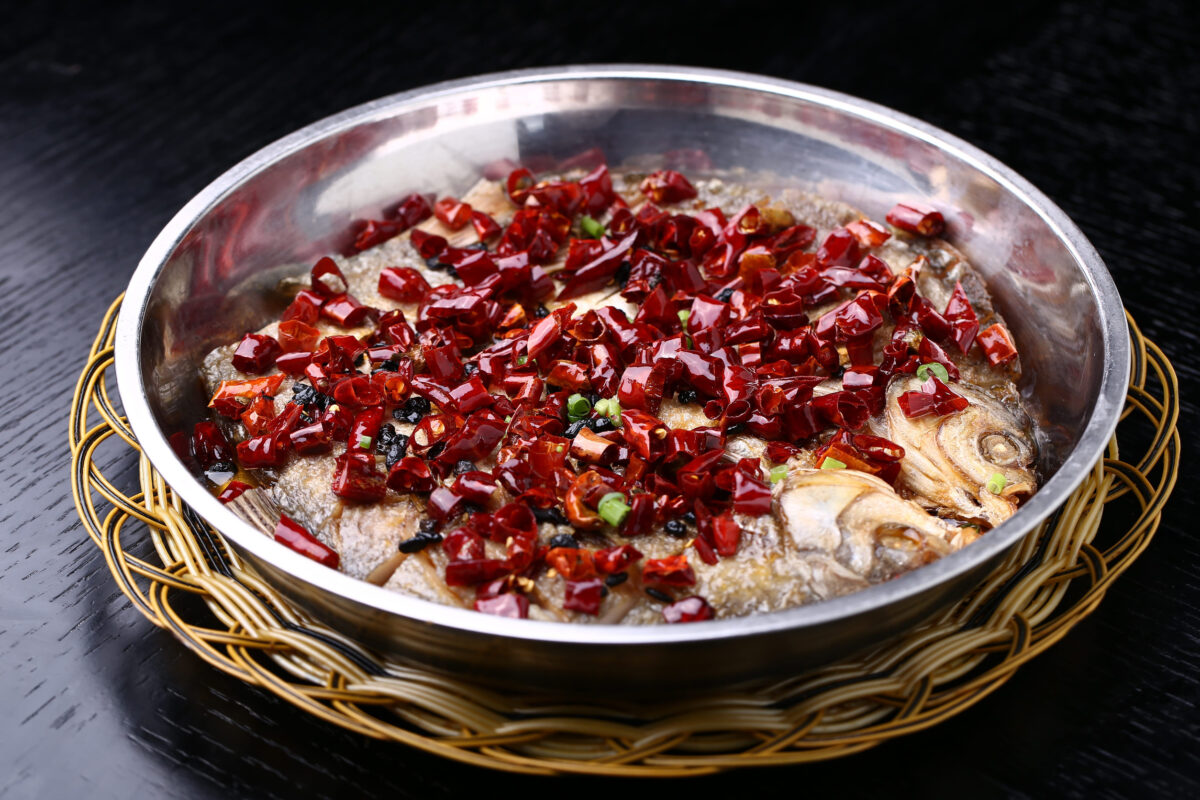
Hunan cuisine in China is famous for direct, unapologetic chili flavor.
Fresh chilies, dried chilies, salted chopped chilies, and preserved preparations all play a part. A classic example is duo jiao yu tou, steamed fish head covered with chopped salted peppers.
Smoking and pickling are also important techniques, which means the chili contributes more than raw heat. They can also bring saltiness, sourness, and deep preserved flavors.
You will sometimes hear claims that Hunan food is “hotter than Sichuan,” but comparable scientific testing of normal household meals does not support such a neat conclusion.
Sichuan Cooking
Sichuan cuisine deserves its place here, but not simply because it is “super hot.”
Its famous málà combination joins chili heat with the tingling sensation of Sichuan pepper. Sichuan pepper is not a chili and does not contribute capsaicin-based Scoville heat. Instead, it produces that distinctive buzzing, numbing feeling around the mouth.
Think mapo tofu, la zi ji, chili-rich hot pot, or shui zhu fish swimming in fragrant chili oil.
The fun part is that Sichuan cuisine layers sensations. Your mouth can feel hot, fragrant, oily, salty, and tingly all at once.
Naga Cooking in Northeast India
Now we enter serious pepper territory.
Naga food traditions are closely tied to extremely hot chilies, including king chili varieties in the broader ghost-pepper family. Bhut jolokia has been measured at over one million SHU.
But remember the rule: a million-SHU pepper does not turn an entire pork curry into a million-SHU dish.
In Naga cooking, chilies may appear alongside smoked pork, fermented soybeans known as axone, and bamboo shoots. The result is not simply heat for heat’s sake. Smoke, fermentation, and chili combine into something much more complex.
Vijayawada-Guntur Andhra Cooking
Indian food is far too diverse to label as uniformly spicy, but the Vijayawada-Guntur area of Andhra Pradesh has a particularly strong chili-forward reputation.
Here you may encounter gongura pachadi, where sour sorrel leaves meet dried red chilies, avakaya, a powerful mango pickle, and chili-heavy fish or meat preparations.
Rice, tamarind, gongura, and sometimes ghee help provide contrast.
And while Guntur is famous for chili production, there is no single meaningful “Guntur chili SHU.” Different cultivars and cooking methods produce very different results.
Manado Cooking, Indonesia
Indonesia has countless regional cuisines, so calling all Indonesian food fiery would be misleading. Manado cooking in North Sulawesi, though, gives heat seekers plenty to celebrate.
Ayam rica-rica cooks chicken with an assertive chili mixture, while fish rica-rica applies a similar treatment to seafood.
Then there is dabu-dabu, a fresh mixture of chopped chilies, shallots, tomatoes, and citrus often served with grilled fish.
That gives you two excellent chili experiences in one region: cooked and concentrated or fresh and sharp.
Lao Chili-Dip Traditions
In Laos, some of the excitement happens at the table.
Tam mak hoong, a green papaya salad, can be pounded with chilies, garlic, and fermented seasonings. Jeow dips offer another route. Jeow som brings fresh chili and lime, while jeow bong is a chili paste strongly associated with Luang Prabang.
Sticky rice and raw vegetables make perfect partners because they let you control the rhythm: hot bite, sticky rice, hot bite, brief moment of reflection, repeat.
Jamaican Jerk and Pepper Traditions
Jamaican cooking brings one of the Caribbean’s most famous hot peppers into the conversation: Scotch bonnet.
Scotch bonnets are commonly listed around 100,000 to 350,000 SHU as peppers and are especially important in jerk marinades, where they mingle with allspice and other seasonings.
You will also find Scotch bonnet in dishes such as escovitch fish and some versions of curry goat.
Jerk, however, is not merely “hot sauce.” It is also a seasoning tradition and cooking method, often involving grilling or smoking. The chili matters, but so do smoke, spice, and technique.
So, Which Cuisine Is Actually the Spiciest?
There is no responsible one-word answer.
A raw ghost pepper may be far hotter than a Thai chili, but that tells us nothing about how much of each pepper goes into a normal serving. A Jamaican diner might add extra pepper sauce. A Lao diner might use more jeow. A Bhutanese dish might contain large quantities of milder chilies.
That is why the better question is not, “Which country has the hottest food?”
It is: How does this food tradition use heat?
Sometimes chili is the star. Sometimes it is a condiment. Sometimes it is fermented, smoked, or pickled. Sometimes it joins numbing spices, tangy fruit, sour greens, coconut, or cheese.
That’s what makes exploring spicy food so much fun.
You are not simply chasing a bigger Scoville number.
You are discovering just how many delicious ways humans have invented to make dinner fight back.
Other Posts You May Like
- The Boomer Food Traditions That Still Bring People to the Table
- 10 American Foods That Make Visitors Scratch Their Heads- But Many Americans Still Love
If you like what you just read, then subscribe to our newsletter and follow us on social media.