The Blueberry-Lemon Loaf That Makes a Simple Afternoon Feel Special
An ordinary afternoon needs little to feel a little more inviting: a cup of coffee, a comfortable seat, and something worth slicing. A blueberry-lemon loaf fits that assignment beautifully, combining berries and citrus in a single pan and finishing with a lemon glaze. No cake layers to stack or frosting swirls to perfect. It is the kind of bake you can put on the table without turning serving it into a second project.
This recipe comes from Glory, the baker behind Glorious Treats, who originally developed it for a celebration. She made the loaf for a baby shower honoring her friend Joanne of Fifteen Spatulas, but she also recommends it for breakfast, snacks, or dessert. “I love the bright flavors of blueberry and lemon, and they work together so beautifully in this simple loaf,” she writes. That combination is the attraction, not an elaborate decorating routine.
Set one expectation before reaching for the mixing bowl: this is a quick bread, but it is not a quick afternoon snack from start to finish. The recipe calls for 25 minutes of prep and a 55 to 65-minute bake, followed by cooling. Plan ahead rather than beginning when the kettle is already boiling. The hands-on work is manageable; the oven and cooling rack will take up the rest of the afternoon.
Lemon and Blueberries Do the Heavy Lifting
For one loaf, gather 1½ cups of all-purpose flour, 1 teaspoon baking powder, 1 teaspoon salt, ⅓ cup melted unsalted butter, and 1 cup granulated sugar. You will also need two eggs, ½ teaspoon vanilla extract, 2 teaspoons freshly grated lemon zest, 2 tablespoons fresh lemon juice and ½ cup milk. The fruit component is 1 cup fresh or frozen blueberries, plus 1 tablespoon flour to coat them. The published recipe makes 10 servings.
That ingredient list gives lemon two roles before the glaze even enters the picture. Both zest and juice go into the batter, while blueberries provide the fruit throughout the loaf. Glory recommends zesting the lemons before juicing them, a practical preparation detail that is easy to overlook. Measure everything before mixing so you are not trying to grate citrus while the mixer runs or discovering halfway through that the milk is still unmeasured.
The recipe allows fresh or frozen blueberries, so the loaf doesn’t depend on finding fresh berries on the day you want to bake. It does not, however, guarantee that every fruit substitution will behave the same way. Glory notes that she hasn’t personally tested other berries in this recipe, though readers have reported success with some alternatives. For a first attempt, blueberries are the verified choice,not an invitation to empty an assorted-fruit bag into the batter.
Carefully measuring the flour is another small detail with clear instructions. Glory advises stirring the flour in its container, spooning it into the measuring cup, and leveling the top with the back of a knife. Use that method rather than treating a heaped scoop as close enough. The recipe also calls for unsalted butter; if salted butter is your only option, halve the added salt.
Related: 10 Foods You Should Never Store in the Fridge — Here’s What to Do Instead
Keep the Mixing Simple, and Check the Center
Preheat the oven to 350°F and prepare a 9-by-5-inch loaf pan. The recipe allows you to use either a parchment lining or a light coating of butter. In a medium bowl, whisk together the 1½ cups flour, baking powder, and salt, then set the mixture aside. This separate dry-ingredient step keeps the process organized before you begin combining everything in the mixer bowl. No yeast or rising stage to schedule.
Using an electric mixer, combine the melted butter, sugar, eggs, vanilla, lemon zest, and lemon juice until well blended. Then, while mixing slowly, add the flour mixture and milk in alternating batches: some flour, some milk, then the remaining flour and milk. The stopping point matters. “Stop mixing as soon as it’s just combined,” Glory instructs, rather than continuing until the batter has had an unnecessary extra minute under the beaters.
For fresh blueberries, her method calls for rinsing them so they retain a little moisture, then tossing them with the reserved tablespoon of flour. The recipe describes this coating as a way to help prevent the berries from sinking during baking; it doesn’t guarantee perfectly suspended fruit in every slice. Gently stir the coated blueberries into the batter by hand, then immediately transfer it to the prepared pan.
Bake for 55 to 65 minutes, checking the center with a toothpick rather than assuming the loaf is finished because the top looks appealing. In this recipe, the toothpick should come out clean. Once baked, let the loaf cool in the pan for about 30 minutes before moving it to a wire rack. Set a baking sheet beneath the rack to catch the glaze later, a simple precaution that keeps the counter from getting sticky.
The Glaze Gives It a Finish Worth Waiting For
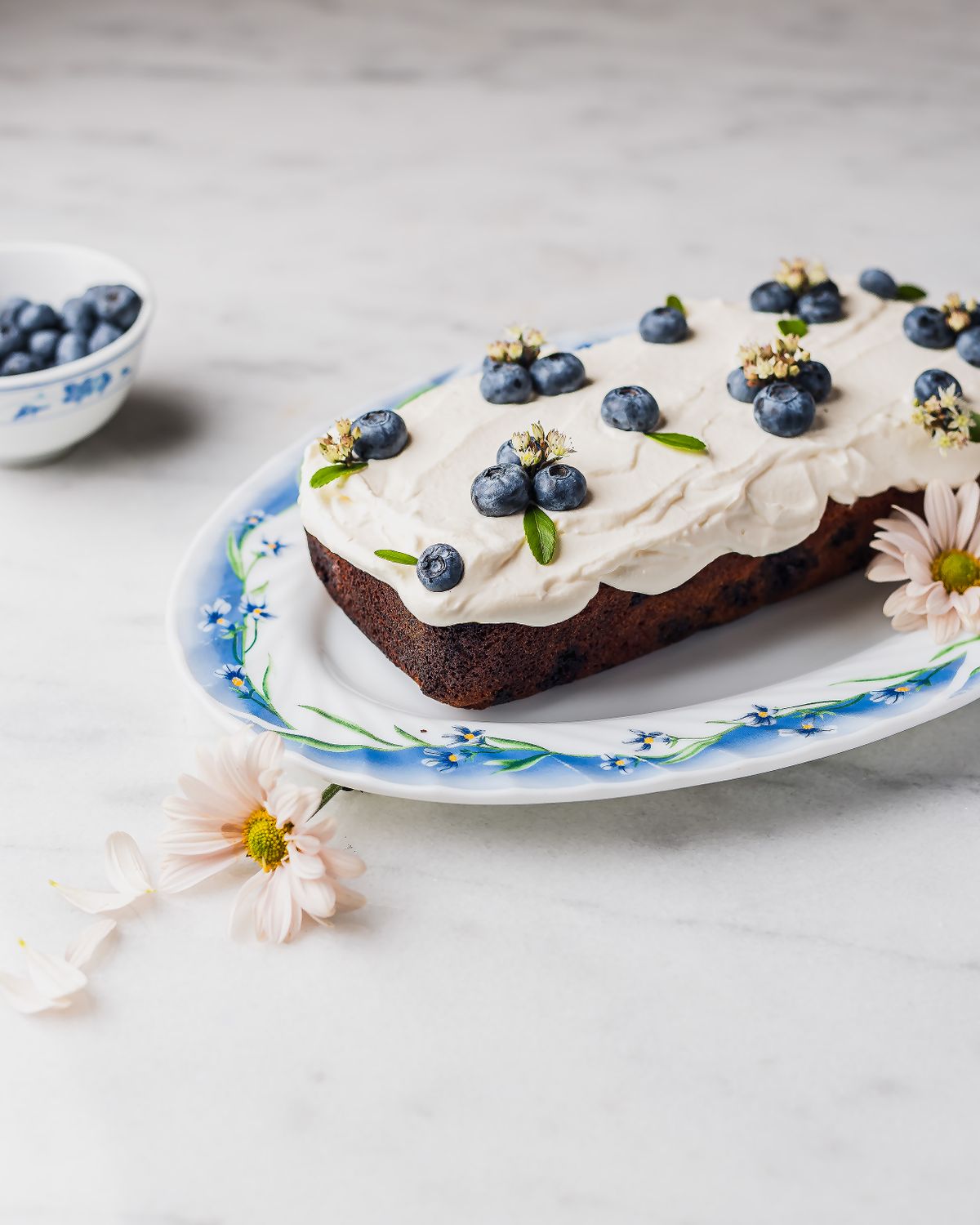
The topping requires just four ingredients: 2 tablespoons melted butter, ½ cup powdered sugar, 2 tablespoons fresh lemon juice and ½ teaspoon vanilla extract. Whisk them together, then pour the mixture over the loaf and follow the recipe’s cooling instructions. Let the glaze set for a few minutes before serving.It adds another dose of lemon without needing a frosting bag, a palette knife, or any decorating confidence.
For a next-day gathering, or simply tomorrow’s coffee break, Glory offers a specific make-ahead option. Wrap the cooled loaf and store it at room temperature without the glaze, then prepare and add the topping on the day you serve it. Keeping that final step separate gives you a clear plan instead of guessing whether to finish everything the night before. It also leaves only a short whisk-and-pour task when you are ready to put the loaf out.
Store leftovers in an airtight container at room temperature or in the refrigerator for up to three days, following the recipe’s guidance. For longer storage, let the bread cool completely, wrap it in plastic wrap and foil, then place it in a freezer-safe airtight container or bag for up to three months. Glory recommends thawing it in the refrigerator. These options make the 10-serving loaf work even when no crowd is waiting at the table.
The pleasure here is simplicity: one loaf, a familiar fruit-and-citrus pairing and a glaze that takes only a bowl and a whisk. Serve it with coffee or tea, as Glory suggests, without needing an occasion grand enough to justify baking. Bake and cool, follow the measurements, and let the lemon and blueberries bring the personality. An ordinary afternoon is occasion enough.